
CS — CASE STUDY
Elite Container Homes
Container homes sell against skepticism. Buyers are curious, but they arrive with doubts about durability, financing, and whether the product is a real house or a novelty. Elite Container Homes needed a web presence that did two jobs at once: legitimize the product and convert interest into inquiries.
APPROACH
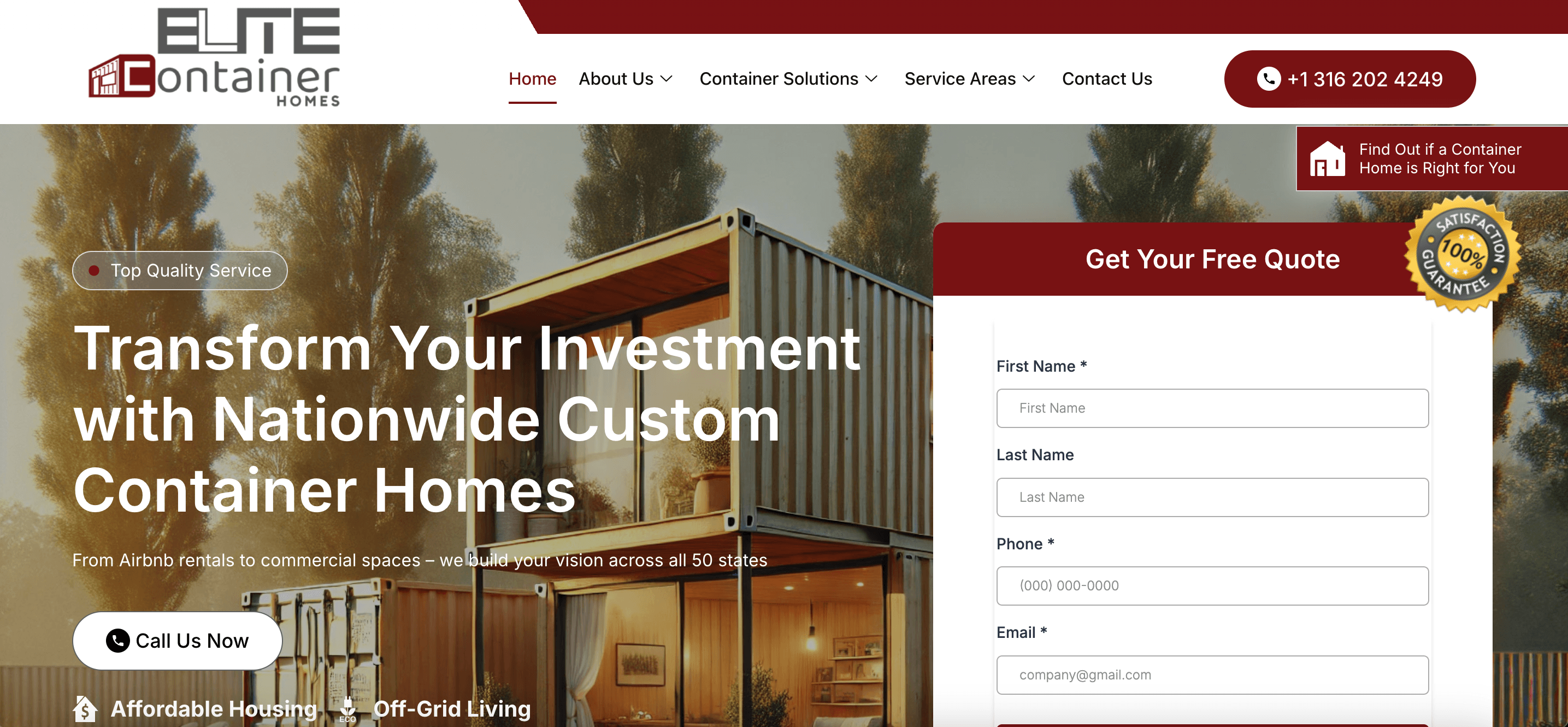
We built the website conversion-first, structured to answer the doubts container-home buyers actually carry before asking for the inquiry. Behind it, we put lead generation systems in place so interest had somewhere to go — clear calls to action, capture points matched to buyer readiness, and a path from first visit to conversation.
The situation
Container homes are an off-site product that sells against skepticism. The buyers exist — interest in container-based building keeps growing — but they arrive carrying doubts, and the doubts are always the same three. Is it durable? Can I finance it? Is this a real house or a novelty?
Those questions decide the sale before anyone speaks to a salesperson. A buyer who can’t answer them on your website doesn’t call to ask. They leave quietly and either buy site-built or buy nothing, and the company never learns the deal existed.
Elite Container Homes had a product that could stand up to every one of those questions. What it needed was a web presence that did two jobs at once: legitimize the category and convert curiosity into inquiries. Most container home websites do neither. They show renders, list specs, and leave the visitor to talk themselves into making contact. In a category where the buyer is already halfway skeptical, that’s how you lose people who were ready to buy.
The system we built
We built education-first, capture-second — in that order, because the order is the point.
- A new website, designed conversion-first, structured around the three doubts container-home buyers actually carry: durability, financing, and legitimacy
- Education content that answers each doubt before it’s spoken, in plain language, with proof placed where a skeptical visitor will actually find it
- Lead generation systems behind the site, so interest has somewhere to go — capture points matched to how ready the visitor actually is
- Conversion-focused design throughout: clear calls to action, no dead-end pages, and a deliberate path from first visit to conversation
When you sell a method as much as a product, the website’s first job is education and its second job is capture. Skip the first and the second becomes impossible. Do the first without the second and it becomes pointless. We’ve spent years positioning off-site products to buyers who default to site-built, and container homes are the sharpest version of that challenge. The same rules hold: answer the doubt before it’s spoken, then make the next step obvious.
How it works day to day
A visitor arrives skeptical. The site doesn’t hide from that — it leads with it. The durability question gets answered with substance, not adjectives. The financing question gets treated as the serious, deal-deciding topic it is. The is-this-a-real-house question gets settled by showing the product the way a builder shows finished work, not the way a novelty gets marketed.
Then the paths split. The early-stage researcher — the one who’s months from a decision — meets a capture point suited to where they are, and enters the system instead of vanishing. The ready buyer gets a short, obvious route to a conversation. Nobody is forced to choose between requesting a quote and leaving.
For the Elite Container Homes team, the practical effect is that the website runs the first sales conversation for them. By the time a buyer makes contact, the doubts have already been worked through, and the conversation starts at how do we do this, not convince me this is real. Dustin Burke of Elite Container Homes tells that story in his own words in the video on this page.
What changed
Elite Container Homes now sells with the skepticism handled up front instead of on every phone call. The website legitimizes the product before the team ever speaks to a buyer, and every expression of interest — early or late — is captured and routed instead of lost. That’s the difference between a brochure and a system working a skeptical market: the brochure waits for the visitor to be ready, while the system meets them where they are and moves them forward.
The structure also compounds. Every doubt the site answers is a conversation the sales side no longer has to repeat, and every capture point keeps working on the buyers who weren’t ready this month. In a category that sells against skepticism, the company that educates first and captures properly wins the buyers everyone else loses.
EXHIBITS — LIVE PAGES
CLIENT TESTIMONIAL