More than 80 percent of american construction firms report that a well-optimized website leads to increased client inquiries and stronger project pipelines. In today’s digital world, your online presence is often the first impression potential clients have of your business. Effective construction website optimization does much more than showcase your work. When done right, it becomes the engine that drives growth, attracts quality leads, and gives you an edge in a crowded market.
Table of Contents
- Defining Construction Website Optimization
- Core Elements Of Website Optimization
- Seo And Lead Generation Strategies
- Automation And Digital Tools Integration
- Measuring Roi And Avoiding Common Pitfalls
Key Takeaways
| Point | Details |
|---|---|
| Website Optimization | Construction businesses should prioritize comprehensive website optimization to enhance lead generation and client engagement. |
| SEO Strategies | Effective SEO strategies, including targeted keyword research and high-quality content, are essential for attracting high-quality clients. |
| Digital Tool Integration | Leveraging automation and digital tools can significantly improve operational efficiency and project management in construction. |
| Measuring ROI | Implementing thorough performance tracking is crucial for understanding the impact of digital investments on business growth. |
Defining Construction Website Optimization
Website optimization for construction businesses represents a strategic digital approach to transforming online presence into a powerful lead generation and client attraction tool. According to research from Automation in Construction, digital tools and computing methods are increasingly crucial for enhancing project efficiency and effectiveness in the modern construction landscape.
Construction website optimization goes beyond simple web design – it’s a comprehensive process of refining digital platforms to attract, engage, and convert potential clients more effectively. This approach integrates technical website performance, strategic content development, user experience design, and targeted search engine visibility. The goal is creating a digital platform that not only looks professional but actively supports business growth objectives.
At its core, website optimization for construction firms involves several critical components. According to Constructability principles, the digital representation must reflect the same efficiency and strategic thinking applied to physical construction projects. Key optimization elements include:
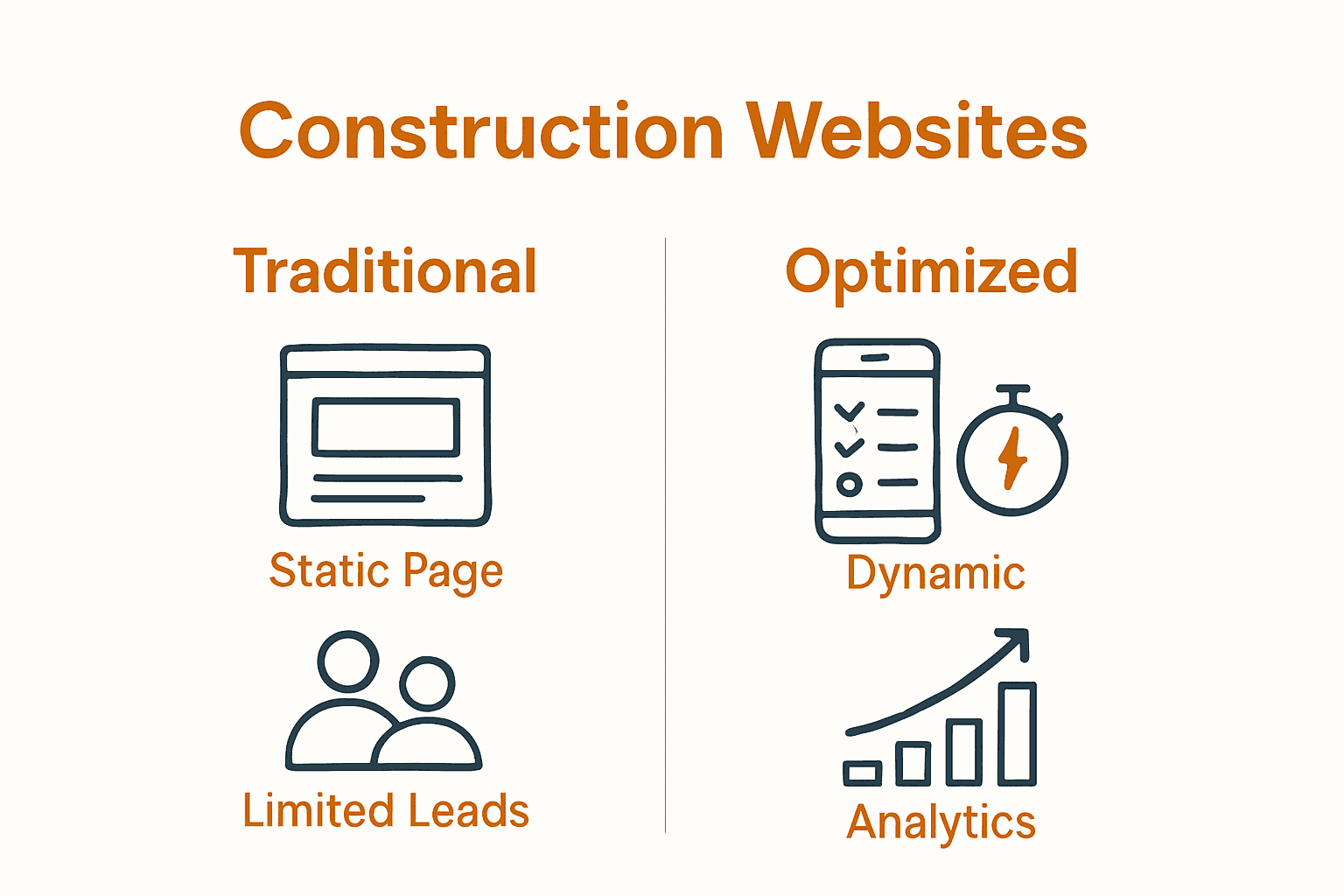
- Responsive Design: Ensuring website functions perfectly across devices
- Performance Optimization: Fast loading speeds and smooth navigation
- SEO Strategy: Targeted keywords and content that attracts ideal clients
- Conversion-Focused Layout: Clear calls-to-action and compelling service descriptions
For modular builders, prefab developers, and off-site construction professionals, website optimization guide for builders becomes a critical competitive advantage. Your website isn’t just an online brochure – it’s a sophisticated sales tool that works continuously to showcase expertise, build trust, and generate high-quality leads.

Core Elements of Website Optimization
Website optimization for construction professionals encompasses a strategic blend of technical performance, design, and user experience. According to Website Magazine, successful technical SEO hinges on several critical elements including website speed, performance, mobile optimization, crawlability, and robust site architecture.
Technical Performance stands as the foundation of effective website optimization. This involves creating a digital platform that loads quickly, functions seamlessly across all devices, and provides an intuitive user experience. Modern construction websites must balance aesthetic appeal with technical efficiency, ensuring potential clients can easily access information about services, past projects, and contact details.
Key optimization components for construction websites include:
- Page Load Speed: Ensuring rapid content delivery
- Mobile Responsiveness: Perfect functionality on smartphones and tablets
- Security Protocols: Implementing HTTPS and protecting user data
- Clean Site Structure: Logical navigation and easy information access
- Search Engine Compatibility: Optimized metadata and crawlability
For builders looking to transform their digital presence, website strategy for builders guide provides comprehensive insights into creating a high-performing online platform. As Internet is Good emphasizes, the ultimate goal is designing websites that are not just visually appealing, but truly user-friendly and accessible to a broad audience of potential clients.
SEO and Lead Generation Strategies
For construction businesses, SEO and lead generation represent a powerful digital strategy to attract high-quality clients and showcase industry expertise. According to Intergrowth, effective SEO strategies involve precise keyword research, creating high-quality content, and implementing strategic on-page optimization techniques that improve search engine rankings and attract potential leads.
Keyword Targeting is the cornerstone of successful digital marketing for construction professionals. By identifying and strategically incorporating industry-specific search terms, builders can position themselves directly in front of potential clients actively seeking their services. This approach goes beyond generic optimization – it’s about understanding the specific language and search behaviors of modular builders, prefab developers, and off-site construction experts.
Key SEO and lead generation strategies include:
- Targeted Keyword Research: Identifying precise search terms used by potential clients
- Content Expertise: Creating in-depth, authoritative content that demonstrates industry knowledge
- Local SEO Optimization: Focusing on geographic-specific search results
- Conversion-Optimized Landing Pages: Designing pages that transform website visitors into qualified leads
- Performance Tracking: Continuously monitoring and refining digital marketing efforts
For construction professionals seeking to elevate their digital strategy, Role of SEO in Construction guide provides comprehensive insights. As SEO Tonic emphasizes, the ultimate goal is creating a robust online presence that not only ranks higher in search results but effectively converts website traffic into genuine business opportunities.
Automation and Digital Tools Integration
Digital transformation has become a critical strategy for construction businesses seeking to enhance efficiency and competitive advantage. According to Science Direct, advanced automation methods and computing techniques are revolutionizing construction management by integrating sophisticated digital tools that streamline complex processes.
Digital Tool Integration represents a fundamental shift in how construction professionals approach project planning, design, and execution. Modern builders are leveraging cutting-edge technologies to transform traditional workflows, creating more precise, efficient, and data-driven approaches to construction management. This integration goes beyond simple technological adoption – it’s about reimagining how modular builders, prefab developers, and off-site construction experts can optimize their entire operational ecosystem.
Key automation and digital tools strategies include:
- Project Management Software: Centralized platforms for real-time collaboration
- BIM (Building Information Modeling): Advanced 3D modeling and simulation tools
- Automated Design Workflows: Reducing manual processes and increasing precision
- Cloud-Based Collaboration Platforms: Enabling seamless communication across teams
- Data Analytics Tools: Providing actionable insights for strategic decision-making
For construction professionals looking to leverage digital transformation, AI Automation & Workflows offers comprehensive strategies for integrating advanced technologies. As the Integrated Modification Methodology suggests, the future of construction lies in scientifically analyzing and systematically improving built environment processes through intelligent digital integration.
Measuring ROI and Avoiding Common Pitfalls
Measuring return on investment for digital optimization requires a strategic and nuanced approach specific to construction industry digital marketing. According to arXiv, successful conversion strategies demand a gradual approach that balances visual intensity with meaningful user engagement, ensuring that digital investments translate directly into tangible business outcomes.
Performance Tracking becomes critical for construction businesses investing in digital transformation. This involves developing comprehensive measurement frameworks that go beyond surface-level metrics, diving deep into how website optimizations directly contribute to lead generation, client acquisition, and overall business growth. Modular builders and prefab developers must look beyond vanity metrics to understand the genuine impact of their digital investments.
Key strategies for measuring digital ROI include:
- Conversion Rate Analysis: Tracking percentage of website visitors becoming qualified leads
- Cost Per Lead Calculation: Understanding the financial efficiency of digital marketing efforts
- Customer Acquisition Metrics: Measuring the direct impact of website optimization on new project contracts
- Engagement Depth Tracking: Analyzing time spent, pages viewed, and interaction quality
- Long-Term Value Assessment: Evaluating how digital investments contribute to sustained business growth
For construction professionals seeking to refine their digital strategy, 7 Proven Examples of Digital Lead Generation for Builders provides actionable insights into transforming digital investments into measurable business success. The ultimate goal is creating a data-driven approach that continually optimizes digital performance while avoiding common pitfalls that can drain marketing resources.
Unlock Your Construction Website’s True Potential Today
Many modular builders and prefab experts face the challenge of turning their websites into powerful lead generation machines while navigating complex SEO and digital marketing demands. This article highlights the crucial need for responsive design, targeted keyword strategies, and automation tools that drive measurable growth and position your construction business as a trusted industry leader.
Your website should do more than just display information. It must actively convert visitors into qualified leads using proven techniques like conversion-optimized funnels and data-driven SEO. At BoxBuild Agency we specialize in integrating cutting-edge digital solutions tailored specifically for off-site construction businesses. From advanced AI-driven marketing to strategic funnels that engage and convert, we ensure your digital presence delivers real value.
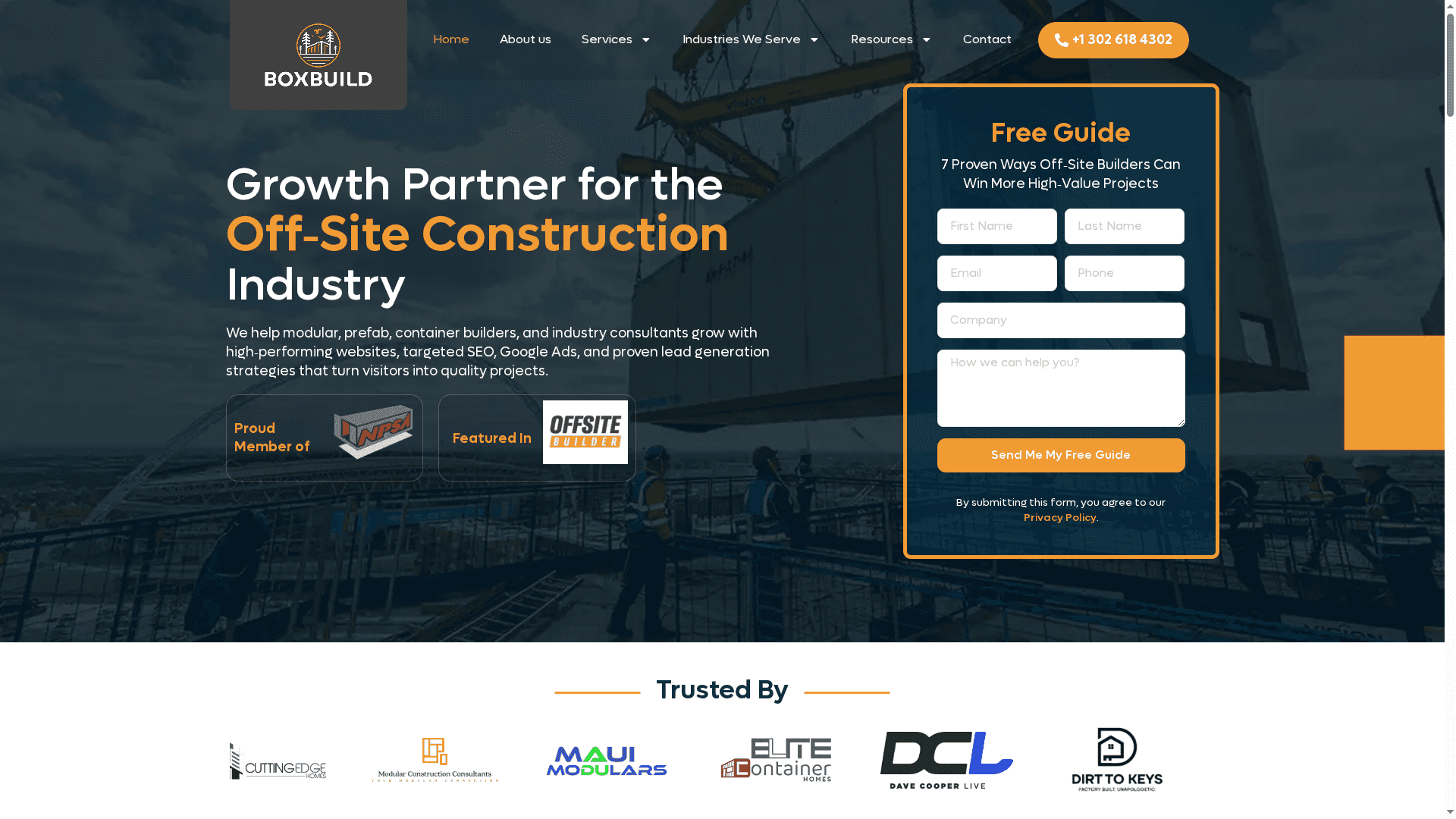
Take control of your website’s performance now by partnering with experts who know the construction industry inside and out. Visit BoxBuild Agency to start transforming your online platform into a high-impact growth engine and secure more high-value projects today.
Frequently Asked Questions
What is construction website optimization?
Construction website optimization is the strategic process of enhancing a construction company’s online presence to effectively attract, engage, and convert potential clients through improved design, technical performance, and search engine visibility.
Why is SEO important for construction websites?
SEO (Search Engine Optimization) is essential for construction websites because it helps improve search engine rankings, making it easier for potential clients to find your services when searching online. This can lead to increased traffic and higher-quality leads.
How can responsive design benefit my construction website?
Responsive design ensures that your website functions well on all devices, including desktops, tablets, and smartphones. This improves user experience and accessibility, helping to retain visitors and convert them into clients more effectively.
What key elements should I focus on for optimizing my construction website?
Key elements to focus on include page load speed, mobile responsiveness, security protocols, clean site structure, and effective SEO strategies. These components work together to enhance user experience and increase the chances of converting website visitors into leads.