Over 90 percent of potential clients will judge a builder’s credibility by their website before making contact. In a market where trust and technical know-how are everything, a basic online presence just won’t cut it. Choosing the right website strategy can help builders stand out, win better leads, and turn digital traffic into lasting partnerships. Discover what sets high-performing construction websites apart and what steps actually drive real business growth.
Table of Contents
- Defining Website Strategy for Builders
- Key Components of Effective Builder Websites
- Types of Website Strategies for Builders
- Digital Marketing Integration and Industry SEO
- Common Pitfalls and How to Avoid Them
Key Takeaways
| Point | Details |
|---|---|
| Strategic Website Importance | A builder’s website must serve as a purposeful digital roadmap that attracts, engages, and converts potential clients. |
| Core Components | Essential features include a clear project portfolio, mobile responsiveness, SEO-optimized content, and streamlined client inquiries. |
| Tailored Marketing Strategies | Builders should adopt specific digital marketing approaches, such as content-driven or conversion-focused strategies, to enhance their online effectiveness. |
| Avoid Common Pitfalls | Successful builders must proactively address SEO issues, enhance user experience, and engage their target audience effectively to maximize their digital presence. |
Defining Website Strategy for Builders
A website strategy for builders isn’t just about having an online presence – it’s a purposeful digital roadmap designed to transform how construction professionals attract, engage, and convert potential clients. According to George Washington University’s Communications, an effective website strategy requires setting clear objectives and understanding your target audience’s specific needs.
For modular and prefab builders, a strategic website approach means more than showcasing projects. It involves creating a digital platform that communicates your unique value proposition, demonstrates technical expertise, and provides a seamless path for potential clients to understand your construction capabilities. Research from Frontiers in Built Environment emphasizes that modern construction firms must integrate data analytics and digital tools to enhance project management and client engagement.
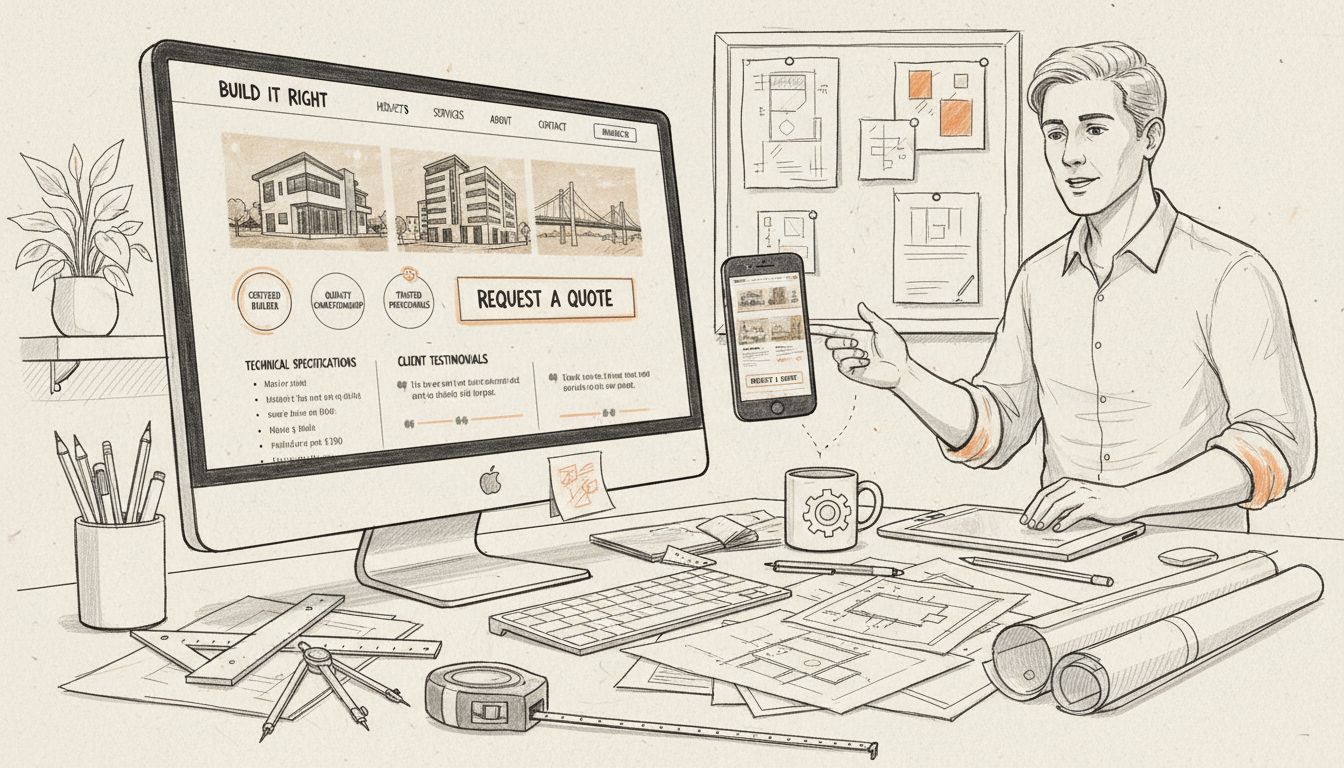
Key components of a robust website strategy for builders include:
- Clear project portfolio presentation
- Responsive design for mobile and desktop
- Technical specification details
- Client testimonial integration
- Streamlined contact and inquiry processes
- Search engine optimized content
Building an effective website strategy requires understanding your specific market segment. Whether you’re developing container homes, modular housing, or ADU solutions, your digital presence must reflect your specialized expertise. Digital marketing strategies for builders can help transform your website from a simple online brochure into a powerful lead generation tool that speaks directly to your ideal clients.
The goal is creating a digital experience that not only showcases your technical capabilities but also builds trust, demonstrates professionalism, and makes it effortless for potential clients to see why your construction approach stands out in a competitive market.
Key Components of Effective Builder Websites
Builder websites are sophisticated digital platforms that do far more than display projects. According to research from IJRAR, effective websites must strategically combine search engine optimization, user-friendly design, and clear calls to action to enhance online visibility and customer engagement.
The core components of a high-performing builder website go beyond aesthetic appeal. They require a deliberate approach that communicates technical expertise, builds trust, and guides potential clients through a seamless decision-making journey. Research in digital marketing emphasizes that SEO isn’t just a technical requirement – it’s a critical mechanism for attracting and converting potential construction clients.
Key elements that distinguish top-tier builder websites include:
-
Professional Portfolio Showcase
- High-resolution project images
- Detailed case studies
- Interactive project galleries
-
Technical Credibility Indicators
- Certification displays
- Team expertise sections
- Technical specification details
-
Client Conversion Tools
- Clear contact forms
- Immediate quote request options
- Mobile-responsive design
Builders must recognize that their website serves as a digital storefront, sales representative, and trust-building platform simultaneously. Website design solutions can transform a basic online presence into a powerful lead generation engine that speaks directly to your ideal client’s needs and aspirations.
Ultimately, an effective builder website isn’t just about looking good – it’s about creating a strategic digital experience that demonstrates your unique value, technical mastery, and commitment to delivering exceptional construction solutions.
Types of Website Strategies for Builders
Builders have multiple digital marketing strategies to choose from when developing their online presence. According to research from IJRAR, these strategies can be tailored to meet specific business goals and target audiences, ranging from content marketing to social media engagement and targeted email campaigns.
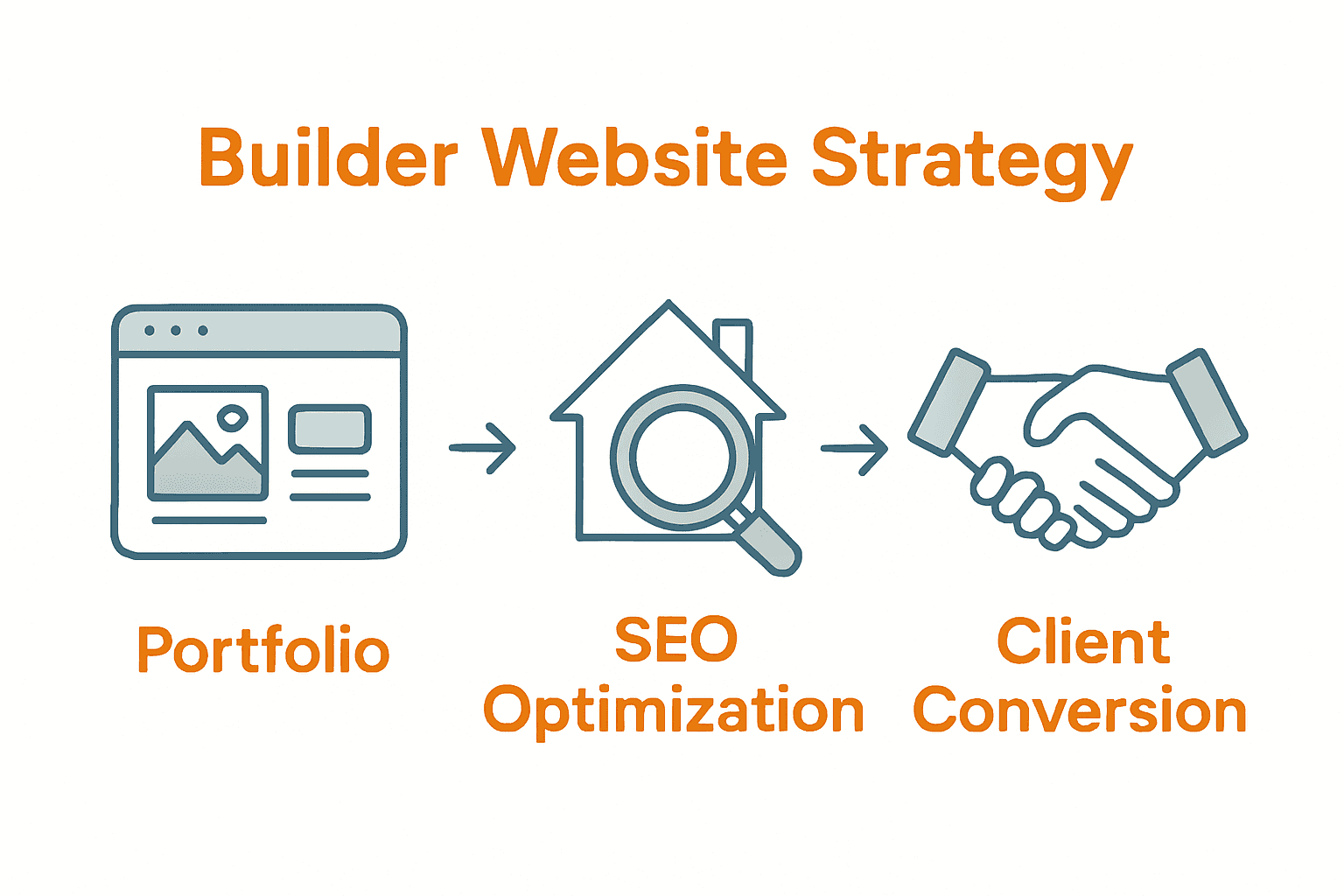
Digital marketing research reveals three primary website strategy approaches for construction professionals:
- Content-Driven Strategy
- Blog posts showcasing project expertise
- Technical whitepapers
- In-depth case studies
- Video project walkthroughs
- Search Optimization Strategy
- Keyword-targeted service pages
- Local SEO optimization
- Technical construction-related content
- Geographic targeting
- Conversion-Focused Strategy
- Clear call-to-action buttons
- Streamlined quote request forms
- Portfolio-driven landing pages
- Client testimonial integration
Modular and prefab builders need a nuanced approach that goes beyond generic marketing tactics. Examples of digital lead generation demonstrate how specialized construction websites can transform online interactions into high-value project opportunities.
Successful website strategies aren’t one-size-fits-all. They require continuous refinement, understanding of your specific market segment, and a commitment to providing genuine value to potential clients through your digital platform.
Digital Marketing Integration and Industry SEO
Digital marketing integration for builders requires a sophisticated approach that goes beyond traditional online advertising. According to research from AIMS International Conference, successful digital strategies must align with industry standards to enhance online visibility and build brand recognition.
Construction professionals need a multi-dimensional SEO approach that addresses the unique challenges of their industry. This means developing content that speaks directly to potential clients while simultaneously optimizing for search engine algorithms. Key components include:
-
Technical SEO Elements
- Keyword optimization for construction services
- Mobile-responsive design
- Fast page loading speeds
- Structured data markup
-
Content Strategy Considerations
- Project-specific landing pages
- Technical expertise demonstrations
- Geographic service area targeting
- Client case study integration
-
Conversion Optimization
- Clear call-to-action buttons
- Streamlined contact forms
- Trust-building testimonials
- Transparent pricing information
SEO strategies for construction professionals require continuous refinement and a deep understanding of both technical optimization and client communication. Successful digital marketing isn’t about gaming search algorithms – it’s about creating genuine value and establishing trust with potential clients.
Builders must recognize that their digital presence is more than a marketing tool. It’s a comprehensive platform that communicates expertise, builds credibility, and transforms online interactions into real-world construction opportunities.
Common Pitfalls and How to Avoid Them
Digital marketing challenges can derail even the most well-intentioned builder websites. According to research from IJRAR, many construction professionals fall into common traps that undermine their online effectiveness, including neglecting SEO, poor website design, and lacking clear strategic objectives.
Digital marketing research reveals several critical pitfalls that builders must proactively address:
- Ineffective SEO Practices
- Ignoring local search optimization
- Using generic, non-specific keywords
- Failing to update content regularly
- Neglecting mobile optimization
- Poor Website User Experience
- Complex navigation structures
- Slow page loading times
- Non-responsive design
- Lack of clear call-to-action buttons
- Audience Engagement Mistakes
- Minimal project showcase content
- Absence of client testimonials
- Limited technical detail presentation
- Inconsistent brand messaging
Digital lead generation strategies demonstrate that successful builders transform these potential pitfalls into opportunities for meaningful client connection.
Mitigating these challenges requires a strategic, holistic approach. Builders must view their digital presence as a dynamic platform that continuously evolves, adapts, and speaks directly to their target market’s specific needs and expectations.
Transform Your Builder Website Into a Lead Powerhouse
Struggling to turn your website into more than just an online brochure? This article highlights how a clear website strategy with SEO, client conversion tools, and targeted content is essential for modular and prefab builders looking to stand out. Many builders face challenges like poor mobile responsiveness, weak SEO, and lack of engaging client testimonials that prevent potential leads from becoming real projects.
At BoxBuild Agency, we understand these pain points deeply. Our expertise in Funnels – BoxBuild helps construction professionals craft seamless digital journeys that convert visitors into qualified leads. Coupling that with data-driven Google Ads – BoxBuild campaigns ensures your unique construction expertise reaches the right audience now. This tailored approach brings clarity, trust, and professionalism to your online presence exactly as the article advises.
Take control of your digital growth today and position your business as an industry leader. Visit BoxBuild Agency to explore how our strategic website design and marketing solutions can elevate your off-site construction business. Don’t wait to turn your website into a powerful sales tool that wins high-value projects and builds lasting client relationships.
Frequently Asked Questions
What are the key components of an effective website strategy for builders?
An effective website strategy for builders includes a clear project portfolio presentation, responsive design, technical specification details, client testimonials, streamlined contact processes, and search engine optimized content.
How can builders improve their website’s search engine optimization (SEO)?
Builders can improve their website’s SEO by optimizing for specific keywords, creating local SEO-focused content, ensuring fast loading speeds, and utilizing structured data markup to enhance visibility on search engines.
What are common pitfalls builders should avoid when creating their website?
Common pitfalls include ineffective SEO practices, poor website user experience such as complex navigation, slow page loading times, and lack of engagement features like client testimonials and project showcases.
How can builders create a seamless user experience on their websites?
Builders can create a seamless user experience by implementing a responsive design, ensuring fast page load speeds, simplifying navigation structures, and including clear call-to-action buttons to guide potential clients through the decision-making process.
Recommended
- Website Design & Development – BoxBuild
- Role of SEO in Construction: Complete Guide – BoxBuild
- SEO & Content Strategy – BoxBuild
- 7 Digital Marketing Ideas for Builders to Boost Leads – BoxBuild
- Smart Design and Renovation to Boost Home Value
- Master Mixing Tile Patterns for Stunning Spaces – Tile Choices