Every off-site construction marketing manager knows that improving website conversions is more than a numbers game. Tracking the right metrics and interpreting user journeys can reveal where prospects hesitate and where engagement thrives. A clear understanding of website performance data empowers you to pinpoint friction points and tailor your site for maximum impact. Explore proven ways to turn those site visits into qualified leads and real project opportunities using the latest digital strategies.
Table of Contents
- Step 1: Assess Current Website Metrics and User Journeys
- Step 2: Refine Messaging and Visuals for Target Audiences
- Step 3: Implement Data-Driven CTAs and Lead Capture Tools
- Step 4: A/B Test Landing Pages and Conversion Elements
- Step 5: Analyze Results and Optimize for Higher Conversions
Quick Summary
| Key Point | Explanation |
|---|---|
| 1. Assess Website Metrics Thoroughly | Collect data on traffic, engagement, conversion, and technical performance to understand user behavior and improve strategy. |
| 2. Tailor Messaging and Visuals | Customize content for different client segments like residential and commercial construction to enhance relevance and engagement. |
| 3. Leverage Advanced Lead Capture Tools | Use AI and automation to create dynamic CTAs and lead capture forms tailored to distinct audience types for better conversion. |
| 4. Conduct A/B Testing | Implement rigorous A/B tests on landing pages to identify effective elements that lead to higher conversions over time. |
| 5. Analyze and Optimize Regularly | Continuously evaluate metrics to identify friction points and adapt strategies to enhance overall conversion rates. |
Step 1: Assess Current Website Metrics and User Journeys
Understanding your off-site construction website’s performance starts with a comprehensive metrics assessment. By analyzing website performance data, you will uncover critical insights about visitor behavior and engagement that can transform your digital strategy.
Begin by gathering key metrics across four primary categories: traffic, engagement, conversion, and technical performance. Focus on tracking specific indicators like page views, session duration, bounce rates, and conversion percentages. User path analysis becomes crucial here, allowing you to visualize how potential clients navigate through your website and identify potential friction points in their journey.
Utilize web analytics tools to generate heatmaps and funnel visualizations that reveal precisely where visitors enter, interact with, and potentially exit your site. Pay special attention to drop-off points and task completion rates specific to your off-site construction audience. These insights will help you understand user behavior and optimize your website to guide more prospects toward requesting quotes or scheduling consultations.
Pro Tip: Segment your website metrics by client demographics to uncover nuanced insights about different customer groups and tailor your user experience accordingly.
Here’s a quick overview of key website metrics and why each matters:
| Metric Type | Example Indicator | Why It Matters | Optimization Goal |
|---|---|---|---|
| Traffic | Unique visitors | Gauge brand awareness | Expand client reach |
| Engagement | Session duration | Understand user interest | Improve content relevance |
| Conversion | Contact form rate | Measure lead generation | Boost qualified inquiries |
| Technical Performance | Page speed | Influence bounce rates | Enhance user experience |
Step 2: Refine Messaging and Visuals for Target Audiences
Transforming your off-site construction website requires strategic messaging that speaks directly to your diverse client base. Personalized marketing approaches enable you to craft communications that resonate with specific audience segments more effectively than traditional one-size-fits-all strategies.

Leverage AI-powered tools to analyze your target audience demographics and preferences. Break down your potential clients into specific segments such as residential developers, commercial contractors, and municipal project managers. For each segment, develop tailored visual content and messaging that addresses their unique challenges and goals. Content strategy trends suggest using dynamic, interactive visuals that showcase your off-site construction capabilities in ways that feel personalized and engaging.
Create distinct content paths for different audience personas, ensuring each group finds relevant information quickly. Use imagery that reflects the specific context of each client type – architectural renderings for commercial developers, cost comparison graphics for municipal planners, and lifestyle visuals for residential construction prospects. Align your messaging tone, technical depth, and visual style with the expectations of each audience segment to build immediate credibility and connection.
Pro Tip: Conduct quarterly audience persona reviews to ensure your messaging remains current and continues to reflect evolving market needs and preferences.
This table compares tailored content strategies for different construction audience segments:
| Audience Segment | Visual Content Style | Messaging Approach | Main Goals |
|---|---|---|---|
| Residential Developers | Lifestyle photos, floorplans | Friendly, practical tone | Showcase home benefits |
| Commercial Contractors | Architectural renderings | Technical, efficient tone | Demonstrate capabilities |
| Municipal Planners | Cost analytics graphics | Data-driven, formal tone | Highlight cost savings |
Step 3: Implement Data-Driven CTAs and Lead Capture Tools
Transforming your off-site construction website requires strategic lead capture mechanisms that go beyond traditional contact forms. Modern lead capture tools leverage AI and automation to streamline data collection and dramatically improve your conversion potential.
Design your call-to-action buttons and lead capture interfaces using behavioral insights and predictive analytics. Implement AI-powered lead qualification systems that can automatically segment and prioritize prospects based on their interactions with your website. Create multiple targeted CTAs that speak directly to different audience personas such as residential developers, commercial contractors, and municipal project managers. Each CTA should feature personalized messaging and offer specific value propositions that align with the unique needs of each client segment.
Integrate your lead capture tools seamlessly with your existing CRM and marketing platforms to ensure smooth data flow and rapid follow-up. Use dynamic form fields that adapt based on user behavior, collecting progressively more detailed information as potential clients engage deeper with your content. Implement real-time lead scoring mechanisms that help your sales team quickly identify and pursue the most promising opportunities.
Pro Tip: Regularly A/B test your CTAs and lead capture forms to continuously optimize conversion rates and user experience.
Step 4: A/B Test Landing Pages and Conversion Elements
Optimizing your off-site construction website requires a systematic approach to understanding what truly drives visitor engagement. A/B testing provides a data-driven method for making incremental improvements that can significantly boost your conversion rates.
Implement a structured testing framework that focuses on isolating and evaluating individual website elements. Start by creating two versions of your landing page with a single variable changed such as headline text, CTA button color, image placement, or form layout. Landing page testing frameworks emphasize the importance of testing one element at a time to accurately measure its impact on user behavior and conversion potential.
Allocate equal website traffic between your original and variant pages, ensuring statistical significance in your results. Use advanced analytics tools to track key performance indicators like click through rates, form submissions, and time spent on page. Prioritize testing elements that directly influence potential clients in the off-site construction industry such as project cost calculators, portfolio showcases, and technical specification displays. Remember that even minor modifications can yield substantial improvements in your website’s ability to generate high quality leads.
Pro Tip: Maintain a comprehensive testing log to track each experiment’s outcomes and build a data driven understanding of your audience’s preferences over time.
Step 5: Analyze Results and Optimize for Higher Conversions
Transforming website performance requires a systematic approach to conversion rate optimization that goes beyond surface level metrics. By deeply analyzing your website’s performance data, you can uncover strategic insights that drive meaningful improvements in visitor engagement and lead generation.
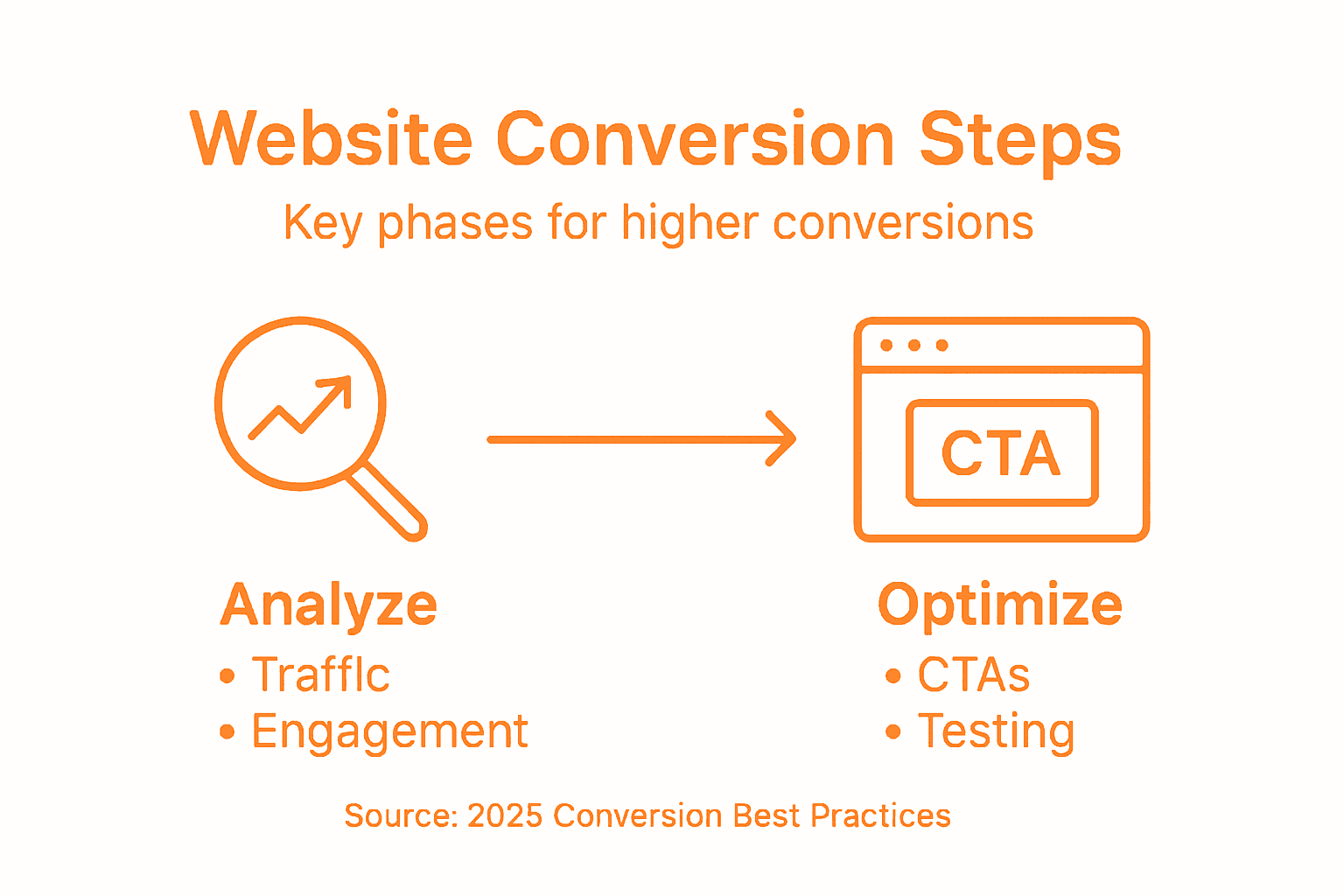
Develop a comprehensive analytics framework that tracks both macro and micro conversions across your off-site construction website. Examine key performance indicators such as form submission rates, time on page, click through percentages, and visitor segmentation. Funnel performance analysis allows you to identify precise friction points where potential clients might disengage and develop targeted strategies to address these challenges.
Continuously iterate on your optimization efforts by implementing incremental changes based on data driven insights. Prioritize modifications that demonstrate statistically significant improvements in user experience and conversion potential. Involve cross functional teams including marketing, sales, and web design to ensure a holistic approach to website performance enhancement. Monitor your improvements over time and be prepared to adapt your strategies as market dynamics and client expectations evolve.
Pro Tip: Create a dedicated optimization dashboard that tracks your key conversion metrics in real time, enabling rapid response and strategic decision making.
Boost Your Off-Site Construction Website Conversions with Data-Driven Funnels and AI Solutions
The article highlights a common challenge faced by many off-site builders today: turning website visits into qualified leads and high-value projects. You know that without precise funnels, smart lead capture tools, and tailored messaging your website risks losing valuable prospects. The pain points include understanding user journeys, refining audience-specific content, and implementing advanced CTAs that resonate with residential developers, commercial contractors, and municipal planners alike.
At BoxBuild Agency, we specialize in transforming these challenges into growth opportunities. Our expert team leverages cutting-edge AI to analyze visitor behavior and automate lead segmentation, ensuring your website speaks directly to the right audience at the right moment. Combine this with targeted Google Ads campaigns designed specifically for the off-site construction industry, and you unlock a steady flow of qualified leads ready to engage.
Don’t let visitor drop-offs hold your business back. Partner with us at BoxBuild Agency to build strategic websites powered by smart funnels and AI-driven insights. Start driving higher conversions today and position your off-site construction company as a market leader. Visit us now to take the next step toward digital growth.
Frequently Asked Questions
What are the key website metrics I should assess to improve conversions for off-site builders?
Start by evaluating traffic, engagement, conversion, and technical performance metrics. Focus on indicators like page views, session duration, and conversion rates to identify areas for improvement within 30 days.
How can I refine my website messaging for different audience segments in off-site construction?
Create tailored content paths for each audience segment, such as residential developers and commercial contractors. Use specific visuals and messaging that address their unique challenges, adjusting your approach quarterly to stay relevant.
What types of lead capture tools are effective for increasing conversions on an off-site construction website?
Implement AI-powered lead capture tools that automate data collection and qualify leads based on user interactions. Ensure these tools are integrated with your CRM to maximize efficiency and improve conversion rates by 15% over the next quarter.
How can I effectively A/B test landing pages to drive better conversion rates?
Develop a structured A/B testing framework focusing on one variable at a time, like headlines or CTA button colors. By analyzing visitor behavior, you can identify the most effective elements and aim for a conversion rate increase of 10% within 60 days.
What should I continuously analyze to optimize website conversions over time?
Monitor both macro and micro conversions, looking at key performance indicators like form submission rates and click-through percentages. Regularly adjust your strategies based on these insights to enhance user engagement and optimize for higher conversions, ideally refining your approach every month.