Coordinating fast-paced modular projects often means juggling fragmented data, miscommunication, and tight schedules that leave little room for error. For American and Canadian project managers working in off-site construction, the drive for greater efficiency meets real-world barriers at every stage. Discover how adopting Building Information Modeling as a collaborative, data-centric foundation equips teams to streamline modular workflows, improve decision-making, and tackle common integration challenges before they delay your next build.
Table of Contents
- Defining BIM and Its Core Concepts
- Digital Workflow Integration in Modular Construction
- Types of BIM Applications for Modular Projects
- Improving Collaboration and Data Sharing
- Cost Control, Quality, and Risk Reduction
- Avoiding Common BIM Implementation Pitfalls
Key Takeaways
| Point | Details |
|---|---|
| BIM Enhances Project Efficiency | Building Information Modeling integrates design, construction, and facility management stages to improve project accuracy and reduce costs. |
| Digital Workflow Integration is Crucial | Seamless connection between design, scheduling, and manufacturing increases efficiency and minimizes errors. |
| Collaboration is Key to Success | Centralized data management and real-time communication enhance transparency and information sharing among project teams. |
| Strategic Implementation is Essential | Avoid common pitfalls by investing in training, creating clear roadmaps, and fostering a culture supportive of change. |
Defining BIM and Its Core Concepts
Building Information Modeling (BIM) represents a revolutionary digital approach that transforms how construction professionals design, construct, and manage building projects. Unlike traditional 2D drafting methods, BIM integrates complex digital modeling technologies that enable comprehensive project visualization and collaboration.
At its core, BIM functions as a dynamic, data-rich digital representation of physical and functional building characteristics. The technology encompasses several critical attributes:
- Dimensional Modeling: Creating precise 3D representations of architectural elements
- Data Integration: Embedding detailed information about materials, specifications, and performance characteristics
- Collaborative Workflow: Enabling real-time communication and information sharing across project stakeholders
- Lifecycle Management: Tracking building components from initial design through construction and maintenance
The evolution of BIM has been marked by progressive technological advancements. What began as basic 3D modeling has transformed into a sophisticated system that supports comprehensive project management. Modern BIM frameworks now integrate design, construction, and facility management stages, creating a holistic digital ecosystem that enhances project efficiency and accuracy.
Modular construction particularly benefits from BIM’s integrated approach. By providing a centralized digital platform, BIM enables precise prefabrication planning, reduces errors, and streamlines off-site manufacturing processes. The technology allows project managers to simulate complex assembly sequences, identify potential conflicts, and optimize production workflows before physical construction begins.
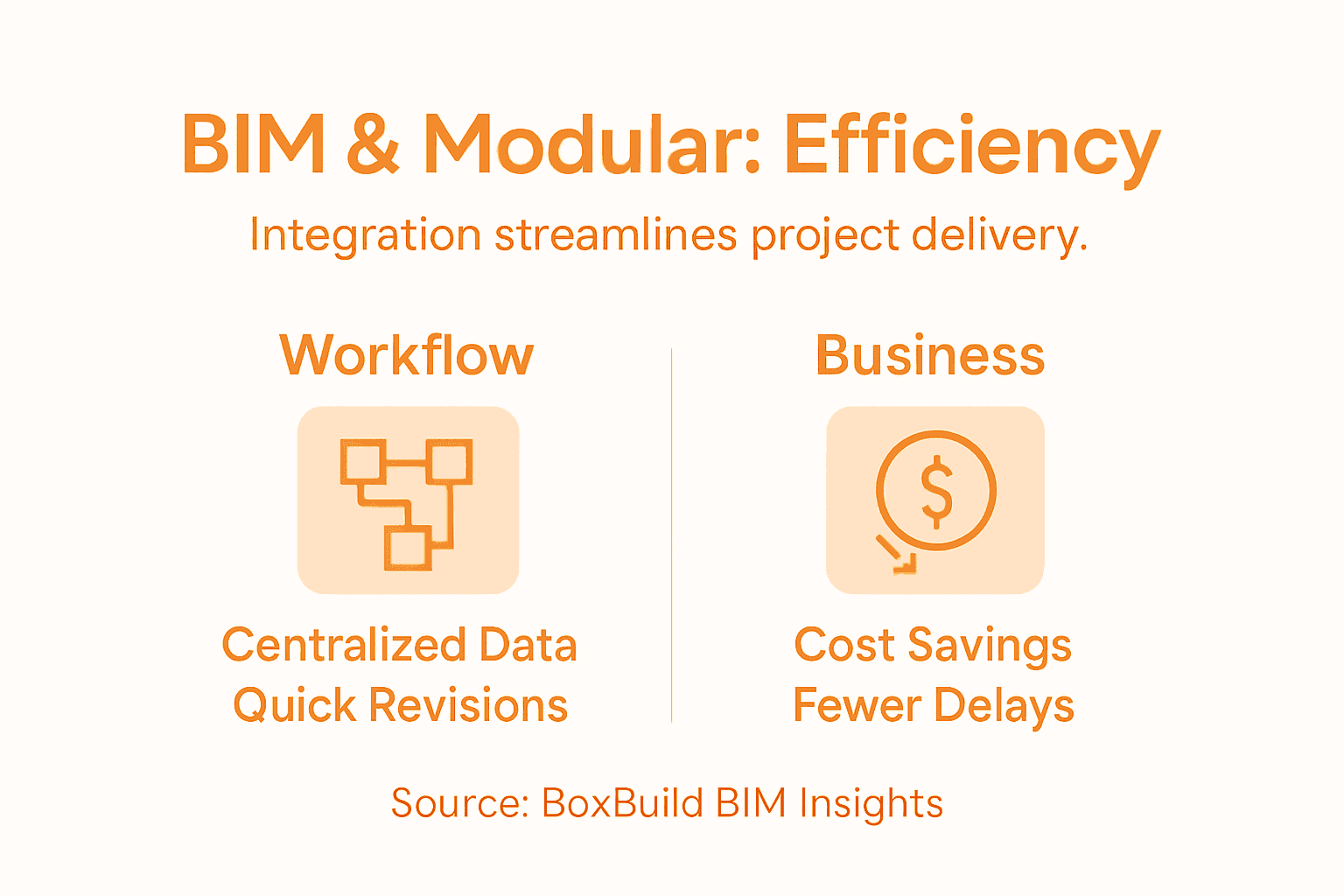
Here is a summary table illustrating how BIM enhances different modular construction phases:
| Project Phase | BIM Contribution | Business Impact |
|---|---|---|
| Design | Multi-dimensional modeling | Early error detection |
| Manufacturing | Workflow simulation | Fewer production mistakes |
| Construction | Conflict resolution | Reduced delays |
| Facility Management | Digital asset tracking | Lower maintenance costs |
Pro tip: Start small by implementing BIM in one project phase to gradually build organizational expertise and comfort with the technology.
Digital Workflow Integration in Modular Construction
Digital workflow integration represents a transformative approach in modular construction, enabling unprecedented levels of efficiency and precision through advanced technological frameworks. Comprehensive data-driven frameworks now optimize modular building processes by seamlessly connecting design, scheduling, and manufacturing stages.
The integration of digital technologies in modular construction encompasses several critical components:
- Real-Time Collaboration: Enabling instant communication across design, engineering, and manufacturing teams
- Automated Data Synchronization: Ensuring consistent information flow between project stages
- Predictive Simulation: Identifying potential conflicts and optimization opportunities before physical production
- Performance Tracking: Monitoring project metrics and quality control parameters throughout the construction lifecycle
Advanced Digital Technologies are revolutionizing modular construction workflows. Emerging technologies like IoT, AI, and digital twins are creating more intelligent and responsive construction ecosystems, allowing unprecedented levels of precision and adaptability in project management.

The primary advantage of digital workflow integration lies in its ability to reduce errors, minimize waste, and accelerate project timelines. By creating a centralized digital platform, modular construction teams can simulate complex assembly sequences, detect potential conflicts, and optimize manufacturing processes before physical implementation begins. This approach dramatically reduces rework, improves resource allocation, and enhances overall project predictability.
Pro tip: Invest in staff training and gradual technology implementation to successfully transition your organization toward integrated digital workflows.
Types of BIM Applications for Modular Projects
BIM applications in modular construction have evolved into sophisticated multidimensional tools that transform project management and delivery. Comprehensive BIM applications support complex modular construction processes by providing advanced visualization, simulation, and integration capabilities across project lifecycles.
The primary types of BIM applications for modular projects include:
- 4D Scheduling BIM: Integrating time-based simulation for construction sequencing
- 5D Cost Estimation: Linking financial modeling directly with design parameters
- 6D Sustainability Analysis: Evaluating environmental performance and energy efficiency
- 7D Facility Management: Supporting long-term building maintenance and operations
- Clash Detection: Identifying potential design conflicts before physical construction
Advanced modeling technologies enable precise multidimensional project planning by creating digital representations that go far beyond traditional 3D modeling. These applications allow modular construction teams to simulate complex assembly processes, predict potential challenges, and optimize resource allocation with unprecedented accuracy.
The strategic implementation of diverse BIM applications dramatically transforms modular construction workflows. By integrating detailed digital models with real-time data analytics, project managers can make more informed decisions, reduce waste, minimize errors, and accelerate project timelines. These technologies provide a comprehensive digital ecosystem that supports everything from initial design conception through final facility management.
Pro tip: Select and implement BIM applications incrementally, focusing on solving specific project challenges rather than adopting all technologies simultaneously.
Improving Collaboration and Data Sharing
Digital collaboration has become the cornerstone of modern modular construction, transforming how project teams communicate and share critical information. BIM-based tools facilitate centralized information management by breaking down traditional communication barriers and creating transparent, integrated workflows across multidisciplinary teams.
Key strategies for enhancing collaboration through BIM include:
- Centralized Data Repositories: Creating single source platforms for project information
- Real-Time Communication Channels: Enabling instant updates and feedback mechanisms
- Shared Visualization Tools: Providing comprehensive digital environments for joint project review
- Permission-Based Access Controls: Maintaining data security while promoting open collaboration
- Cross-Disciplinary Integration: Connecting design, engineering, manufacturing, and management teams
Advanced data integration frameworks support comprehensive stakeholder coordination by developing unified digital platforms that enable seamless information exchange. These technologies allow project teams to assess risks collaboratively, synchronize complex construction schedules, and make data-driven decisions with unprecedented precision and speed.
Successful collaboration requires more than just technological tools. It demands a cultural shift toward transparency, mutual understanding, and shared project goals. By implementing robust BIM-driven communication strategies, modular construction teams can dramatically reduce misunderstandings, minimize rework, and create more efficient, responsive project environments that adapt quickly to changing requirements.
Pro tip: Develop clear communication protocols and standardized data sharing practices before implementing advanced BIM collaboration tools.
Cost Control, Quality, and Risk Reduction
Risk management in modular construction demands sophisticated digital approaches that go beyond traditional planning methods. BIM enables comprehensive lifecycle cost control by providing detailed insights across design, production, construction, and maintenance phases, dramatically reducing financial uncertainties.
Key strategies for cost control and risk reduction through BIM include:
- Predictive Cost Modeling: Generating accurate financial projections before construction begins
- Design Error Detection: Identifying potential conflicts and design inconsistencies early
- Resource Optimization: Minimizing material waste and improving procurement efficiency
- Performance Simulation: Assessing potential risks and performance scenarios digitally
- Compliance Tracking: Ensuring adherence to regulatory and quality standards
Advanced risk management techniques in modular construction leverage sophisticated digital tools to enhance safety planning and minimize potential project delays. By creating comprehensive digital representations, project managers can simulate complex scenarios, anticipate potential challenges, and develop proactive mitigation strategies.
Successful risk reduction requires more than technological implementation. It demands a holistic approach that integrates advanced digital tools with strategic project management practices. BIM enables teams to create more transparent, predictable, and controlled construction environments, ultimately delivering higher-quality projects with reduced financial and operational risks.
Pro tip: Develop detailed digital risk assessment protocols that integrate BIM simulations with comprehensive project management strategies.
Avoiding Common BIM Implementation Pitfalls
Digital transformation in modular construction requires strategic planning and awareness of potential challenges. Comprehensive BIM implementation strategies address critical organizational barriers by anticipating and proactively managing common obstacles that can derail technology adoption.
Key pitfalls to avoid during BIM implementation include:
- Inadequate Training: Failing to invest in comprehensive staff skill development
- Unclear Implementation Roadmap: Lacking a structured, phased adoption strategy
- Insufficient Leadership Support: Not securing executive-level commitment
- Technology Interoperability Issues: Neglecting compatibility between different software platforms
- Resistance to Organizational Change: Underestimating cultural shifts required for digital transformation
Contractors face multiple challenges during BIM technology integration, including complex software limitations and communication barriers. Successful implementation demands a holistic approach that combines technological investment with strategic change management.
Effective BIM adoption requires more than technical solutions. Organizations must create a supportive ecosystem that encourages continuous learning, promotes cross-team collaboration, and develops flexible implementation strategies that can adapt to evolving technological landscapes. By understanding and proactively addressing potential challenges, modular construction teams can successfully navigate the complex journey of digital transformation.
Compare common BIM implementation pitfalls with recommended mitigation strategies:
| Pitfall | Recommended Mitigation |
|---|---|
| Inadequate staff training | Invest in ongoing education |
| Unclear implementation roadmap | Set phased goals and milestones |
| Software incompatibility | Prioritize open platform solutions |
| Organizational resistance | Foster a culture of collaboration |
Pro tip: Develop a phased BIM implementation plan with clear milestones, dedicated training programs, and mechanisms for ongoing feedback and adaptation.
Unlock the Full Potential of BIM in Modular Construction with Strategic Digital Growth
The article highlights how Building Information Modeling (BIM) drives efficiency and integration in modular building by improving collaboration, reducing errors, and optimizing workflows. If your goal is to harness these digital advantages but you struggle with translating BIM’s technical benefits into real business growth, BoxBuild Agency can help. We understand the challenges modular builders face in standing out and winning high-value projects in a competitive market.
Our expertise combines industry insight with data-driven marketing strategies, including tailored Funnels – BoxBuild and innovative AI – BoxBuild tools that amplify your digital presence. By integrating these solutions with your BIM-driven operations, you position your company as a trusted leader who not only delivers top-quality modular projects but also attracts more qualified leads.
Take the next step toward transforming your modular construction business today. Visit BoxBuild Agency and discover how our strategic digital growth services will complement your BIM workflows to accelerate project wins and boost efficiency. Start winning more contracts now with a partner who understands your industry’s unique demands.
Frequently Asked Questions
What is Building Information Modeling (BIM) in modular construction?
Building Information Modeling (BIM) is a digital approach that integrates complex modeling technologies to visualize and manage building projects, enhancing collaboration and efficiency throughout the construction lifecycle.
How does BIM improve efficiency in modular construction projects?
BIM enhances efficiency by providing a centralized digital platform that supports real-time collaboration, workflow simulation, and predictive modeling, ultimately reducing errors, minimizing waste, and accelerating project timelines.
What are the key types of BIM applications for modular projects?
Key types of BIM applications include 4D scheduling for construction sequencing, 5D cost estimation linked to design, 6D sustainability analysis for environmental performance, and 7D facility management for maintenance and operations.
What are common pitfalls to avoid when implementing BIM in modular construction?
Common pitfalls include inadequate staff training, unclear implementation roadmaps, insufficient leadership support, software interoperability issues, and resistance to organizational change. Addressing these challenges proactively is crucial for successful BIM adoption.
Recommended
- What Is BIM in Off-Site Construction: Key Impacts – BoxBuild
- Automation in Construction: Boosting Modular Efficiency – BoxBuild
- 7 Key Modular Home Design Best Practices for Builders – BoxBuild
- 7 Essential Types of Modular Construction for Builders – BoxBuild
- Role of Mechanical Plans in Project Success – Florida Licensed Engineers