Standing out in the competitive prefab market demands more than expert building skills or sleek designs. Many Modular and Prefab Home Developers face website challenges that limit visibility and slow down lead generation. Improving your online effectiveness starts with a deep dive into your website’s performance, focusing on metrics like user engagement and site structure. This practical guide helps pinpoint website strengths and weaknesses, revealing actionable strategies tailored for developers ready to attract the right clients worldwide.
Table of Contents
- Step 1: Analyze Current Prefab Website Performance
- Step 2: Update Site Structure For Modular Projects
- Step 3: Optimize On-Page Seo For Prefab Keywords
- Step 4: Integrate Lead Capture Features And Automation
- Step 5: Verify Speed, Mobile Usability, And Conversion Paths
Quick Summary
| Key Point | Explanation |
|---|---|
| 1. Analyze website performance | Use metrics like bounce rate and conversion rate to assess the current effectiveness of your prefab website. |
| 2. Update site structure | Organize content by project type to enhance client navigation and highlight modular construction expertise. |
| 3. Optimize on-page SEO | Implement targeted keywords in strategic locations to improve search engine visibility and attract quality leads. |
| 4. Integrate lead capture tools | Use automated features like chatbots and smart forms to engage visitors and streamline Lead generation. |
| 5. Verify mobile usability | Test your website for speed and responsiveness to remove barriers that hinder user interaction and conversion. |
Step 1: Analyze current prefab website performance
Analyzing your prefab website’s performance is a critical first step toward generating more qualified leads and understanding how effectively your online presence supports your business goals. By systematically evaluating key metrics and user interactions, you can uncover valuable insights that drive strategic improvements.
Start by conducting a comprehensive performance assessment across several essential dimensions. Performance analysis requires measuring user engagement and tracking specific metrics that reveal your website’s current effectiveness:
- User engagement metrics
- Bounce rate
- Average time on site
- Number of page views per session
- Conversion rate tracking
Utilize web analytics tools like Google Analytics to gather detailed performance data. These platforms provide granular insights into how visitors interact with your prefab construction website, helping you understand potential roadblocks in your lead generation process.
Effective website performance analysis isn’t just about numbers—it’s about understanding the story behind those metrics.
Pay special attention to technical performance elements as well. Website load speed and mobile responsiveness significantly impact user experience and search engine rankings. Slow-loading pages or poor mobile design can dramatically reduce potential lead interactions.
Pro tip: Use performance benchmarking tools to compare your website against industry standards and identify specific areas for improvement.
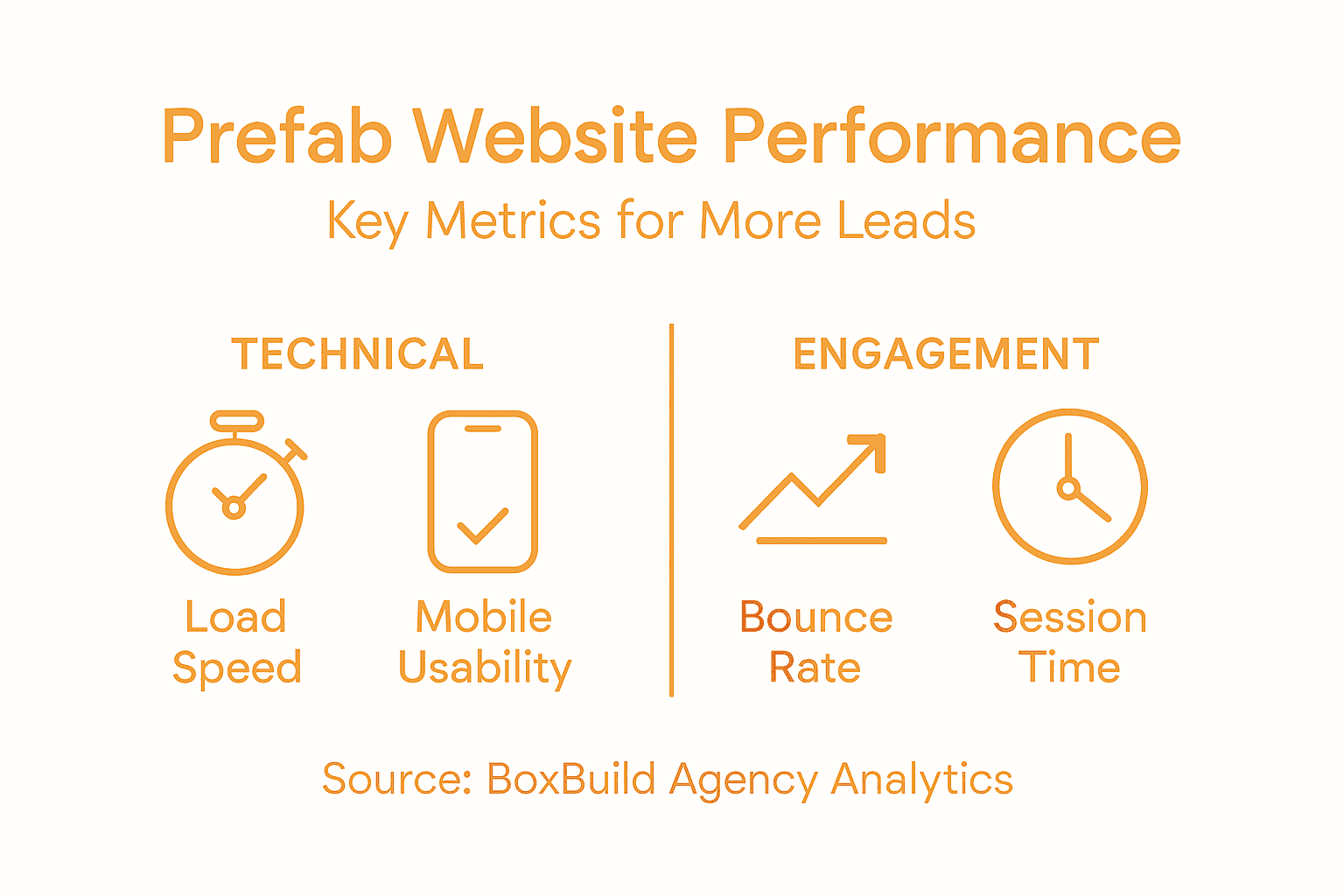
Here’s a summary of how each website performance metric impacts lead generation:
| Metric Analyzed | What It Measures | Impact on Lead Generation |
|---|---|---|
| Bounce Rate | Visitors leaving after one page | Indicates engagement issues |
| Avg. Time on Site | Duration of each visit | Reveals content effectiveness |
| Pages per Session | Number of pages viewed | Shows navigation quality |
| Conversion Rate | Visitors turning into leads | Directly reflects lead success |
| Load Speed | How fast pages display | Affects user retention and SEO |
Step 2: Update site structure for modular projects
Updating your website’s structure is a critical strategy for effectively showcasing modular construction capabilities and improving lead generation potential. By strategically organizing content, you can help potential clients quickly understand your prefab building expertise and navigate complex project information.
Site architecture supports flexible design configurations and should reflect the modularity of your construction approach. Consider restructuring your website to highlight key aspects of modular building:
- Project type categories
- Residential modular homes
- Commercial modular structures
- Custom modular designs
- Sustainable modular solutions
Each category should provide clear, concise information that demonstrates your technical capabilities and design flexibility. Use intuitive navigation menus that allow visitors to explore different modular construction options with minimal clicks.
A well-structured website transforms complex technical information into an engaging user journey.
Pay special attention to content hierarchy and information flow. Organize pages to guide potential clients through your design process, showcasing technical expertise and unique value propositions. Include clear calls-to-action and contact points that make it easy for interested clients to initiate project discussions.
Pro tip: Create dedicated landing pages for each modular construction type to improve search engine optimization and provide targeted information for specific client segments.
Step 3: Optimize on-page SEO for prefab keywords
Optimizing on-page SEO is crucial for helping potential clients discover your modular construction services and attracting high-quality leads through strategic keyword placement. By carefully crafting your website’s content, you can significantly improve your search engine visibility and connect with the right audience.
Strategic keyword optimization targets user intent and requires a nuanced approach specific to the prefab construction industry. Focus on implementing targeted keywords that reflect your unique modular building capabilities:
- Primary keyword focus areas
- Modular construction techniques
- Prefabricated home design
- Sustainable building solutions
- Off-site manufacturing processes
- Custom modular project capabilities
Ensure that your keywords are naturally integrated into high-quality, informative content. Avoid keyword stuffing by maintaining a balanced approach that prioritizes readability and value for potential clients. Place primary keywords strategically in:
- Page titles
- Header tags (H1, H2)
- Meta descriptions
- First paragraph
- Image alt text
Effective SEO is about creating valuable content that answers your potential clients’ most pressing questions.
Pay special attention to technical on-page optimization elements. This includes optimizing page load speeds, ensuring mobile responsiveness, and creating clear, descriptive URLs that include relevant keywords. Each page should provide comprehensive information about your modular construction services while maintaining a natural, conversational tone.

Pro tip: Conduct quarterly keyword research to stay ahead of emerging trends in prefab construction and continuously refine your website’s SEO strategy.
Step 4: Integrate lead capture features and automation
Transforming your prefab construction website into a powerful lead generation machine requires strategic implementation of advanced automation and capture technologies. By creating intelligent, responsive systems, you can dramatically improve your ability to convert website visitors into qualified potential clients.
AI-powered marketing automation transforms lead follow-up with personalized, timely communications tailored to your modular construction audience. Focus on integrating the following key automation features:
- Automated lead capture tools
- Smart contact forms
- Chatbots with industry-specific responses
- Automated email sequence triggers
- Real-time lead qualification systems
- SMS follow-up campaigns
Ensure that your lead capture mechanisms are designed specifically for the prefab construction industry. This means creating forms that capture technical project details, understanding client requirements, and providing immediate, relevant responses.
Effective lead capture isn’t about collecting contact information—it’s about initiating meaningful conversations.
Pay special attention to strategic integration points. Connect your website’s lead capture systems directly with your CRM, ensuring seamless data transfer and immediate lead routing. Implement multi-channel follow-up strategies that adapt to individual client communication preferences.
Pro tip: Design lead capture forms that ask progressively more detailed questions, creating a conversational experience that feels helpful rather than intrusive.
The table below compares traditional vs. automated lead capture methods for prefab websites:
| Approach | Response Speed | Personalization Level | Data Quality |
|---|---|---|---|
| Manual Forms | Slow, relies on staff | Low, generic response | Prone to errors |
| Automated Tools | Instant, 24/7 | High, tailored follow-up | Consistent, structured |
| Chatbots | Real-time | Contextual, adaptive answers | Captures key details |
| Email Automation | Immediate trigger | Targeted, segmented messaging | Tracks interactions |
Step 5: Verify speed, mobile usability, and conversion paths
Ensuring your prefab construction website delivers a seamless user experience across all devices is critical for converting potential leads and maintaining professional credibility. By meticulously testing and optimizing your site’s performance, you can eliminate barriers that might prevent potential clients from engaging with your modular building services.
Mobile web performance requires comprehensive optimization that addresses design, technical, and user experience factors. Implement a systematic verification process focusing on these key areas:
- Performance verification metrics
- Page load speed
- Mobile responsiveness
- User interaction smoothness
- Cross-device compatibility
- Conversion funnel efficiency
Utilize professional diagnostic tools to conduct thorough assessments across multiple dimensions. Key testing platforms like Google PageSpeed Insights, GTmetrix, and Mobile-Friendly Test provide detailed insights into your website’s technical performance and user experience.
Technical optimization is the silent ambassador of your prefab construction brand.
Conduct detailed user journey mapping to identify and eliminate potential friction points in your conversion paths. This involves analyzing:
- Navigation clarity
- Form completion rates
- Call-to-action visibility
- Information accessibility
- Mobile interaction ease
Pro tip: Perform user testing with actual potential clients in the prefab construction industry to gain authentic insights into your website’s real-world performance.
Unlock More Qualified Leads with Expert Prefab Website Strategies
Struggling to convert your prefab website visitors into high-value modular construction leads? This article highlights the crucial steps like website performance analysis, modular content structuring, on-page SEO, and lead capture automation that unlock the full potential of your online presence. If you’re facing challenges with bounce rates, slow site speed, or ineffective lead capture forms, our tailored solutions are designed to specifically address these pain points with data-driven precision.
BoxBuild Agency is your trusted digital growth partner for the off-site construction industry. We combine deep industry insight with advanced automation and targeted Google Ads campaigns to position your prefab business as a market leader. From crafting strategic funnels that guide potential clients seamlessly, to leveraging AI-powered automation that personalizes lead follow-up, our services optimize every stage of your modular project sales cycle.
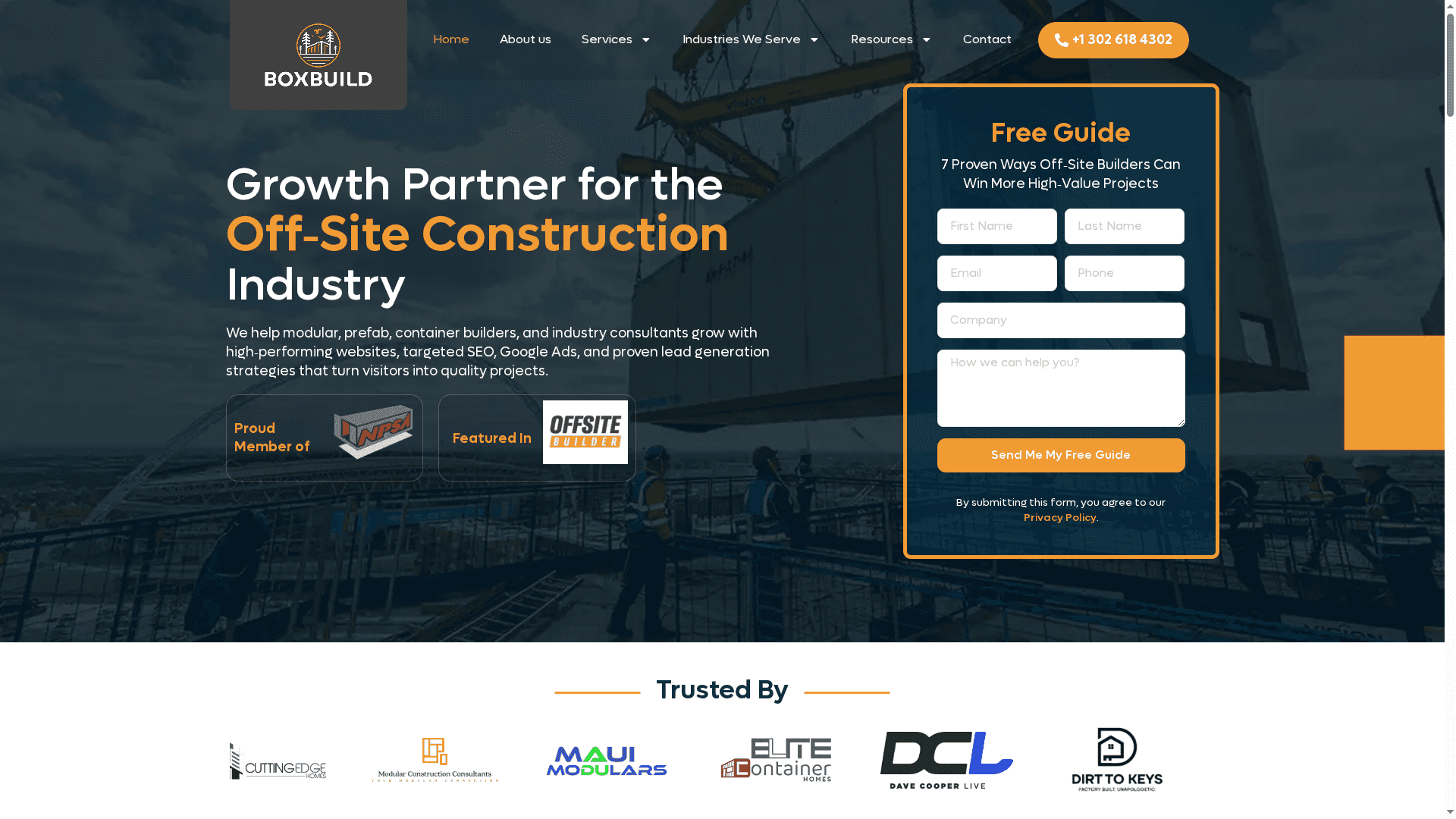
Ready to optimize your prefab website and generate more qualified leads right now Visit BoxBuild Agency to discover how our expert team can transform your digital footprint and accelerate your project pipeline with proven growth strategies tailored for modular construction.
Frequently Asked Questions
What are the key metrics to analyze for optimizing my prefab website?
To optimize your prefab website, focus on key metrics such as bounce rate, average time on site, pages per session, and conversion rate. Start by utilizing web analytics tools to gather this information, which will help you identify areas that need improvement within the next 30 days.
How can I improve the structure of my prefab website to attract more leads?
Enhance your website structure by categorizing content based on project types, such as residential, commercial, and sustainable modular solutions. Organize your website to allow easy navigation, guiding potential clients to relevant information and encouraging engagement within the first week of changes.
What steps should I take to optimize my prefab website’s on-page SEO?
To optimize your on-page SEO, incorporate targeted keywords related to modular construction into titles, headers, and meta descriptions. Aim to create high-quality content that naturally includes these keywords, and perform a content review every quarter to stay updated on trends.
How can I effectively integrate lead capture tools on my prefab website?
Integrate lead capture tools by implementing smart contact forms and chatbots tailored for the prefab construction industry. Ensure these features are in place to initiate client conversations immediately after a visitor engages with your site, aiming to boost lead collection within 60 days.
What should I do to verify the speed and usability of my prefab website?
Verify your website’s speed and usability by testing its performance across multiple devices and checking page load speed. Conduct a thorough review weekly to identify any issues and optimize user experience based on the findings.
How often should I update my prefab website’s content for better lead generation?
Aim to update your prefab website’s content regularly, ideally once a month, to keep it fresh and relevant. Schedule content reviews and updates to ensure that all information is accurate and aligned with current industry trends, which will help in attracting potential leads.