Chasing every lead often means missing out on the highest-value opportunities. In the off-site construction industry, knowing which prospects will actually convert into profitable clients is what sets successful lead generation managers apart. Defining an Ideal Customer Profile and segmenting leads using concrete data helps you focus efforts on real growth, ensure your follow-ups hit the mark, and build strategies that speak directly to each prospect’s needs.
Table of Contents
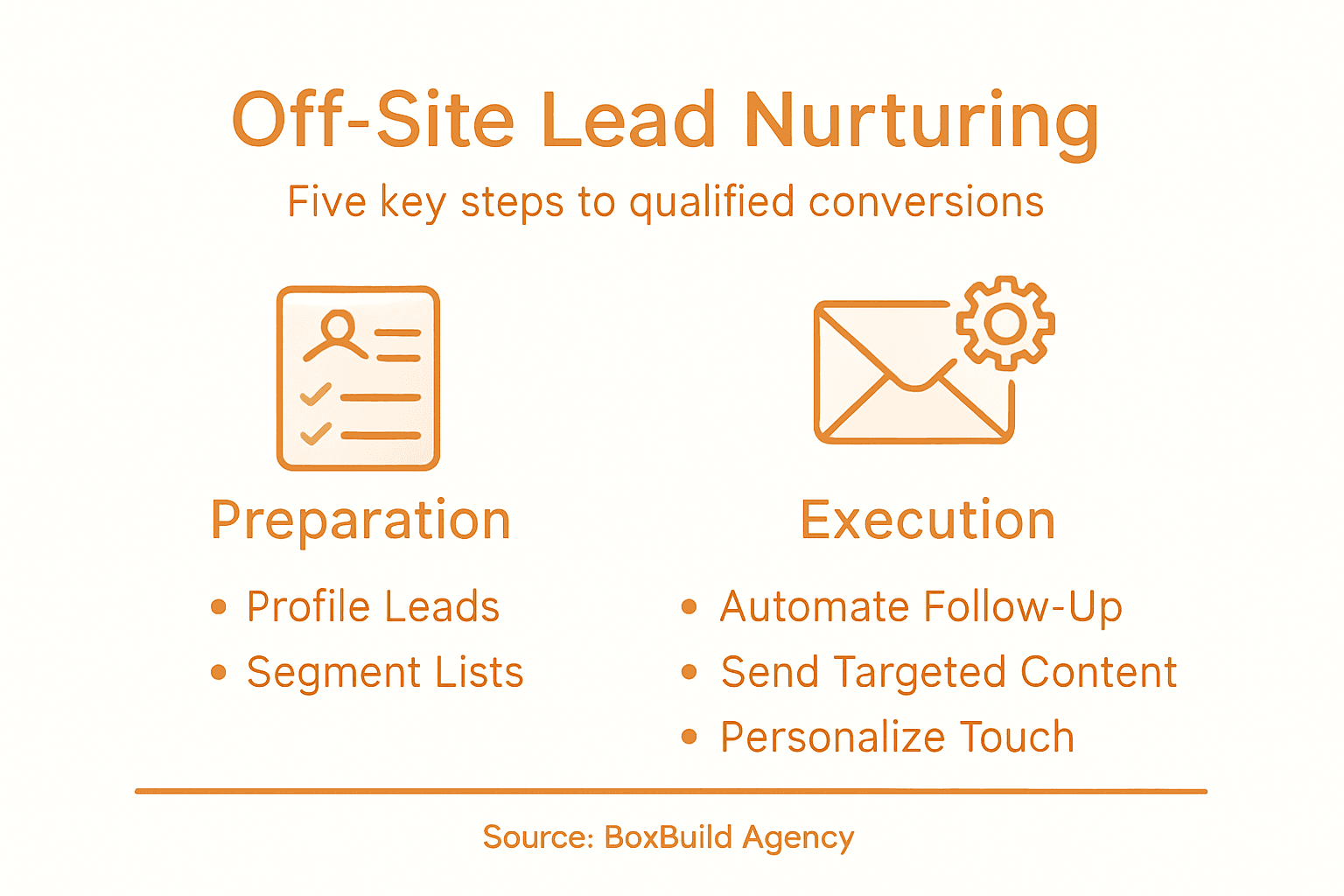
- Step 1: Define Ideal Lead Profiles And Segmentation
- Step 2: Set Up Automated Multi-Channel Follow-Up Systems
- Step 3: Deliver Targeted, Value-Driven Content Sequences
- Step 4: Personalize Engagement Using Behavioral Insights
- Step 5: Monitor Results And Refine Nurturing Strategies
Quick Summary
| Key Point | Explanation |
|---|---|
| 1. Define Ideal Customer Profiles | Establish clear customer profiles to focus lead nurturing efforts effectively. |
| 2. Segment Leads by Specifics | Use segmentation to tailor messages that address unique needs of different prospects. |
| 3. Automate Multi-Channel Follow-Ups | Implement automated systems that engage leads consistently across various channels. |
| 4. Deliver Value-Driven Content | Create valuable content sequences that educate rather than simply sell to prospects. |
| 5. Monitor and Refine Strategies | Continuously track performance metrics and adjust strategies for improved lead conversion. |
Step 1: Define ideal lead profiles and segmentation
Now that you’re ready to nurture leads effectively, your first move is to clearly define who you’re actually targeting. This means building an Ideal Customer Profile (ICP) and creating meaningful segments within your prospect list. Without this foundation, you’ll waste time chasing leads that’ll never convert into profitable projects, no matter how polished your follow-up is.
Start by gathering concrete data about your best customers. Look at the off-site construction projects you’ve already closed successfully. What was the revenue range of those companies? What geographic markets do they operate in? How many units were they building annually? Were they modular specialists, ADU manufacturers, container builders, or a mix? Talk directly with your sales team about which clients were easiest to work with, moved through your sales cycle fastest, and generated the most profit. This qualitative insight combined with your quantitative metrics creates a powerful foundation for your ICP. You’ll find that B2B ideal customer profiles typically include revenue thresholds, industry focus, geographic presence, and growth trajectory, all of which apply directly to the builder segment you serve.
Once you understand your ideal profile, segment your current and prospect lists accordingly. Not every lead fits the same mold. Some prospects might be early-stage startups with massive growth potential but limited current budget. Others could be established builders with immediate project needs and proven purchasing power. You might have regional builders versus those operating nationally. Using customer segmentation techniques based on recency, frequency, and monetary value, you can identify which prospects are your best customers, which are emerging opportunities, and which are worth re-engaging. This segmentation prevents you from sending the same generic nurturing sequence to a two-person startup that you’d send to a 500-person organization. The startup needs education and relationship building. The established builder needs specificity about project capacity and timeline. By creating these distinct segments, your messaging stays relevant, your team prioritizes high-value opportunities, and your conversion rates improve because you’re speaking each prospect’s language.
Pro tip: Create at least three distinct segments based on company size and project volume, then test your nurturing messaging against each group separately. You’ll quickly discover which segments respond to which approaches, allowing you to refine your ICP and double down on your most profitable buyer profiles.
Here’s how common lead segments differ in needs and engagement approach:
| Segment Type | Key Needs | Preferred Content |
|---|---|---|
| Startup Builders | Education, relationship building | Guides, explainer videos |
| Established Builders | Specifics, quick timelines | Case studies, ROI proofs |
| Regional Operators | Local relevance, resources | Local success stories |
| National Operators | Scalability, consistency | Benchmark reports |
Step 2: Set up automated multi-channel follow-up systems
You’ve identified your ideal leads and segmented them. Now comes the critical work of actually reaching them consistently without burning out your team. An automated multi-channel follow-up system ensures your prospects hear from you at the right time, through their preferred communication channel, with messaging that feels personal rather than robotic. This is where most builders fail. They either follow up sporadically and lose momentum, or they follow up so aggressively that prospects feel harassed. Automation solves both problems when set up correctly.
Start by choosing a platform that integrates email, SMS, and phone call tracking into one centralized hub. Your system needs to pull all lead data from your website forms, Google Ads, and any other sources into a single database so nothing falls through the cracks. When a lead comes in, the system should immediately trigger a response based on which segment they belong to and where they are in your sales cycle. An early-stage startup builder gets a different first message than an established regional operator. AI-powered multi-channel follow-up systems can score leads automatically, determining which ones need immediate attention versus those that need nurturing over time. Set your automation to send an initial email within two hours of form submission. Follow that with SMS after 24 hours if they haven’t opened your email. Add a phone call attempt by day three. The specifics vary by your business model, but the principle is consistent. Speed matters. Responsiveness signals professionalism to your prospects.
Within your automation sequences, create different tracks for different prospect types. A prospect with an immediate project timeline needs faster follow-up and more direct conversation starters. A prospect in early research mode needs educational content about your capabilities and experience. Implementing multi-channel lead follow-up strategies that trigger based on prospect behavior dramatically improves response rates. If someone opens your email but doesn’t click through, that’s a signal to try a different angle in your next message. If they visit your project portfolio page multiple times, that tells your system they’re seriously considering you. Design your sequences to respond to these signals automatically. This keeps your team from chasing the wrong leads while ensuring hot prospects get priority attention. Also consider what information your sales team actually needs to close deals. Does your system automatically log every interaction? Can your team see the full conversation history before picking up the phone? These operational details matter because they turn automation from a lead blaster into a genuine sales enablement tool.
Pro tip: Start with just email and SMS automation for your top three segments, test the sequences for 30 days, measure response rates and conversation starts, then expand to additional channels or segments once you’ve proven the system works. Most builders overengineer their automation from day one, which creates maintenance nightmares. Simple and proven beats complex and broken every time.
Step 3: Deliver targeted, value-driven content sequences
Automation sends your messages at the right time, but content quality determines whether prospects actually engage. This step is about crafting sequences that provide genuine value instead of just pushing your services. Your prospects are drowning in generic sales pitches. They need information that helps them solve problems, understand their options, and make informed decisions about off-site construction. When your content delivers that value, trust builds naturally and conversions follow.

Start by mapping out what information each prospect segment actually needs at each stage of their buying journey. A company researching modular construction for the first time needs educational content about prefab benefits, cost comparisons, and timeline advantages. They don’t need your pricing sheet yet. A company that has already visited your case studies multiple times needs different content, something that addresses their specific concerns like quality assurance or supply chain reliability. Value-driven content marketing strategies focus on understanding audience needs and crafting sequences that build trust over time. This means your first email might be a guide on “How Modular Construction Reduces Project Timeline by 40 Percent.” Your second could be a case study showing how a similar builder achieved that timeline. Your third might feature client testimonials. Your fourth could compare modular versus traditional construction. Each piece serves a purpose. Each one teaches something useful. Avoid selling in the first three to four touches. Instead, position yourself as the expert who understands their world and can guide them toward better decisions.
When creating these sequences, think about format variety. Some prospects learn best through written guides. Others prefer video walkthroughs of your modular process. Some want spreadsheets comparing costs. Content curation strategies that deliver targeted information in different formats resonate better with diverse audiences and keep your sequences from feeling repetitive. A 30-day nurture sequence might include three detailed guides, two video explainers, one interactive cost calculator showing their potential savings, and one webinar invitation. Your automation system should track which formats each prospect engages with most, then prioritize similar content in future touches. Also pay attention to your email subject lines and opening statements. These determine whether someone even opens your message. “Here’s what we charge” loses every time to “Why 60 percent of builders in your region switched to prefab last year.” The subject line represents your single chance to prove relevance. Use specific numbers, industry insights, and language that mirrors how your prospects actually talk about their challenges. Your content sequences are ultimately your sales team working while they sleep. Make every piece count.
Pro tip: Batch-create your content sequences one segment at a time rather than trying to build everything at once. Pick your highest-value segment, create a complete 30-day sequence for them, launch it, measure results for two weeks, then refine based on open rates and click-through rates before moving to the next segment. This approach prevents overwhelm and gives you real data to improve your sequences rather than guessing what might work.
Step 4: Personalize engagement using behavioral insights
You have content sequences ready and automation running. Now it’s time to make each prospect feel like you’re speaking directly to them, not broadcasting a generic message to thousands. Personalization based on what prospects actually do—not just who they are—transforms your nurturing from one-size-fits-all into genuinely relevant conversations. When a prospect visits your portfolio of ADU projects three times but never clicks on your modular construction guide, that tells you something. Act on it.
Start by tracking specific behaviors within your CRM and marketing automation platform. What pages does each prospect visit? How long do they spend there? Do they download resources? Which ones? Do they click through your email links? Which topics? Did they watch your video on cost comparisons but skip the timeline video? This data reveals what actually matters to each prospect. Behavioral-based nurturing tailors engagement based on individual actions like website visits and inquiry patterns, allowing you to increase relevance and responsiveness. A prospect who visits your container project gallery repeatedly but ignores your traditional modular content is telling you they’re interested in container solutions specifically. Your next email should feature container case studies, not generic modular content. A prospect who downloads your “Cost Comparison Guide” is clearly evaluating whether modular makes financial sense. Follow that download with a targeted message addressing ROI and budget considerations. This isn’t manipulation. This is paying attention and responding thoughtfully. Your prospect will feel understood rather than spammed.
Implement dynamic content blocks within your email sequences that change based on these behavioral signals. Your automation system can automatically swap out content sections based on what each individual has done. Prospect A sees content about timeline acceleration because they visited your timeline-focused pages. Prospect B sees content about quality control because they downloaded your quality standards document. Same email template. Completely different messaging. This approach scales personalization without requiring you to manually craft hundreds of email variations. Also set up behavioral triggers that override your regular schedule when prospects show high engagement signals. If someone downloads a proposal template, visits your pricing page, and requests a call within 48 hours, that’s a hot lead. Your automation should immediately notify your sales team and potentially inject a different nurture track focused on moving toward closing rather than continuing education. AI-driven platforms that provide personalized feedback enhance engagement by tailoring responses based on real-time analytics and interactions. Your CRM should never let a hot prospect languish in your standard nurture sequence just because the calendar says it’s not time for the next email yet. Train your team to recognize when behavioral data indicates someone is ready to move forward. Responsiveness matters more than following a predetermined schedule.
Pro tip: Audit your CRM data this week to identify your top five behavioral signals that correlate with actual sales opportunities. Is it downloading a specific resource? Visiting certain pages in a particular order? Spending time on your pricing area? Once you identify your strongest signals, set up automated alerts so your sales team gets notified immediately rather than waiting for the next nurture email to send. Speed kills in sales, and behavioral data gives you the edge.
Step 5: Monitor results and refine nurturing strategies
Your lead nurturing system is now live. Prospects are receiving personalized content through multiple channels, and your automation is running 24/7. But here’s what separates average builders from market leaders: they don’t set it and forget it. They measure everything, identify what’s working and what isn’t, then adjust continuously. This final step transforms your nurturing from a static process into a living, breathing system that improves month after month.
Start by identifying the metrics that actually matter for your business. Email open rates tell you if your subject lines are compelling. Click-through rates show whether your content is relevant. Lead-to-opportunity conversion rates reveal if your nurturing is actually moving people closer to sales. Cost per qualified opportunity helps you understand whether your nurturing investment is paying off. Track these metrics for each segment and each content sequence separately. You might discover that your ADU builder segment has a 28 percent open rate while your container builder segment only achieves 15 percent. That gap tells you something. Maybe your subject line strategy doesn’t resonate with container builders. Maybe the timing is off. Maybe they prefer different content formats. Continuous monitoring of strategies and performance metrics combined with iterative evaluation ensures your approaches remain effective and aligned with actual prospect needs. Pull your data monthly and spend 30 minutes analyzing patterns. Which emails generated the most conversations? Which content pieces drove the most qualified opportunities? Where do prospects drop off in your sequences? Are they unsubscribing after email two? That’s a signal that your content isn’t landing. Don’t ignore it. Change it.
Once you understand your baseline metrics, start testing variations systematically. Change one element at a time so you know what actually moved the needle. Test subject line A versus subject line B for the same email, keeping everything else identical. Run that test for two weeks, then implement the winner. Next month, test send time. Keep testing. Each small improvement compounds into massive gains over a year. If you increase your email open rate from 22 percent to 26 percent through better subject lines, that’s an 18 percent improvement in audience reach. If your click-through rate improves from 3 percent to 4 percent through clearer calls to action, that’s 33 percent more prospects engaging with your content. Ongoing assessment of progress using qualitative and quantitative data allows you to refine strategies continuously and ensure your efforts remain relevant and supportive. After three months of tracking, you’ll have enough data to make confident decisions about which sequences, content formats, and timing strategies work best for each segment. Use that knowledge to create an updated version of your nurturing system. Rebuild it better. Run it for another quarter. Measure again. This isn’t a one-time project. It’s an ongoing commitment to getting better at converting leads into customers. Your competitors who stopped after launching their automation are losing ground while you’re continuously optimizing.
Pro tip: Create a simple monthly dashboard showing your five key metrics tracked by segment and compare month-over-month changes. Share this dashboard with your sales team so they see how nurturing improvements translate to more qualified opportunities. When your team understands the connection between nurturing metrics and actual pipeline growth, they become advocates for continuous refinement rather than critics of the system.
A monthly dashboard can guide ongoing improvements. Compare these key metrics by segment:
| Metric | What It Measures | Optimization Focus |
|---|---|---|
| Email Open Rate | Subject line effectiveness | Test wording and timing |
| Click-Through Rate | Content engagement | Improve relevance |
| Lead-to-Opportunity % | Nurture process efficiency | Refine segmentation |
| Cost per Opportunity | Campaign ROI | Streamline automation |
| Unsubscribe Rate | Content or timing issues | Adjust topics and pacing |
Unlock Powerful Lead Nurturing with Strategic Digital Funnels
Effective off-site lead nurturing demands precise segmentation, multi-channel automation, and personalized engagement to convert high-value prospects. If you struggle with disjointed follow-up or generic messaging that fails to connect, you are not alone. This article highlights how understanding behavioral insights and continuously refining your strategies can turn casual leads into loyal customers — and that is exactly where BoxBuild Agency can help.
We specialize in crafting tailored funnels that integrate automation and data-driven content designed specifically for modular, prefab, and container builders. Combining deep industry expertise with cutting-edge AI tools and targeted Google Ads, our approach maximizes your qualified lead flow while nurturing each prospect with relevant, timely messages that build trust and accelerate sales.
Don’t let another lead slip away due to slow or generic follow-up. Partner with BoxBuild Agency at https://www.boxbuild.agency/ and transform your off-site construction lead nurturing into a streamlined system that works 24/7 to grow your pipeline. Act now to position yourself as a market leader and start closing more high-value projects today.
Frequently Asked Questions
What is an Ideal Customer Profile (ICP) and why is it important for lead nurturing?
An Ideal Customer Profile (ICP) is a detailed description of the type of customer that would benefit most from your services. It helps you focus your lead nurturing efforts on those who are most likely to convert, ensuring your resources are spent effectively. To create an ICP, analyze your best existing customers and gather data on their characteristics and needs.
How should I segment my leads for better nurturing results?
Segmenting your leads involves grouping them based on factors like company size, project volume, and their stage in the buying process. By doing this, you can tailor your communication to meet the specific needs of each group, which improves engagement and conversion rates. Start by establishing at least three distinct segments based on key criteria for your business.
What type of follow-up system should I implement for nurturing leads?
Implement an automated multi-channel follow-up system that includes email, SMS, and phone call tracking. This ensures that you maintain consistent and personalized communication with your leads without overwhelming your team. Set up triggers to respond to different segments promptly, enhancing the chances of conversion within the first three days after initial contact.
How can I create targeted content sequences for my prospects?
To create targeted content sequences, map out the specific information needs of each lead segment along their buying journey. Develop content that educates them about solutions relevant to their situation, such as case studies or guides, rather than pushing for a sale. Focus on providing value in the first few interactions, which can help establish trust and credibility.
What behaviors should I track to personalize my engagement with leads?
Track behaviors such as page visits, content downloads, and email interactions to tailor your communications effectively. For example, if a prospect frequently visits your project portfolio, focus your next communications on relevant case studies or specific project insights. Set up alerts for behaviors that signify readiness to engage, ensuring timely follow-up.
How often should I monitor and refine my lead nurturing strategies?
You should monitor and refine your lead nurturing strategies at least monthly to measure performance metrics like open rates and conversion rates. This ongoing evaluation helps identify which elements work and which need improvement. Implement changes based on the data collected to optimize your approach continually, aiming for measurable improvements each month.