Over sixty percent of European construction firms say off-site methods now outperform traditional building in speed and quality. As American and European demand pushes sustainability targets higher each year, project managers face new pressure to adopt efficient modular and prefabricated solutions. This article unpacks the latest advances, digital integration strategies, and regulatory shifts shaping off-site construction for 2025, giving you practical tools to stay ahead in a rapidly changing industry.
Table of Contents
- Defining Off-Site Construction In 2025
- Major Types: Modular, Panelized, Hybrid
- Sustainability Innovations And Efficiency Gains
- Digital Technology And Automation Integration
- Regulatory Changes Shaping Adoption
- Risks, Costs, And Common Mistakes
Key Takeaways
| Point | Details |
|---|---|
| Off-Site Construction Definition | Off-site construction entails manufacturing building components in factory settings, which enhances precision, efficiency, and quality control. |
| Construction Methodologies | The primary methods—modular, panelized, and hybrid—allow for tailored solutions across different project requirements, emphasizing flexibility and speed. |
| Sustainability Focus | Innovations in off-site construction promote sustainability by reducing waste and energy consumption while improving operational performance. |
| Digital Integration | The incorporation of digital technologies such as BIM and IoT enhances project management, efficiency, and tracking capabilities in construction workflows. |
Defining Off-Site Construction in 2025
Off-site construction represents an advanced manufacturing approach transforming traditional building methodologies by strategically producing structural components in controlled factory environments before final onsite assembly. This innovative construction strategy enables unprecedented levels of precision, efficiency, and quality control across architectural projects.
According to European Commission research, off-site construction in 2025 is characterized by a specialized subset of industrialized construction where building elements are manufactured in highly regulated factory settings before being transported and assembled onsite. The methodology fundamentally aims to streamline construction processes, dramatically improve quality standards, reduce material waste, and effectively address persistent labor shortages within the building sector.
Key characteristics of off-site construction include:
- Prefabrication of standardized building components
- Controlled manufacturing environments
- Reduced onsite construction timelines
- Enhanced quality consistency
- Significant waste reduction
- Minimized environmental disruption
Scientific research indicates that while off-site construction offers substantial advantages, knowledge management limitations have historically hindered full implementation of its potential benefits. Successful adoption requires robust organizational frameworks and technological integration to maximize efficiency and effectiveness across construction projects.
Pro tip: When implementing off-site construction strategies, invest in comprehensive staff training programs focused on prefabrication techniques and advanced manufacturing technologies to bridge existing skills gaps and optimize project outcomes.
Major Types: Modular, Panelized, Hybrid
Off-site construction encompasses three primary methodological approaches that enable advanced building techniques: modular, panelized, and hybrid systems. Each method offers unique advantages for construction projects, allowing architects and builders to select the most appropriate strategy based on specific project requirements and constraints.
According to industry research, off-site construction primarily utilizes modular, panelized, and hybrid systems to optimize building processes. Modular construction involves creating complete three-dimensional units in factory settings, which are then transported and assembled onsite, enabling faster project timelines and ensuring consistent quality standards.
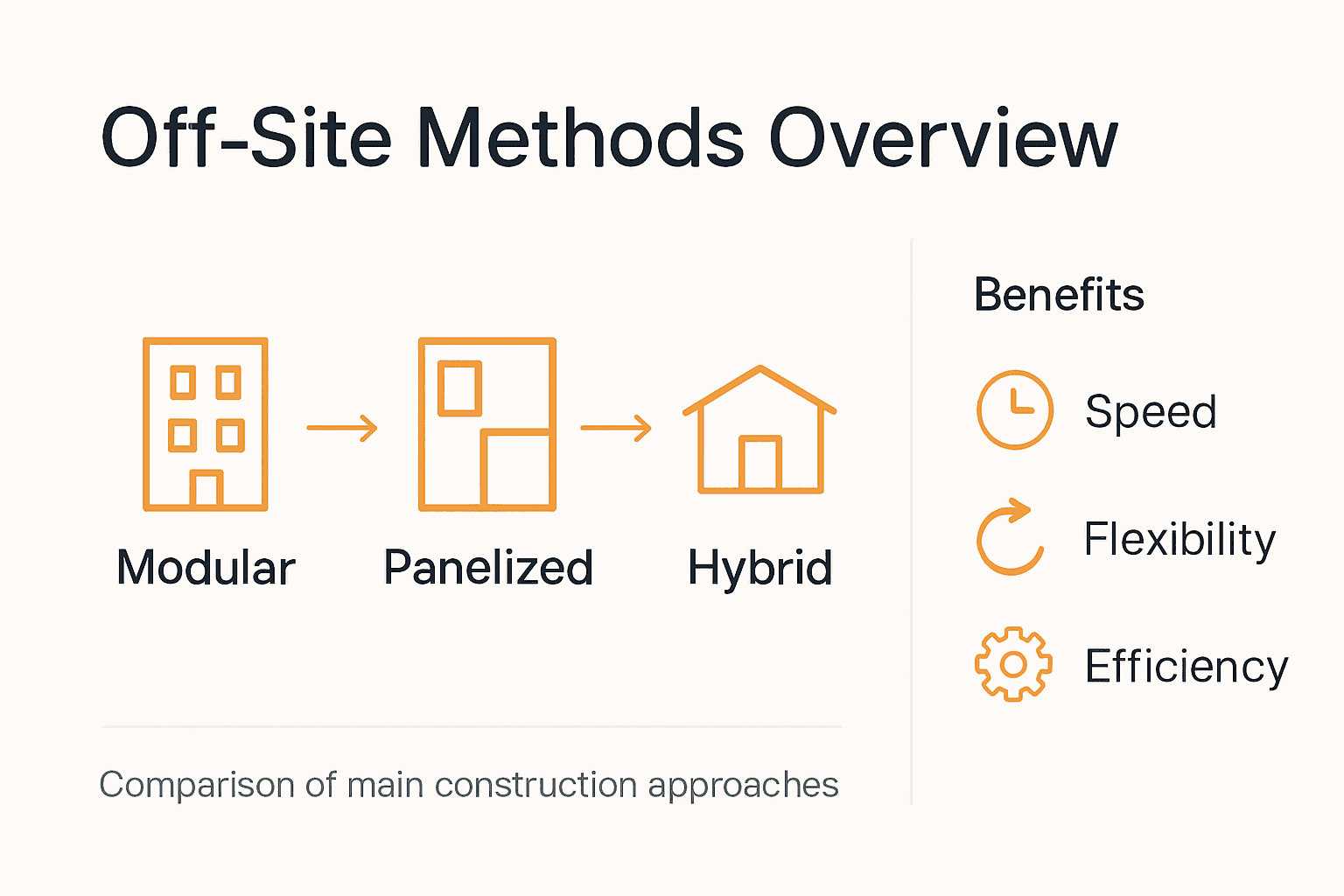
Key characteristics of each construction type include:
Modular Construction:
- Full volumetric units built offsite
- Complete 3D structures manufactured in controlled environments
- Rapid assembly and installation
- High precision and quality control
Panelized Construction:
- Prefabricated flat panels produced in factories
- Flexible design options
- Easier transportation compared to full modules
- Faster onsite assembly
Hybrid Construction:
- Combination of modular and panelized components
- Maximizes design flexibility
- Optimizes cost-efficiency
- Adapts to complex architectural requirements
Hybrid systems represent the most adaptable approach, blending modular and panelized techniques to address intricate project specifications. By integrating different prefabrication methods, construction teams can develop innovative solutions that balance cost-effectiveness, design complexity, and construction speed.
Here’s a clear comparison of the three main off-site construction methods to help you choose the right approach:
| Method | Best Suited For | Project Speed | Flexibility |
|---|---|---|---|
| Modular | Repetitive building layouts | Fastest assembly | Limited customization |
| Panelized | Custom architectural designs | Moderate speed | High design variation |
| Hybrid | Complex, bespoke projects | Variable (by mix) | Maximum adaptability |
Pro tip: When selecting an off-site construction approach, carefully evaluate your project’s specific requirements, budget constraints, and design complexity to determine the most suitable construction method.
Sustainability Innovations and Efficiency Gains
Sustainability has become a critical driving force in modern off-site construction, transforming traditional building methodologies through innovative technological and process-driven approaches. The construction industry is experiencing a paradigm shift towards more environmentally conscious and resource-efficient building strategies that minimize ecological impact while maximizing operational performance.
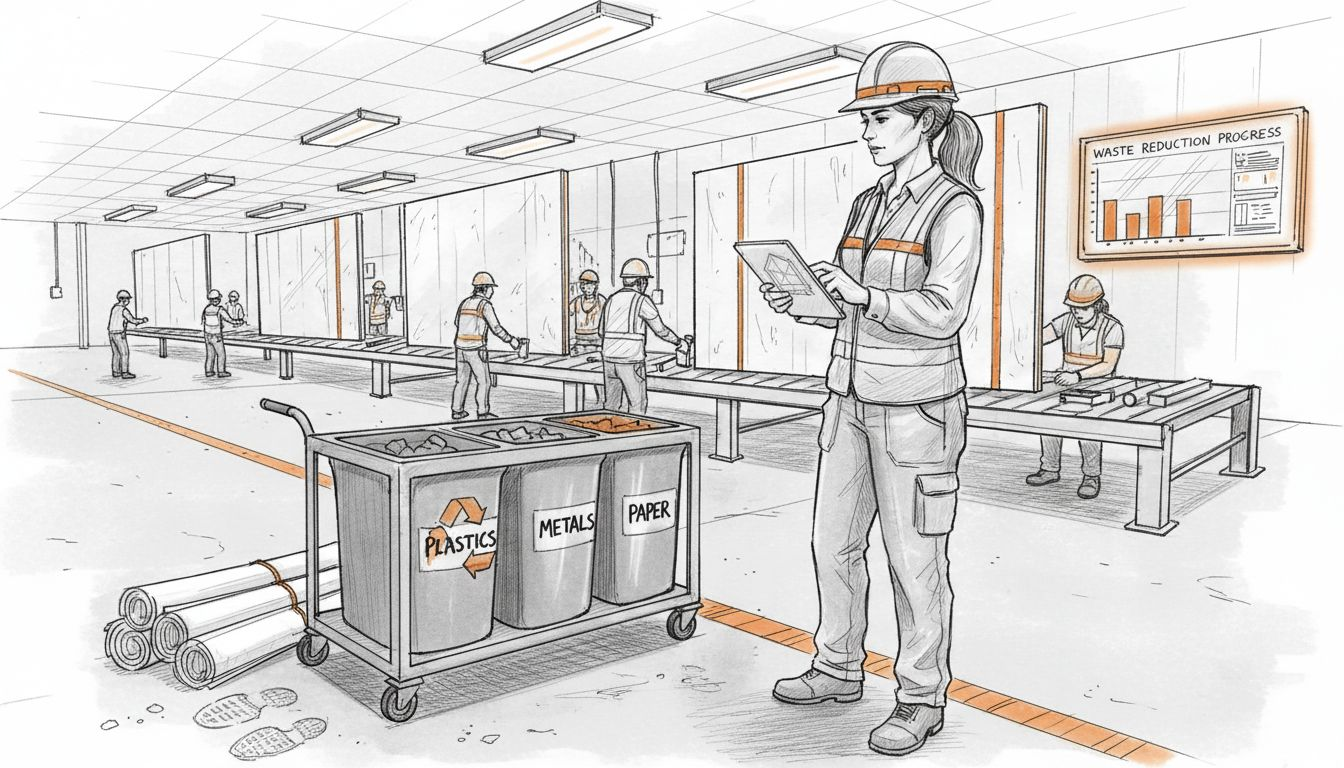
Research indicates that off-site construction is advancing sustainability through strategic innovations in material usage, energy consumption, and environmental tracking. Carbon tracking technologies like Building Information Modeling (BIM) and Environmental Product Declarations now enable precise measurement and optimization of construction’s environmental footprint.
Key sustainability innovations in off-site construction include:
Environmental Impact Reduction:
- Significantly reduced material waste generation
- Lower energy consumption during manufacturing
- Enhanced building designs supporting disassembly and reuse
- Minimized onsite construction emissions
Efficiency Optimization Strategies:
- Integration of lean manufacturing principles
- Supply chain streamlining
- Renewable material incorporation
- Accelerated project delivery timelines
The convergence of technological advancements and sustainability principles is reshaping construction methodologies. By leveraging precise digital tools, manufacturers can now create more intelligent, resource-efficient building solutions that meet stringent environmental standards while maintaining exceptional quality and performance.
Pro tip: Invest in comprehensive carbon tracking and BIM technologies to gain granular insights into your construction project’s environmental performance and identify optimization opportunities.
Digital Technology and Automation Integration
Digital technologies are revolutionizing off-site construction, creating unprecedented opportunities for precision, efficiency, and innovation across manufacturing and assembly processes. The integration of advanced technological solutions is transforming traditional construction methodologies, enabling more intelligent, responsive, and data-driven project management strategies.
Digital technologies such as Building Information Modeling (BIM), Internet of Things (IoT), and advanced automation systems are now deeply embedded in offsite construction workflows. These technological innovations provide real-time tracking capabilities, enable precision manufacturing, and dramatically improve assembly coordination across complex construction projects.
Key digital technology integration strategies include:
Advanced Monitoring Technologies:
- Real-time project tracking systems
- IoT sensor integration
- Automated quality control mechanisms
- Digital twin simulation technologies
Automation Implementation Approaches:
- Robotic manufacturing processes
- AI-driven design optimization
- Predictive maintenance algorithms
- Integrated supply chain management platforms
The convergence of digital technologies creates a comprehensive ecosystem where automation, data analytics, and intelligent design tools work synergistically. By leveraging these advanced technologies, construction teams can significantly reduce errors, optimize resource allocation, and accelerate project timelines with unprecedented precision and efficiency.
Below is a quick-reference table summarizing key digital technology tools and how they enhance off-site construction:
| Tool/Technology | Primary Function | Business Impact |
|---|---|---|
| BIM (Building Info Modeling) | Project visualization & data | Fewer mistakes; better planning |
| IoT Sensors | Real-time monitoring | Improved efficiency and safety |
| Robotic Automation | Component manufacturing | Consistent quality; reduced labor |
| Digital Twin Simulation | Virtual project testing | Faster problem solving |
Pro tip: Develop a phased digital transformation strategy that progressively integrates automation technologies, focusing first on high-impact areas with measurable performance metrics.
Regulatory Changes Shaping Adoption
Regulatory frameworks are undergoing transformative changes globally, creating a supportive environment for off-site construction technologies and methodologies. These evolving legal landscapes are designed to reduce bureaucratic barriers, promote innovation, and accelerate the widespread adoption of industrialized construction approaches.
Governments worldwide are instituting strategic policy updates that facilitate broader implementation of off-site construction methods. The emerging regulatory environment focuses on updating procurement guidelines, establishing comprehensive certification standards for prefabricated components, and creating economic incentives that encourage sustainable building practices.
Key regulatory transformation areas include:
Policy Innovation Strategies:
- Streamlined approval processes
- Updated building code specifications
- Certification standards for modular systems
- Economic incentives for sustainable construction
Regulatory Support Mechanisms:
- Procurement guideline modifications
- Lifecycle assessment frameworks
- Subsidies for innovative construction technologies
- Safety and quality compliance standards
National approaches like the United Kingdom’s Modern Methods of Construction (MMC) framework and Singapore’s Prefabricated Integrated Plant (PIP) are setting global benchmarks. These initiatives demonstrate how targeted regulatory interventions can drive market transformation, addressing critical infrastructure and housing challenges through systematic policy support.
Pro tip: Proactively engage with local regulatory bodies and stay informed about emerging policy frameworks to position your construction projects at the forefront of technological and sustainable innovations.
Risks, Costs, and Common Mistakes
Risk management represents a critical challenge in off-site construction, requiring strategic planning and comprehensive understanding of potential operational and financial complexities. Project managers must navigate an intricate landscape of technological, logistical, and financial considerations to ensure successful implementation.
Off-site construction projects face significant risks including supply chain volatility, logistical complexities, and substantial initial technology investment costs. Understanding these potential pitfalls is essential for developing robust mitigation strategies and maintaining project financial viability.
Key risk categories and potential challenges include:
Financial Risks:
- High initial capital expenditure
- Unpredictable technology integration costs
- Extended return on investment timelines
- Complex financing structures
Operational Risks:
- Supply chain disruption potential
- Transportation and logistics complications
- Design compatibility challenges
- Quality control management
Common mistakes in off-site construction often stem from insufficient planning, inadequate stakeholder communication, and underestimating the complexity of modular system integration. Successful projects require meticulous attention to design constraints, collaborative approaches, and comprehensive understanding of technological limitations and opportunities.
Pro tip: Conduct thorough risk assessments early in project planning, developing detailed contingency strategies and maintaining flexible implementation frameworks to mitigate potential operational and financial uncertainties.
Accelerate Your Off-Site Construction Growth with Digital Precision
The rise of off-site construction in 2025 demands more than innovative manufacturing methods. It requires a sharp digital strategy that tackles challenges like complex project workflows, lead generation, and market positioning. If you seek to overcome operational risks and fully leverage modular or hybrid construction advantages, strategic digital marketing becomes your strongest asset. At BoxBuild Agency, we understand the importance of advanced solutions like automation in marketing and data-driven funnel optimization to help you reach decision makers faster and close high-value projects efficiently.
Unlock your project potential today by exploring Funnels – BoxBuild for optimized client journeys and harness the power of automated targeting with Google Ads – BoxBuild. Discover how intelligent marketing backed by our industry expertise empowers your off-site construction business to stand out. Start transforming your lead generation and project efficiency now at https://www.boxbuild.agency/. Don’t wait let digital innovation drive your growth.
Frequently Asked Questions
What is off-site construction?
Off-site construction is a manufacturing approach where structural components are produced in controlled factory environments before being transported and assembled onsite, enhancing efficiency and quality.
What are the key characteristics of off-site construction methods?
Key characteristics include prefabrication of standardized components, reduced onsite construction timelines, enhanced quality control, significant waste reduction, and minimized environmental disruption.
How do modular, panelized, and hybrid construction methods differ?
Modular construction involves complete 3D units built offsite, panelized construction consists of prefabricated flat panels, and hybrid construction combines both methods for maximum flexibility and adaptability in design and cost efficiency.
What role does sustainability play in off-site construction?
Sustainability is integral to off-site construction, focusing on reducing material waste, lowering energy consumption, and using advanced technologies to optimize environmental performance and enhance overall efficiency.