Every developer knows the challenge of sifting through countless project inquiries and turning them into real, qualified opportunities. For modular builders and container home specialists, mastering efficient lead nurturing is the key to converting interest into signed contracts. A thoughtful workflow—anchored in systematic segmentation, timely automation, and responsive communication—transforms chaotic lead lists into organized sales pipelines. Systematic lead segmentation provides the foundation for delivering personalized engagement that drives higher conversion rates and accelerates project wins.
Table of Contents
- Step 1: Identify and Segment Incoming Leads
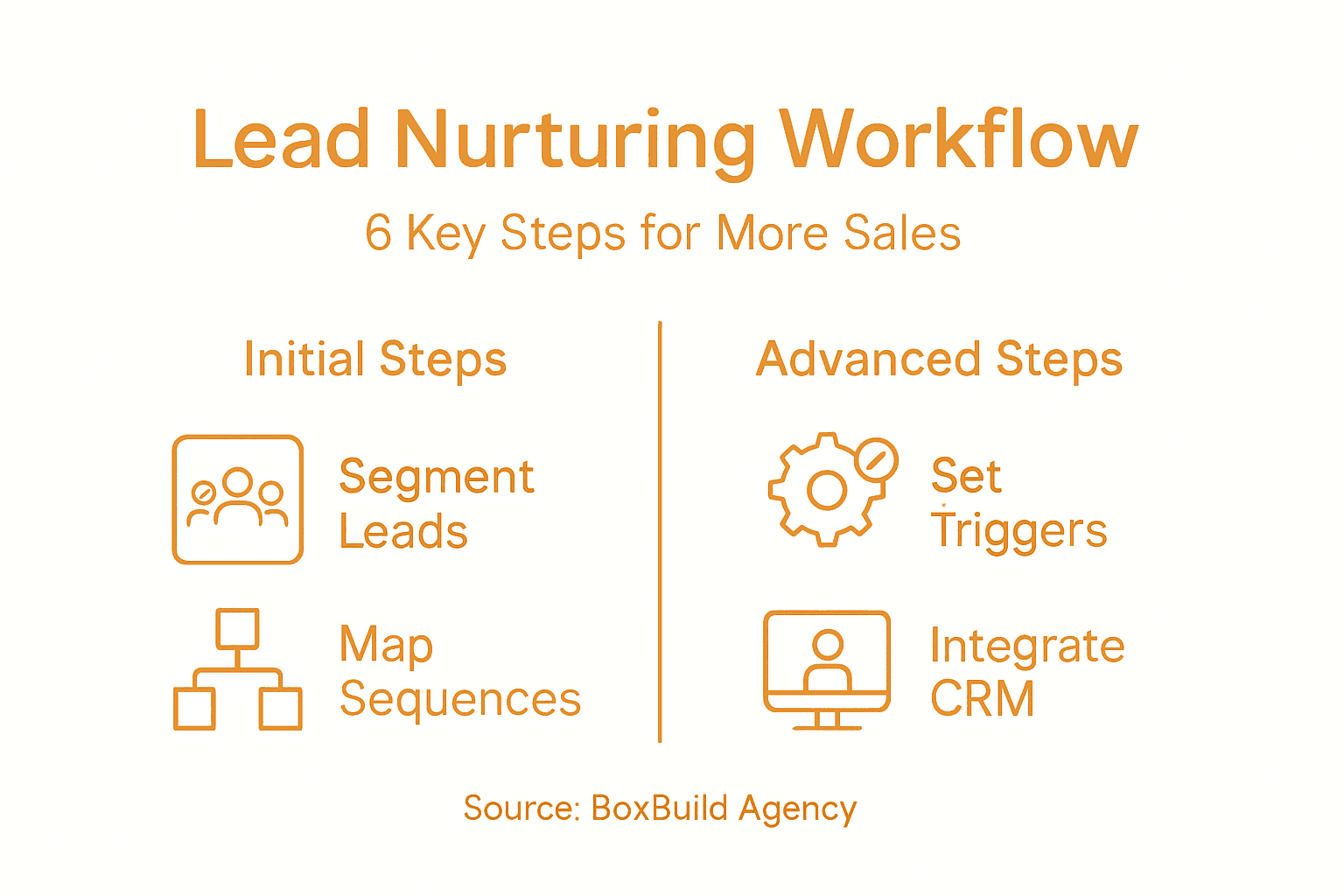
- Step 2: Design and Map Lead Nurturing Sequences
- Step 3: Configure Automation Triggers and Touchpoints
- Step 4: Integrate Workflow With Your CRM Tools
- Step 5: Test Workflow Functionality End-to-End
- Step 6: Monitor Performance and Optimize Results
Quick Summary
| Key Takeaway | Explanation |
|---|---|
| 1. Implement Advanced Segmentation | Utilize behavioral, demographic, and intent signals to categorize leads effectively for better targeting. |
| 2. Design Personalized Nurturing Workflows | Create systematic communication paths that guide leads through their decision-making journey tailored to their readiness. |
| 3. Incorporate Dynamic Automation | Use intelligent triggers and automated touchpoints to respond to lead behaviors and enhance engagement. |
| 4. Seamlessly Integrate with CRM | Ensure your workflow is synchronized with your CRM for consistent data and communication across platforms. |
| 5. Continuously Monitor and Optimize | Regularly assess performance metrics to refine messaging and improve lead conversion strategies over time. |
Step 1: Identify and Segment Incoming Leads
Building an effective lead nurturing workflow starts with understanding and categorizing your potential customers with precision. The goal is to transform random inquiries into strategic opportunities by systematically segmenting leads based on their specific characteristics and behaviors.
To achieve this, you’ll want to develop a robust lead segmentation strategy that goes beyond basic demographics. Advanced segmentation frameworks help resolve the initial data challenge by categorizing leads across multiple dimensions:
-
Behavioral Indicators
- Website interaction patterns
- Content download history
- Engagement frequency
- Specific page visits related to modular building
-
Demographic Attributes
- Geographic location
- Property type interest
- Budget range
- Project timeline
-
Intent Signals
- Specific questions asked
- Request for detailed information
- Attendance at webinars or virtual tours
- Level of project complexity
By implementing a multi-dimensional segmentation approach, you create a nuanced understanding of each lead’s potential and readiness. This enables more targeted, personalized communication strategies that dramatically improve conversion rates.
Here is a summary of advanced lead segmentation dimensions and their strategic business impact:
| Segmentation Dimension | What It Reveals | Business Impact |
|---|---|---|
| Behavioral Indicators | Engagement and interests | Improves targeting and conversion chances |
| Demographic Attributes | Background and context | Enables tailored communication and offers |
| Intent Signals | Readiness to purchase | Prioritizes high-value, sales-ready leads |
Effective lead segmentation transforms generic marketing into precision-targeted communication.
The key is building a flexible system that allows dynamic reassessment as leads progress through your sales pipeline. Continuous refinement ensures your nurturing workflow remains responsive and adaptive.
Pro tip: Invest in a customer relationship management (CRM) system that supports complex, multi-attribute lead scoring and automatic segmentation.

Step 2: Design and Map Lead Nurturing Sequences
Creating an effective lead nurturing workflow requires strategic design that transforms potential customers into committed project partners. Your goal is to develop a systematic communication approach that guides leads through their decision-making journey with precision and personalization.
Scalable B2B lead nurturing sequences involve multiple critical components that work together to engage and convert leads:
-
Segmentation Strategy
- Categorize leads by project type
- Define readiness levels
- Map specific communication paths
- Customize messaging intensity
-
Content Mapping Stages
- Awareness phase materials
- Consideration phase resources
- Decision phase detailed proposals
- Post-conversion follow-up content
-
Communication Touchpoints
- Email sequences
- Targeted website content
- Personalized retargeting ads
- Webinar invitations
- Direct outreach communications
Successful lead nurturing demands a dynamic and responsive framework that adapts to individual lead behaviors and signals. By creating multiple pathways and triggers, you ensure that each potential customer receives relevant, timely, and compelling information.
Effective lead nurturing transforms cold contacts into warm, interested prospects ready for meaningful engagement.
The key is building flexibility into your sequence, allowing leads to progress at their own pace while maintaining consistent, value-driven communication. Track engagement metrics closely and be prepared to adjust your approach based on real-world performance.
Pro tip: Implement automated workflow tools that enable real-time lead behavior tracking and instant sequence adjustments.
The following table compares traditional lead nurturing workflows with modern automated workflows:
| Workflow Type | Scalability | Personalization Level | Adaptability |
|---|---|---|---|
| Traditional Manual | Limited | Generic messages | Slow to change |
| Modern Automated | Highly scalable | Dynamic and personal | Quickly responsive |
Step 3: Configure Automation Triggers and Touchpoints
Transforming your lead nurturing workflow into a precision instrument requires strategic automation that responds intelligently to each prospect’s unique journey. Your objective is to create a dynamic communication ecosystem that anticipates and addresses potential customer needs before they even articulate them.
Lead nurturing workflows enable you to design intelligent automation sequences that adapt to individual lead behaviors:
-
Behavioral Trigger Categories
- Website page visits
- Form submission events
- Content download interactions
- Email engagement metrics
- Specific project interest signals
-
Automation Touchpoint Types
- Personalized email sequences
- Targeted content recommendations
- Automated task assignments
- Dynamic property updates
- Retargeting ad triggers
-
Engagement Tracking Mechanisms
- Time-based progression rules
- Interaction scoring systems
- Segmentation refinement protocols
- Multi-channel response tracking
Successful automation requires a nuanced understanding of lead progression. By implementing sophisticated trigger mechanisms, you create a responsive system that delivers the right message to the right lead at the perfect moment.
Intelligent automation transforms generic marketing into personalized, contextually relevant conversations.
The most effective workflows maintain a delicate balance between automated efficiency and human-like responsiveness. Continuously monitor and refine your triggers to ensure they remain adaptive and genuinely helpful throughout the customer journey.
Pro tip: Configure redundant tracking mechanisms that capture micro-interactions and subtle engagement signals to enhance your automation precision.
Step 4: Integrate Workflow With Your CRM Tools
Bringing your lead nurturing workflow into harmony with your customer relationship management system transforms disconnected data into a powerful strategic asset. Your mission is to create a seamless communication infrastructure that synchronizes every interaction across your marketing and sales platforms.
CRM integration strategies provide a comprehensive approach to connecting your workflow with critical business intelligence:
-
Data Synchronization Requirements
- Standardize contact information
- Map field attributes precisely
- Eliminate duplicate entries
- Validate data integrity
- Establish consistent naming conventions
-
Integration Mapping Protocols
- Lead source tracking
- Behavior-based scoring
- Interaction history logging
- Automated follow-up triggers
- Real-time status updates
-
Performance Monitoring Mechanisms
- Conversion rate tracking
- Engagement metric analysis
- Workflow optimization indicators
- Cross-platform reporting
- Continuous improvement protocols
Successful CRM integration requires a holistic approach to data management. By creating intelligent connections between your nurturing workflows and customer management systems, you build a responsive ecosystem that adapts to each lead’s unique journey.
Sophisticated CRM integration transforms raw data into strategic relationship-building opportunities.
The most effective integrations blur the lines between marketing automation and sales intelligence. Focus on creating a fluid, dynamic system that provides real-time insights and enables immediate, personalized responses to lead interactions.
Pro tip: Conduct monthly audits of your CRM integration to ensure data accuracy and refine your automation triggers based on emerging performance trends.
Step 5: Test Workflow Functionality End-to-End
Testing your lead nurturing workflow demands a meticulous, systematic approach that simulates real-world scenarios and validates every potential interaction path. Your mission is to create a comprehensive testing strategy that identifies and eliminates potential performance bottlenecks before they impact actual lead conversions.
Lead nurturing automation testing requires a multi-dimensional verification process that examines each workflow component:
-
Trigger Validation Protocols
- Simulate multiple lead entry points
- Verify enrollment conditions
- Test branch logic accuracy
- Confirm conditional pathways
- Validate decision tree complexity
-
Performance Verification Stages
- Email personalization checks
- Scoring mechanism accuracy
- Data synchronization integrity
- Timing and delay configurations
- Cross-platform interaction validation
-
Error Detection Strategies
- Intentional workflow interruptions
- Edge case scenario testing
- Stress test automation sequences
- Data integrity verification
- Unexpected input handling
Successful testing requires a comprehensive and methodical approach to uncovering potential workflow limitations. By creating multiple test scenarios that challenge your automation’s resilience, you build a robust system capable of handling complex lead interactions.
Rigorous testing transforms potential workflow weaknesses into opportunities for optimization.
The most effective testing strategies simulate unpredictable lead behaviors and capture nuanced interaction patterns. Your goal is to create a workflow that remains flexible, responsive, and consistently reliable across diverse scenarios.
Pro tip: Develop a dedicated test environment that mirrors your production system, allowing unlimited experimentation without risking live lead data.
Step 6: Monitor Performance and Optimize Results
Transforming your lead nurturing workflow from a static process to a dynamic, intelligent system requires continuous performance monitoring and strategic optimization. Your mission is to develop a data-driven approach that transforms raw metrics into actionable insights that consistently improve lead conversion rates.
Automated lead workflow analysis demands a comprehensive strategy for tracking and enhancing performance:
-
Key Performance Indicators
- Conversion rate tracking
- Lead engagement scoring
- Multi-touch attribution
- Content interaction metrics
- Pipeline velocity analysis
-
Optimization Focus Areas
- Message timing refinement
- Content personalization
- Trigger logic improvements
- Segmentation precision
- Communication channel effectiveness
-
Continuous Improvement Mechanisms
- A/B testing protocols
- Performance benchmark comparisons
- Predictive analytics integration
- Real-time metric dashboards
- Automated optimization suggestions
Successful performance monitoring requires a holistic and adaptive approach that goes beyond surface-level metrics. By implementing sophisticated tracking mechanisms, you create a self-improving system that learns and evolves with each interaction.
Performance optimization transforms data points into strategic competitive advantages.
The most effective monitoring strategies blend quantitative measurements with qualitative insights. Your goal is to create a workflow that not only tracks performance but actively suggests and implements improvements across your lead nurturing ecosystem.
Pro tip: Establish a quarterly review process that combines automated insights with manual strategic assessment to ensure comprehensive performance optimization.
Unlock Higher Sales with a Tailored Lead Nurturing Workflow for Modular Builders
If you are struggling to convert leads into high-value projects, the key challenge is crafting a precise lead nurturing workflow that understands your prospects’ behaviors and intent. This article highlights the importance of advanced segmentation, dynamic automation triggers, and seamless CRM integration to transform generic leads into loyal customers. Without these critical elements, you risk sending generic messages that fail to engage or convert potential clients in the competitive prefab construction market.
At BoxBuild Agency, we specialize in building exactly those workflows through powerful Funnels – BoxBuild strategies combined with intelligent AI – BoxBuild automation.
Take control of your lead conversion today by partnering with us. Our proven, data-driven marketing approach equips your modular or prefab business with tailored lead nurturing sequences designed to generate qualified leads and close more deals. Don’t let valuable prospects slip away. Visit BoxBuild Agency now to start turning your inquiries into profitable projects.
Frequently Asked Questions
How can I identify different types of leads for my nurturing workflow?
To identify different types of leads, develop a lead segmentation strategy that categorizes them based on behavioral indicators, demographic attributes, and intent signals. Focus on tracking their website interactions and specific inquiries to tailor your communication for improved engagement.
What steps are involved in designing an effective lead nurturing sequence?
Designing an effective lead nurturing sequence involves categorizing leads by project type, defining their readiness levels, and mapping specific communication paths. Start by creating targeted content for each stage of the buyer’s journey to guide leads from awareness to decision-making.
What automation triggers should I configure in my lead nurturing workflow?
Configure triggers based on behavioral categories like website page visits, form submissions, and content downloads. Ensure that each trigger delivers timely, relevant communications that keep potential customers engaged throughout their purchasing journey.
How do I integrate my lead nurturing workflow with CRM tools?
To integrate your lead nurturing workflow with your CRM, standardize data formats and ensure seamless synchronization of contact information. Set up automated follow-up triggers and track lead interactions to enhance your overall communication strategy.
What performance metrics should I monitor for optimizing my lead nurturing workflow?
Monitor key performance indicators such as conversion rates, lead engagement scores, and content interaction metrics. Regularly analyze these metrics to refine your messaging and optimize your workflow, aiming for improvements of at least 20% in engagement over time.
How can I test the functionality of my lead nurturing workflow?
To test your lead nurturing workflow, simulate various lead entry points and verify all trigger conditions and decision paths. Conduct thorough performance verification to identify any bottlenecks before deploying the workflow to ensure a smooth experience for your potential customers.