Over half of American homeowners are considering ways to add value or create extra income from their properties, driving massive interest in accessory dwelling units. With so many families exploring these innovative spaces, understanding how ADU developers attract and qualify new clients is more relevant than ever. This guide unpacks the essentials of lead generation for American builders, spotlighting proven methods that help turn homeowner curiosity into completed projects.
Table of Contents
- Defining Lead Generation for ADU Developers
- Types of ADU Leads and Qualification Stages
- How Lead Generation Works for Off-Site Builders
- Key Channels for ADU Lead Acquisition
- Compliance, Legalities, and Common Pitfalls
Key Takeaways
| Point | Details |
|---|---|
| Effective Lead Generation | ADU developers should implement targeted digital marketing strategies to attract potential clients and capture their interest effectively. |
| Lead Qualification | Understanding different lead categories and their motivations is essential for prioritizing and nurturing prospects in the ADU market. |
| Compliance and Legal Awareness | ADU developers must adhere to legal requirements and maintain transparency to build trust and avoid common pitfalls in lead generation. |
| Integration of Marketing Channels | A multifaceted approach that combines both digital and traditional marketing channels can maximize client reach and conversion opportunities. |
Defining Lead Generation for ADU Developers
Lead generation represents the strategic process of attracting and capturing potential client interest for accessory dwelling unit (ADU) development projects. For ADU developers, this critical marketing approach transforms cold prospects into qualified leads who are actively considering constructing additional residential units on their properties.
At its core, lead generation involves identifying and cultivating potential customers through targeted outreach and engagement strategies. Effective lead generation systems help ADU developers systematically capture contact information from homeowners, real estate professionals, and property investors interested in expanding residential spaces. These systems typically include multiple touchpoints such as:
- Digital marketing campaigns
- Website contact forms
- Educational webinars
- Targeted social media advertising
- Personalized email communication
The goal isn’t just collecting contact details, but developing a robust pipeline of potential clients who demonstrate genuine interest in ADU development. Strategic lead generation approaches enable builders to pre-qualify prospects, understand their specific needs, and craft tailored proposals that address unique property constraints and homeowner objectives.
Successful ADU lead generation requires a nuanced understanding of local real estate markets, zoning regulations, and homeowner motivations. By creating valuable educational content, maintaining transparent communication, and demonstrating technical expertise, developers can transform initial interest into signed contracts and completed ADU projects.
Types of ADU Leads and Qualification Stages
Accessory dwelling unit (ADU) leads represent diverse potential clients with unique motivations and project requirements. Local policy variations significantly impact lead generation strategies, making it crucial for developers to understand and categorize different lead types effectively.
Lead Categories in ADU development typically include:
- Homeowner Investors: Property owners seeking additional rental income
- Family Accommodation Seekers: Families looking to create space for aging parents or adult children
- Property Value Enhancers: Homeowners aiming to increase property marketability
- Passive Income Developers: Investors targeting long-term rental opportunities
Qualification stages for these leads involve a strategic assessment of their potential and readiness. Lead qualification workflows help developers prioritize and nurture prospects through systematic evaluation. The typical qualification process includes:
- Initial Interest Assessment
- Property Feasibility Screening
- Financial Capability Verification
- Zoning and Regulatory Compliance Check
- Design Preference Alignment
Successful ADU developers recognize that comprehensive lead analysis goes beyond basic contact information. They investigate factors like property size, local market conditions, homeowner financial capacity, and personal motivations to determine the most promising opportunities for ADU development.
How Lead Generation Works for Off-Site Builders
Off-site builders leverage unique lead generation strategies that distinguish them from traditional construction approaches. Innovative modular construction techniques require targeted marketing approaches that highlight the distinct advantages of prefabricated and modular ADU development.
The lead generation process for off-site builders typically encompasses several critical stages:
- Digital marketing targeting property owners
- Educational content showcasing ADU benefits
- Technical demonstrations of construction efficiency
- Virtual design consultations
- Transparent cost and timeline presentations
Market research indicates significant potential for ADU development, with off-site builders positioned to capture growing homeowner interest through strategic lead generation techniques. These approaches focus on demonstrating the key advantages of modular construction, such as:
- Faster project completion times
- Reduced on-site construction disruption
- Predictable cost structures
- Higher quality control
- Increased design flexibility
Successful off-site builders understand that lead generation for prefab construction requires a nuanced approach. They invest in digital platforms, create compelling visual content, and develop educational resources that transform complex construction concepts into accessible, appealing opportunities for potential clients.

Key Channels for ADU Lead Acquisition
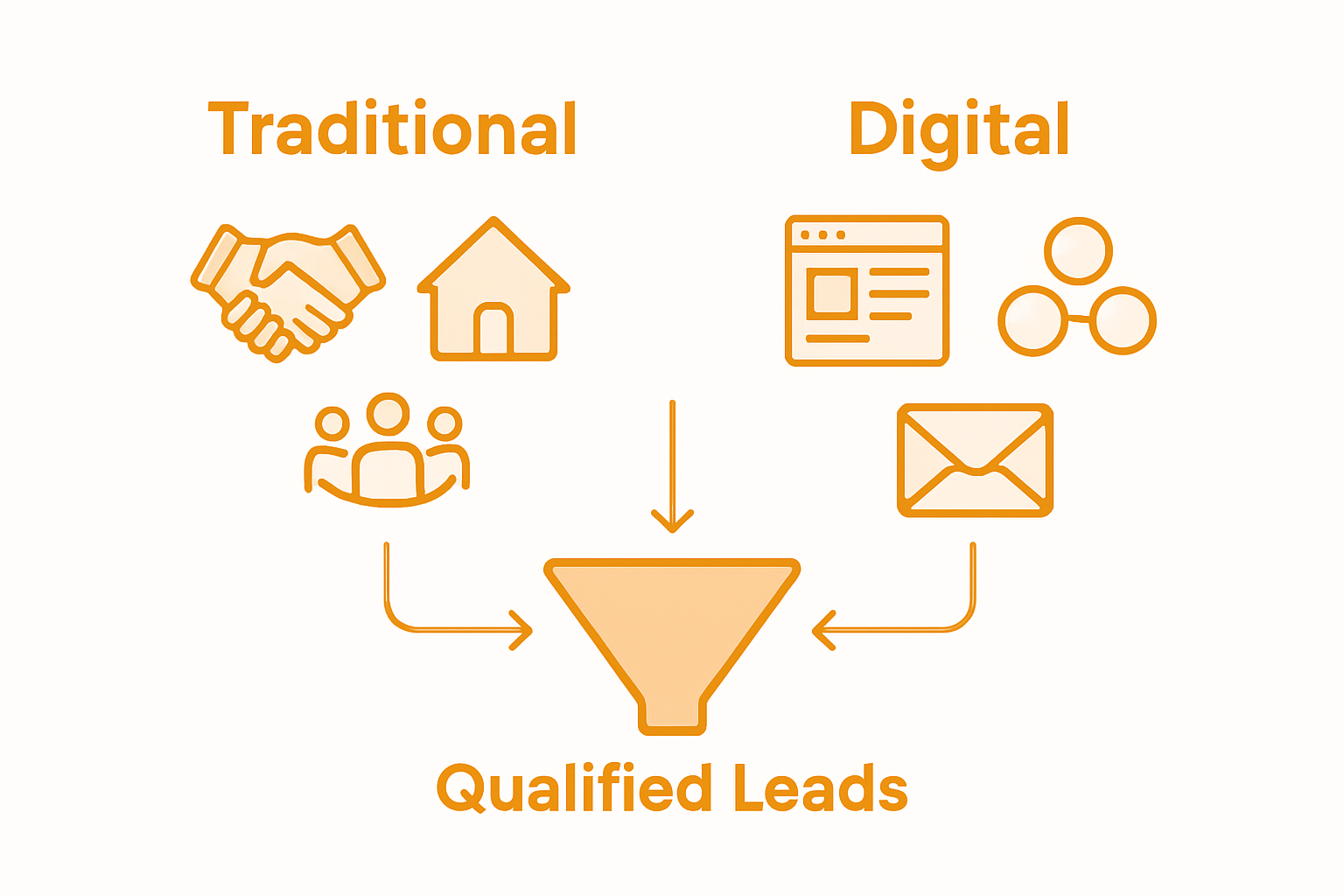
Lead acquisition for ADU developers demands a multifaceted approach that combines digital and traditional marketing strategies. Comprehensive lead generation systems reveal critical channels that enable builders to effectively connect with potential clients and transform interested homeowners into committed ADU project partners.
Digital marketing channels represent the primary mechanism for modern ADU lead generation:
- Search Engine Marketing (SEM)
- Social Media Advertising
- Content Marketing
- Email Marketing Campaigns
- Targeted Google Ads
Strategic digital advertising techniques allow ADU developers to precisely target homeowners based on specific demographic, geographic, and behavioral characteristics. These targeted approaches enable builders to:
- Reach property owners with suitable lot configurations
- Connect with homeowners interested in additional income streams
- Engage individuals seeking multigenerational housing solutions
- Identify potential investors looking to maximize property value
Traditional lead acquisition channels remain equally important, including professional networking, local real estate partnerships, home show exhibitions, and direct mail campaigns. Successful ADU developers integrate these offline strategies with digital channels to create a comprehensive lead generation ecosystem that maximizes potential client touchpoints and conversion opportunities.
Compliance, Legalities, and Common Pitfalls
Legal compliance represents a critical foundation for successful ADU lead generation strategies. Marketing considerations through regulatory frameworks demand meticulous attention to prevent potential legal complications that could derail business growth.
Common legal pitfalls in ADU lead generation include:
- Misrepresenting property development potential
- Violating data privacy regulations
- Making unrealistic financial promises
- Inadequate disclosure of project limitations
- Failing to obtain proper consent for marketing communications
Legal lead generation software tools help builders navigate complex regulatory landscapes by implementing safeguards that protect both developers and potential clients. Successful ADU developers must focus on:
- Transparent communication
- Accurate property assessment
- Comprehensive documentation
- Strict data protection protocols
- Clear contractual terms
Understanding local zoning regulations, building codes, and marketing compliance requirements becomes paramount. Builders who prioritize legal integrity not only mitigate risks but also build trust with potential clients, transforming potential legal obstacles into opportunities for demonstrating professionalism and commitment to ethical business practices.
Accelerate Your ADU Lead Generation with Proven Digital Strategies
Lead generation is the lifeblood that fuels builder growth especially in the competitive ADU market. If you are struggling to capture qualified leads who are actively searching for off-site modular or prefab solutions you are not alone. Many developers face challenges like reaching the right homeowners, demonstrating unique construction benefits, and nurturing leads through informed qualification stages. By leveraging data-driven marketing and automation you can position your business as a trusted market leader while converting interest into signed contracts.
Discover how our expertise in Funnels – BoxBuild can streamline your lead qualification and engagement process with compelling, targeted campaigns designed for the ADU industry. Social Media – BoxBuild strategies enable you to connect directly with motivated homeowners seeking additional rental income or multigenerational housing solutions.
Ready to transform how you attract and close high-value ADU projects? Visit BoxBuild Agency today to explore tailored SEO, Google Ads, and website solutions that capture the right prospects and accelerate your growth now.
Frequently Asked Questions
What is lead generation in the context of ADU development?
Lead generation in ADU development refers to the strategic process of attracting and capturing potential clients interested in accessory dwelling unit projects, transforming them from cold prospects into qualified leads.
What are the key strategies for generating leads for ADU projects?
Key strategies for generating leads include digital marketing campaigns, website contact forms, educational webinars, targeted social media advertising, and personalized email communication.
What types of leads can ADU developers expect?
ADU developers can expect various types of leads, including homeowner investors, family accommodation seekers, property value enhancers, and passive income developers, each with unique motivations and project requirements.
Why is legal compliance important in lead generation for ADU builders?
Legal compliance is crucial because it helps prevent potential complications, such as misrepresenting property development potential or violating data privacy regulations, ultimately building trust with potential clients.