Most American modular builders are now seeing firsthand how digital transformation is changing off-site construction. With over 60 percent of industry leaders reporting improved efficiency through advanced technologies, the impact is both measurable and dramatic. Understanding what digital transformation truly means helps professionals navigate new tools and processes that make projects faster, more accurate, and more sustainable than ever before.
Table of Contents
- Defining Digital Transformation In Off-Site Construction
- Key Technologies Shaping Modular Building
- Role Of Automation And Data Analytics
- Digital Integration Across Project Lifecycles
- Opportunities, Challenges, And Common Pitfalls
Key Takeaways
| Point | Details |
|---|---|
| Digital Transformation Redefines Construction | Digital transformation restructures project development by integrating advanced technologies like BIM, automation, and data analytics. |
| Focus on Automation and Data Integration | Automation tools and data analytics optimize workflows, enhance precision, and accelerate project timelines, providing better decision-making capabilities. |
| Strategic Technology Adoption | Organizations should conduct technology audits to identify areas for immediate efficiency gains and focus on incremental integration to mitigate risks. |
| Collaboration is Key | Successful digital transformation requires seamless communication across teams and robust training programs to foster a culture of collaboration and data-driven decision-making. |
Defining Digital Transformation in Off-Site Construction
Digital transformation in off-site construction represents a fundamental reimagining of manufacturing and design processes through advanced technological integration. At its core, this concept goes beyond simply adding digital tools—it fundamentally restructures how modular builders approach project development, design, and execution.
The technological landscape of digital transformation includes several critical components. Advanced technologies like Building Information Modeling (BIM), prefabrication techniques, and automation are revolutionizing traditional construction methodologies. These innovations enable precision engineering, streamlined workflows, and dramatically improved project outcomes. Builders can now create intricate 3D models, simulate complex construction scenarios, and optimize manufacturing processes with unprecedented accuracy.
Key technological drivers in digital transformation include sophisticated software platforms, robotic manufacturing systems, and data analytics tools. These technologies allow off-site construction professionals to reduce waste, improve quality control, and accelerate project timelines. Predictive maintenance, real-time collaboration platforms, and machine learning algorithms are transforming how modular builders conceptualize, design, and deliver construction projects.
Pro Tip – Digital Integration Strategy: Start by conducting a comprehensive technology audit of your current processes and identify specific areas where digital tools can create immediate efficiency gains, focusing on solutions that provide measurable productivity improvements and cost reductions.
Key Technologies Shaping Modular Building
Modern modular building is experiencing a technological revolution driven by cutting-edge innovations that are dramatically transforming traditional construction methodologies. These emerging technologies are not just incremental improvements, but fundamental reimaginings of how architectural projects are conceived, designed, and executed.
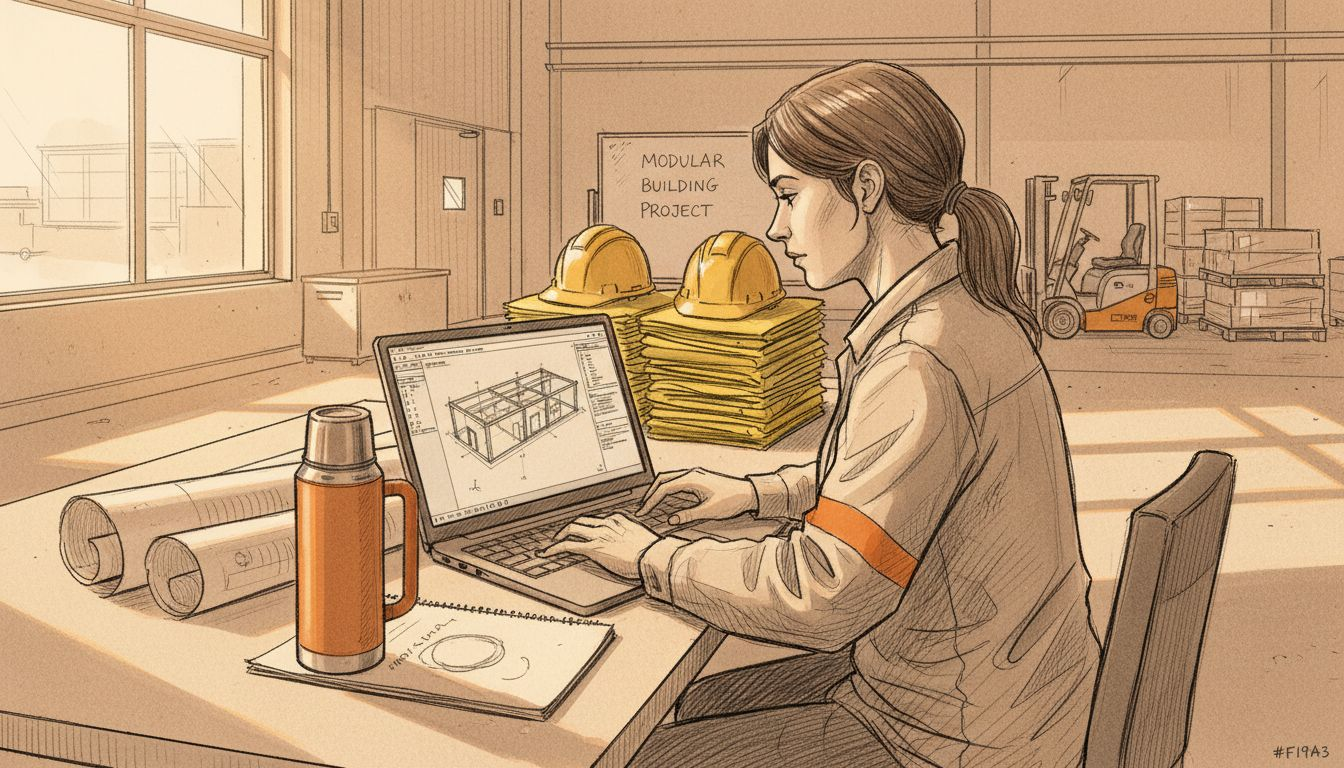
Advanced technologies like Building Information Modeling (BIM), 3D printing, and robotic systems are at the forefront of this transformation. BIM enables incredibly precise digital project visualization, allowing architects and builders to create comprehensive virtual models before physical construction begins. 3D printing technology has emerged as a game-changing tool, enabling rapid production of complex building components with unprecedented precision and minimal waste. Robotic manufacturing systems further enhance these capabilities by introducing extraordinary levels of accuracy and efficiency into the production process.
The Modular 2.0 Roadmap introduces additional technological innovations that promise to reshape the industry. Standardized modular interfaces are creating unprecedented levels of interoperability between different construction systems. Automated project evaluation tools are streamlining complex design assessments, while advanced product simulation file types allow for more nuanced and accurate digital prototyping. These technologies collectively enable faster project timelines, improved design accuracy, and more sustainable construction practices.
Pro Tip – Technology Integration Strategy: Conduct a comprehensive technology audit of your current modular building processes, identifying specific areas where digital tools can create immediate efficiency gains and focusing on solutions that provide measurable productivity improvements and cost reductions.
Here’s a summary of key technologies driving digital transformation in off-site construction:
| Technology | Primary Function | Business Impact |
|---|---|---|
| Building Information Modeling (BIM) | 3D model creation and collaboration | Enhanced visualization and coordination |
| 3D Printing | Rapid component fabrication | Customization and reduced waste |
| Robotic Manufacturing Systems | Automated module assembly and precision | Improved accuracy and lower labor costs |
| Advanced Data Analytics | Predictive modeling and reporting | Informed decisions and risk reduction |
| Automated Evaluation Tools | Digital project assessment | Faster approvals and design validation |
Role of Automation and Data Analytics
Digital transformation in off-site construction is fundamentally reshaping how projects are conceived, executed, and managed through sophisticated automation and data analytics technologies. These advanced systems are moving far beyond traditional computational approaches, creating intelligent ecosystems that optimize every stage of the construction process.
Automation technologies including robotics and computer-aided design are revolutionizing modular construction workflows, dramatically streamlining design, fabrication, and assembly processes. By integrating robotic systems, manufacturers can achieve unprecedented levels of precision while simultaneously reducing labor costs and minimizing human error. Advanced algorithms enable these systems to perform complex tasks with remarkable accuracy, from intricate component fabrication to sophisticated quality control assessments.
Data analytics represents another critical dimension of technological transformation in off-site construction. Advanced project management software and Building Information Modeling (BIM) platforms enable real-time collaboration, comprehensive resource tracking, and predictive performance modeling. These tools provide construction professionals with granular insights into project dynamics, allowing for proactive decision-making, enhanced scheduling optimization, and more accurate budget management. Machine learning algorithms can now predict potential bottlenecks, recommend efficiency improvements, and simulate complex construction scenarios with remarkable precision.
Pro Tip – Automation Implementation Strategy: Start by conducting a comprehensive technology audit of your current processes, identifying specific repetitive tasks and complex workflows where automation can deliver immediate measurable efficiency gains and cost reductions.
Digital Integration Across Project Lifecycles
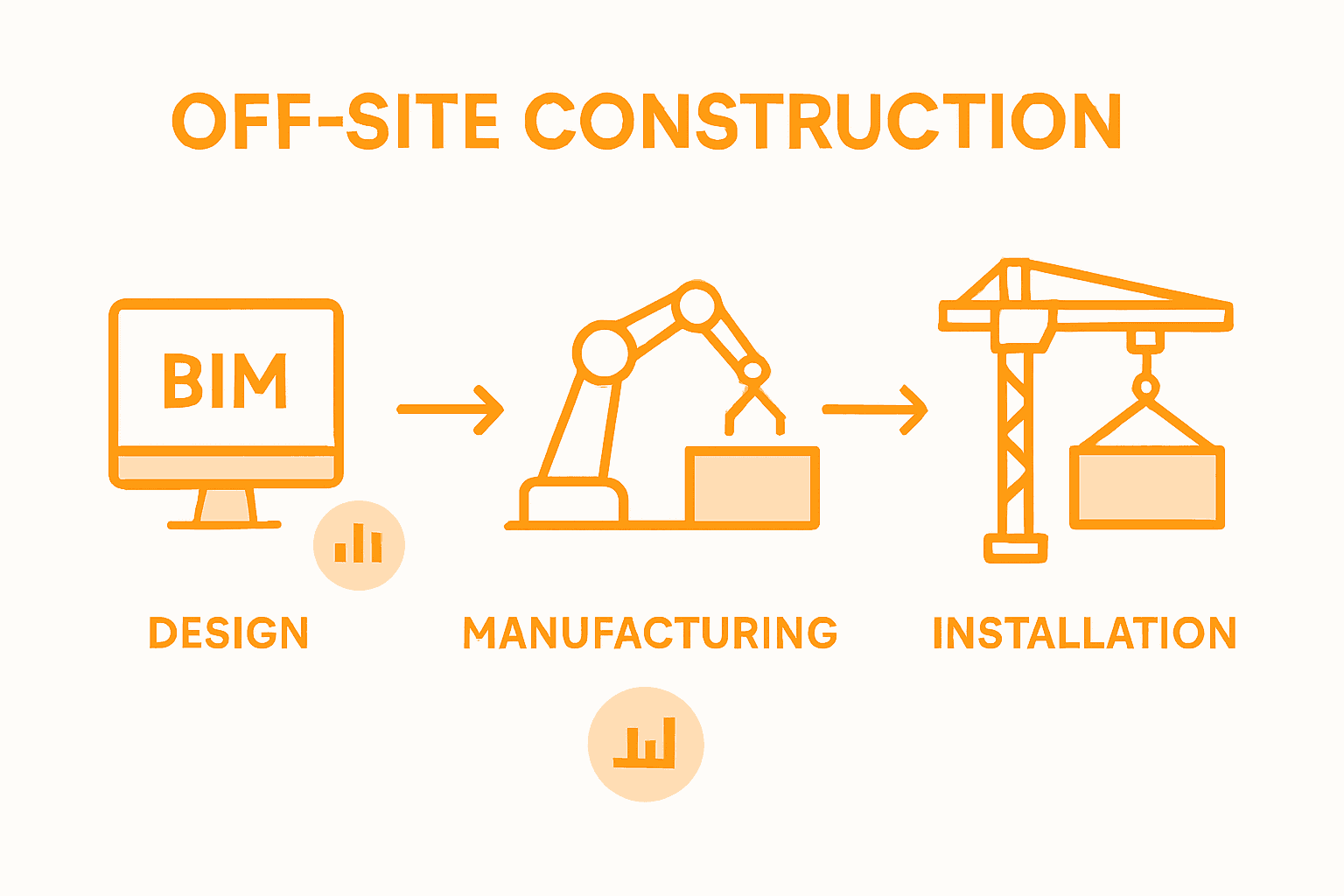
Digital transformation is rapidly reshaping the entire lifecycle of off-site construction projects, creating seamless, interconnected workflows that span from initial conception to final implementation. This holistic approach represents a fundamental shift from traditional fragmented construction methodologies, enabling unprecedented levels of efficiency, collaboration, and precision.
Digital tools like Building Information Modeling (BIM) and computer-aided design are transforming the design and manufacturing process, breaking down traditional silos between design, engineering, and construction teams. These advanced technologies enable real-time collaboration, allowing stakeholders to visualize complex project details through detailed 3D models, identify potential conflicts before physical construction begins, and make data-driven decisions with remarkable accuracy. The integration of these digital platforms means that every stage of the project becomes more transparent, predictable, and adaptable.
The comprehensive digital integration extends beyond design and visualization, encompassing project management, resource allocation, and performance tracking. Advanced software platforms now provide end-to-end visibility into project lifecycles, enabling project managers to monitor progress in real-time, predict potential bottlenecks, and dynamically adjust resources. Machine learning algorithms can analyze historical project data, generating insights that help optimize scheduling, budget management, and risk mitigation. This level of digital intelligence transforms off-site construction from a linear process into an adaptive, intelligent ecosystem that continuously learns and improves.
Pro Tip – Lifecycle Integration Strategy: Develop a comprehensive digital transformation roadmap that identifies key integration points across your project lifecycle, focusing on platforms that offer seamless data exchange and provide actionable insights at each stage of development.
Opportunities, Challenges, and Common Pitfalls
Digital transformation in off-site construction presents a complex landscape of immense potential and significant operational challenges. Understanding these dynamics is crucial for organizations seeking to successfully navigate the technological revolution reshaping the construction industry.
Modular construction offers compelling opportunities like accelerated project timelines, enhanced quality control, and improved workplace safety. However, these advantages are not automatically realized but require strategic implementation and sophisticated technological integration. The most successful organizations recognize that digital transformation is not simply about adopting new technologies, but fundamentally reimagining workflows, communication protocols, and organizational capabilities.
The primary challenges in digital transformation stem from managing technological complexity and ensuring seamless stakeholder coordination. Many organizations underestimate the intricate communication requirements between design teams, manufacturing units, project managers, and on-site construction crews. Successful digital integration demands robust training programs, adaptive technological platforms, and a cultural shift towards collaborative, data-driven decision-making. Common pitfalls include inadequate technological infrastructure, insufficient staff training, resistance to change, and unrealistic expectations about immediate technological returns.
This table compares common opportunities and challenges found in digital transformation for modular construction:
| Opportunity | Description | Common Challenge |
|---|---|---|
| Accelerated project timelines | Faster delivery with off-site methods | Coordination across diverse teams |
| Enhanced quality control | Consistent manufacturing standards | Integrating new digital platforms |
| Improved workplace safety | Controlled factory conditions | Overcoming workforce resistance |
| Sustainability gains | Reduced waste and efficient materials | Justifying initial technology costs |
Pro Tip – Strategic Transformation Approach: Develop a phased digital transformation strategy that prioritizes incremental technological adoption, comprehensive staff training, and continuous performance evaluation to mitigate risks and maximize technological investment potential.
Unlock the Full Potential of Digital Transformation in Off-Site Construction
The challenges highlighted in “Digital Transformation in Off-Site Construction: Real-World Impact” show a clear need for streamlined workflows, improved lead generation, and data-driven decision making. If your modular or prefab construction business struggles with coordinating digital tools, automating complex processes, or breaking through competitive noise, you are not alone. The article’s emphasis on automation, BIM integration, and predictive analytics reveals a vital opportunity to elevate your market position through specialized digital marketing strategies that speak directly to your industry pain points.
At BoxBuild Agency, we combine deep industry knowledge with innovative marketing approaches including Funnels, AI, and Google Ads to transform your digital presence into a powerful conversion engine. Our tailored strategies help modular builders attract more qualified leads and close high-value projects faster by applying automation and data insights to your marketing efforts.
Leverage this momentum from your digital transformation journey and partner with BoxBuild Agency to become a recognized leader in off-site construction. Visit https://www.boxbuild.agency/ today to discover how our industry-focused solutions can help you accelerate growth and exceed your project goals.
Frequently Asked Questions
What is digital transformation in off-site construction?
Digital transformation in off-site construction refers to the integration of advanced technologies into the design and manufacturing processes, fundamentally reshaping how modular builders approach project development and execution.
How do advanced technologies like BIM and 3D printing impact modular construction?
Technologies such as Building Information Modeling (BIM) and 3D printing enhance precision, streamline workflows, and reduce waste, allowing for faster project timelines and improved overall quality in modular construction.
What role does automation play in the digital transformation of construction?
Automation in construction includes robotics and computer-aided design systems that increase efficiency by minimizing human error, lowering labor costs, and ensuring greater accuracy in the manufacturing and assembly processes.
What are common challenges faced during digital transformation in off-site construction?
Common challenges include managing technological complexity, ensuring seamless coordination among diverse teams, and overcoming resistance to change from staff, which can hinder effective implementation of digital strategies.