
Over 80 percent of American modular construction firms now rely on extensive data insights to sharpen marketing decisions and outpace rivals. For marketing managers working in modular and prefab construction across the globe, harnessing data offers a clear path to reaching the right prospects and boosting project wins. By understanding what sets successful, data-driven teams apart from traditional approaches, you can turn raw numbers into real growth for both lead generation and project acquisition.
Table of Contents
- What Is Data-Driven Marketing in Construction
- Types of Data and Key Insights for Builders
- How Data-Driven Marketing Enhances Lead Generation
- Tools and Processes for Analyzing Campaign Results
- Risks, Challenges, and Common Pitfalls to Avoid
Key Takeaways
| Point | Details |
|---|---|
| Data Utilization | Data-driven marketing in construction harnesses both qualitative and quantitative data to enhance decision-making and improve project acquisition. |
| Technology Integration | Advanced tools like CRM systems and data visualization platforms are crucial for optimizing marketing strategies and fostering lead generation. |
| Risk Management | Addressing challenges such as data quality and privacy concerns is essential for successful implementation of data-driven marketing practices. |
| Continuous Improvement | Establishing robust data governance and training programs can mitigate risks and enhance the effectiveness of marketing campaigns. |
What Is Data-Driven Marketing in Construction
Data-driven marketing in construction represents a strategic approach that transforms raw information into targeted, actionable insights for improving business performance. By systematically collecting, analyzing, and applying data from multiple sources, construction marketing professionals can make more precise decisions that drive project acquisition and revenue growth. Data insights from market research reveal that this approach goes far beyond traditional marketing techniques.
At its core, data-driven marketing integrates quantitative and qualitative information from diverse channels including customer interactions, project histories, industry analytics, and digital engagement metrics. Construction firms utilize these insights to understand market trends, predict client needs, and create highly targeted marketing strategies. For instance, by analyzing past project data, companies can identify specific client segments most likely to require modular or prefabricated construction solutions.
The fundamental components of data-driven marketing in construction include comprehensive market research, customer feedback analysis, competitive intelligence tracking, and performance measurement. Professionals leverage technologies like customer relationship management (CRM) systems, web analytics platforms, and advanced data visualization tools to transform complex information into strategic advantages. Construction market insights demonstrate that companies effectively using data can establish thought leadership and respond more dynamically to evolving industry challenges.
Here’s how key marketing technologies impact construction firms:
| Technology Type | Primary Function | Business Impact |
|---|---|---|
| CRM System | Manages client relationships | Improves client retention |
| Data Visualization Tool | Presents complex data simply | Enhances decision-making speed |
| Web Analytics Platform | Tracks digital engagement data | Optimizes online campaigns |
| Marketing Automation | Automates outreach and follow-up | Raises lead conversion rates |
Pro tip: Start by implementing a robust data collection system that tracks key performance indicators across your marketing and sales channels to build a comprehensive understanding of your business ecosystem.
Types of Data and Key Insights for Builders
Construction companies leverage multiple data types to generate strategic insights that drive business performance and competitive advantage. Construction project data analysis reveals four primary categories of critical information: time, cost, quality, and scope metrics. These interconnected data streams provide builders with a comprehensive view of project dynamics, enabling more precise decision-making and risk management strategies.
The primary data types in construction marketing include project performance metrics, customer interaction records, financial benchmarks, and competitive intelligence. Quantitative data such as project completion timelines, budget adherence, and resource allocation patterns help builders identify efficiency opportunities. Qualitative data like client feedback, satisfaction surveys, and market trend analyses offer deeper insights into customer preferences and emerging industry needs. Construction industry data sources demonstrate the importance of integrating diverse data streams to create holistic business intelligence.

Builders can extract powerful insights by systematically analyzing these data categories. Performance tracking enables precise resource optimization, predictive analytics help forecast project risks, and customer segmentation allows for targeted marketing approaches. Advanced technologies like machine learning and data visualization tools transform raw information into actionable strategies, helping construction firms make more informed decisions about project selection, marketing investment, and competitive positioning.
Pro tip: Implement a centralized data management system that aggregates information from multiple sources, ensuring consistent data quality and enabling more sophisticated analytical capabilities.
How Data-Driven Marketing Enhances Lead Generation
Data-driven marketing strategies transform lead generation by enabling construction companies to identify and target potential clients with unprecedented precision. By analyzing comprehensive behavioral data, businesses can create highly personalized marketing approaches that dramatically improve conversion rates. This method moves beyond traditional broad-spectrum marketing, allowing builders to pinpoint exact customer segments most likely to require their specific construction services.
The core mechanism of data-driven lead generation involves sophisticated customer segmentation and predictive modeling. Construction firms can now map potential client journeys by analyzing digital interactions, project history, online behavior, and demographic information. These insights allow marketing teams to develop targeted content, personalized communication strategies, and strategic outreach that resonates with specific client needs. Advanced analytics help predict which leads are most likely to convert, enabling more efficient allocation of marketing resources and higher return on investment.
Technology plays a critical role in enhancing lead generation through data-driven approaches. Customer relationship management (CRM) systems, marketing automation platforms, and advanced analytics tools integrate multiple data sources to create comprehensive lead profiles. Construction marketing insights demonstrate that companies leveraging these technologies can establish greater market authority, build trust more effectively, and develop more sophisticated lead nurturing processes that significantly improve conversion rates.
Pro tip: Develop a systematic lead scoring mechanism that weights potential clients based on multiple data points, allowing your sales team to prioritize and engage with the most promising prospects.
Tools and Processes for Analyzing Campaign Results
Advanced analytical technologies have revolutionized how construction marketing teams evaluate campaign performance. Modern tools integrate multiple data sources, providing comprehensive insights that go far beyond traditional metrics. By leveraging sophisticated platforms, builders can track engagement rates, conversion pathways, and return on investment with unprecedented accuracy and depth, transforming raw data into actionable strategic intelligence.
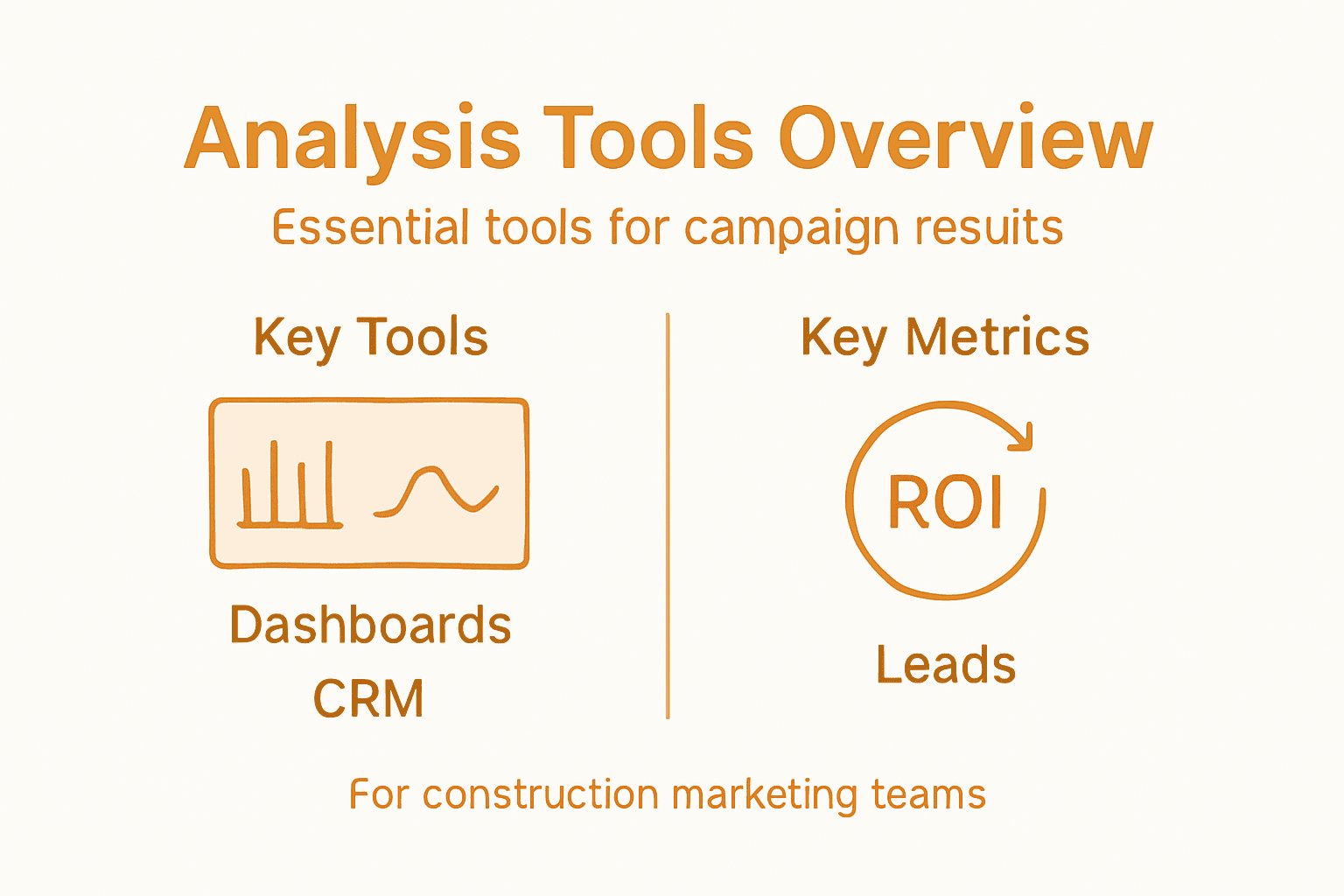
The primary tools for campaign analysis include digital dashboards, customer relationship management (CRM) systems, and integrated analytics platforms. These technologies enable real-time monitoring of key performance indicators, allowing marketing teams to track metrics such as lead generation rates, website traffic, content engagement, and conversion funnel effectiveness. Advanced machine learning algorithms can now predict campaign outcomes, identify potential optimization opportunities, and provide granular insights into audience behavior and preferences.
Construction marketing data management requires a systematic approach to data collection and interpretation. Successful organizations implement standardized processes that ensure data quality, consistency, and meaningful analysis. This involves establishing clear tracking protocols, integrating multiple data sources, and developing visualization tools that translate complex information into clear, actionable insights. By creating a robust data infrastructure, construction firms can make more informed marketing decisions and continuously refine their strategic approach.
Pro tip: Create a centralized dashboard that consolidates all marketing performance metrics, enabling your team to quickly assess campaign effectiveness and make data-driven adjustments in real time.
Risks, Challenges, and Common Pitfalls to Avoid
Data-driven marketing challenges in construction represent complex obstacles that can significantly undermine marketing effectiveness if not carefully managed. The most critical risks emerge from data quality issues, privacy concerns, technological integration challenges, and organizational resistance to change. Construction marketing teams must develop sophisticated strategies to navigate these potential pitfalls, ensuring that data-driven approaches enhance rather than complicate their marketing efforts.
Primary challenges include inconsistent data collection practices, inadequate technological infrastructure, and potential cybersecurity vulnerabilities. Many construction firms struggle with fragmented data sources, outdated systems, and limited digital literacy among team members. These limitations can lead to flawed insights, misguided marketing strategies, and wasted resources. Successful organizations invest in comprehensive training, robust technological platforms, and clear data governance frameworks to mitigate these risks and maintain the integrity of their marketing intelligence.
Construction industry digital transformation demands a proactive approach to addressing potential barriers. Key risks include potential misinterpretation of complex data, over-reliance on algorithmic insights, and failure to balance quantitative analysis with human expertise. Construction marketing professionals must develop critical thinking skills that complement data-driven tools, ensuring that numerical insights are contextualized within broader industry knowledge and strategic objectives.
Below is a comparison of common risks in data-driven marketing and effective mitigation strategies:
| Risk Type | Description | Mitigation Strategy |
|---|---|---|
| Data Quality | Inaccurate or incomplete data | Implement strict data validation |
| Privacy Concerns | Unauthorized data disclosures | Enforce strong privacy policies |
| Tech Integration | Incompatible or outdated systems | Invest in scalable platforms |
| Organizational Resistance | Team members oppose new processes | Provide targeted training sessions |
Pro tip: Establish a cross-functional data governance committee that includes marketing, IT, and leadership representatives to create comprehensive guidelines for data collection, analysis, and ethical use.
Unlock Powerful Data-Driven Growth for Your Construction Business
The article highlights common challenges in construction marketing like fragmented data, inaccurate insights, and inefficient lead generation. Your goal is clear: leverage advanced data analysis and automation to attract qualified leads and boost ROI while overcoming hurdles like inconsistent data and organizational resistance. Terms such as CRM systems, predictive modeling, and marketing automation show how critical smart technology integration is for success.
At BoxBuild Agency, we specialize in helping modular, prefab, and container-based builders use data-driven marketing strategies to build momentum and dominate their markets. Our expertise with Google Ads – BoxBuild and Funnels – BoxBuild ensures every campaign is laser-targeted and optimized for conversions. You can transform raw data into a powerful competitive advantage today.
Take control of your marketing future and turn insights into high-value project wins.
Experience the difference with BoxBuild Agency.
Looking to elevate your campaigns with proven strategies?
Explore how expert funnel design and smart ad targeting can accelerate your lead generation. Contact us now and start building a data-driven marketing engine that delivers measurable results.
Frequently Asked Questions
What is data-driven marketing in construction?
Data-driven marketing in construction involves using analyzed data from various sources to inform marketing strategies, improve project acquisition, and boost revenue. It combines quantitative and qualitative insights to enhance decision-making and better understand client needs.
How can data-driven marketing improve lead generation for construction companies?
Data-driven marketing enhances lead generation by enabling construction firms to identify and target potential clients with greater accuracy. By analyzing customer behavior and preferences, companies can create personalized marketing campaigns that increase conversion rates.
What types of data are most relevant for construction marketing?
The most relevant data types for construction marketing include project performance metrics, customer interaction records, financial benchmarks, and competitive intelligence. These data categories help builders make informed decisions regarding project dynamics and marketing strategies.
What tools are essential for analyzing marketing campaign results in the construction industry?
Essential tools for analyzing marketing campaign results include digital dashboards, customer relationship management (CRM) systems, and integrated analytics platforms. These tools allow teams to track key performance indicators and gain insights into campaign effectiveness.
Recommended
- Role of Data in Construction Marketing Success – BoxBuild
- Why Use Digital Marketing in Construction Today – BoxBuild
- 7 Ways to Automate Construction Marketing for Builders – BoxBuild
- Why Marketing Matters for Builders: Complete Guide – BoxBuild
- Understanding Bulldozers: Key Concepts Explained – WorkWearComfort