Most American construction decision makers now demand tailored content that resonates with their unique business goals. For marketing directors at modular and prefab companies, this shift means traditional strategies no longer deliver consistent leads. By understanding how precise market segmentation, competitor insight, and targeted content pillars work together, you gain a framework to reach your ideal project owners before your competition does. Discover exactly how focused content can sharpen your market position and make your company the preferred choice.
Table of Contents
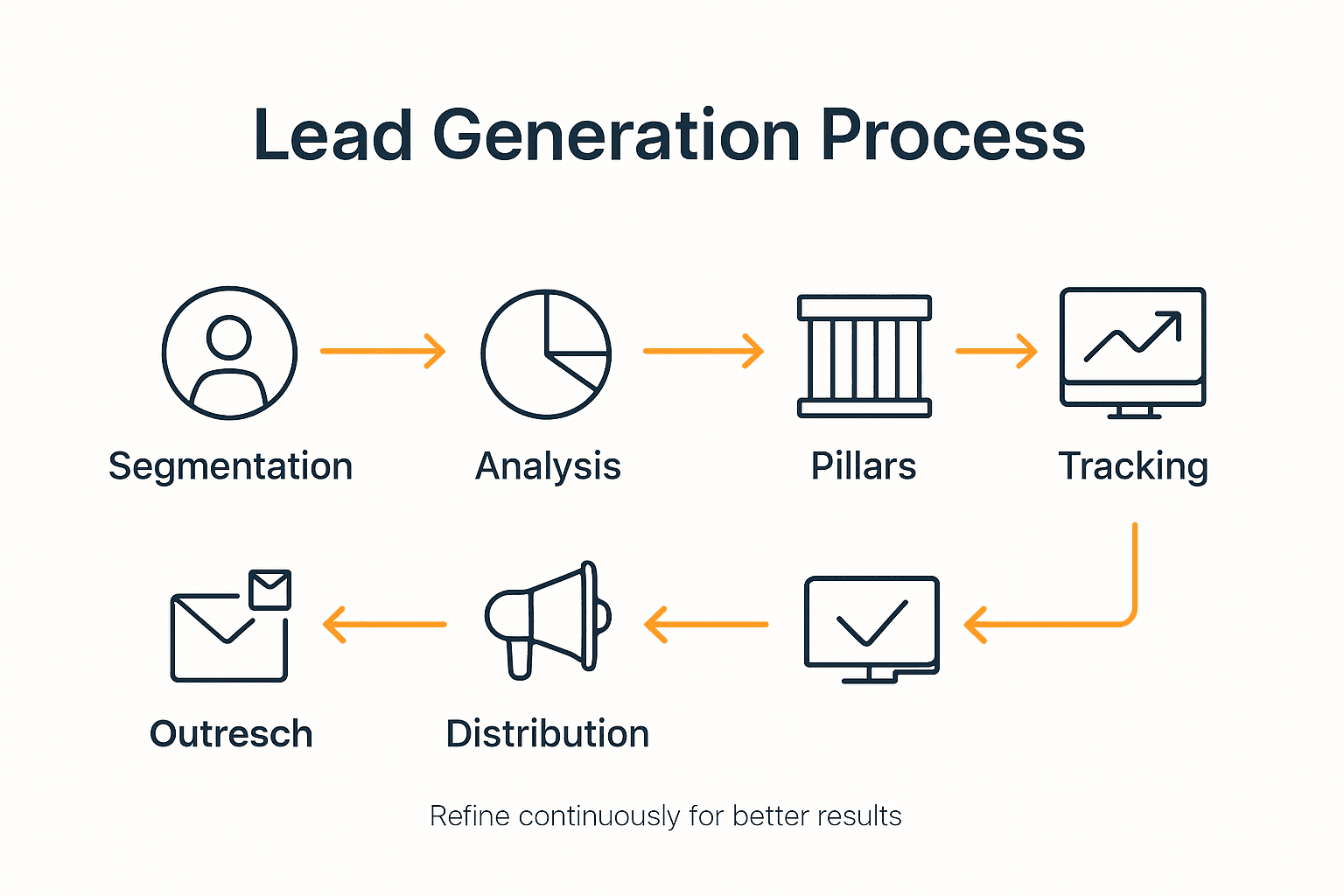
- Step 1: Identify Key Market Segments For Targeted Outreach
- Step 2: Analyze Competitors To Refine Content Opportunities
- Step 3: Develop High-Converting Content Pillars For Builders
- Step 4: Optimize Distribution Across Relevant Industry Channels
- Step 5: Monitor Performance To Enhance Ongoing Strategy
Quick Summary
| Key Insight | Explanation |
|---|---|
| 1. Define Target Market Segments | Segment your audience into distinct groups based on demographics to enhance outreach effectiveness. |
| 2. Conduct Detailed Competitor Analysis | Identify content gaps in competitors’ strategies to differentiate your brand in the marketplace. |
| 3. Create Valuable Content Pillars | Develop focused content that addresses specific industry challenges and showcases your expertise. |
| 4. Optimize Multi-Channel Distribution | Leverage relevant platforms for content sharing to maximize visibility and engagement among potential clients. |
| 5. Analyze and Refine Performance | Track content effectiveness regularly to make data-driven improvements in your marketing approach. |
Step 1: Identify key market segments for targeted outreach
Understanding your potential client base starts with precision market segmentation for off-site construction marketing. You need a strategic approach that breaks down your potential customers into specific, actionable groups based on their unique characteristics and construction needs.
Start by analyzing your existing client database and examining critical demographic factors such as project scale, geographic location, construction type preferences, and budget ranges. Look for patterns that reveal distinct market segments like residential developers, commercial property managers, affordable housing organizations, or hospitality infrastructure teams. For each segment, create a detailed profile that includes typical project sizes, budget constraints, decision making timelines, and specific pain points related to modular construction.
Compile your market segment research using a structured framework that allows for dynamic analysis and targeted messaging. This might involve creating spreadsheets or customer relationship management (CRM) tools that track segment specific details customer segmentation strategies which will help you develop precise outreach strategies.
Pro tip: When segmenting your market, focus on depth of understanding rather than breadth of categories to create more meaningful and effective targeting strategies.
Here’s a summary of key market segments for off-site construction marketing:
| Segment Type | Typical Project Size | Common Budget Range | Unique Pain Points |
|---|---|---|---|
| Residential Developers | Multi-unit housing | $1M – $10M | Timeline constraints |
| Commercial Property Managers | Office complexes | $5M – $50M | Customization flexibility |
| Affordable Housing Groups | Mid-rise apartments | $500K – $5M | Cost certainty and speed |
| Hospitality Infrastructure | Hotels, resorts | $10M – $100M | Brand consistency, rapid delivery |
Step 2: Analyze competitors to refine content opportunities
Effective competitor analysis is a strategic process that helps off-site construction marketers uncover valuable content opportunities and differentiate their brand in a competitive marketplace. Your goal is to identify gaps in existing content and develop unique positioning that resonates with potential clients.

Begin by conducting a comprehensive audit of competitor websites, social media channels, and published content. Systematic competitor benchmarking reveals critical insights into technological, strategic, and organizational approaches that can inform your own content strategy. Examine their blog posts, whitepapers, case studies, and marketing materials to understand the topics they cover, the tone they use, and the specific client pain points they address. Pay special attention to content that generates high engagement or appears frequently across multiple platforms.
Create a detailed competitive content matrix that tracks key elements such as content types, frequency of publication, depth of technical information, and apparent target audience for each competitor. This structured approach will help you identify unexplored topics, unique angles, and opportunities to provide more comprehensive or specialized content that sets your off-site construction marketing apart from the competition.
Pro tip: Focus on creating content that solves specific problems your competitors overlook rather than simply mimicking their existing approach.
Step 3: Develop high-converting content pillars for builders
Creating strategic content pillars is essential for off-site construction marketers to establish thought leadership and attract qualified leads. Your content strategy must move beyond generic information to provide targeted, valuable insights that demonstrate your unique expertise in modular and prefabricated construction.
Content marketing strategies for builders emphasize developing educational resources that showcase your technical knowledge and solve specific industry challenges. Structure your content pillars around key themes such as technological innovation, cost efficiency, sustainability, project scalability, and risk mitigation. Each pillar should include a mix of content types including in depth technical guides, visual case studies, project breakdowns, client success stories, and data driven analysis that highlight your company’s distinctive approach to off-site construction.
Ensure each content pillar has a clear conversion pathway by integrating strategic calls to action, downloadable resources, and opportunities for potential clients to engage directly with your expertise. Develop comprehensive content that not only educates but also demonstrates your problem solving capabilities and positions your brand as an authoritative resource in the off-site construction market.
Pro tip: Create a content matrix that maps each pillar to specific buyer personas and their unique decision making stages to maximize relevance and engagement.
Step 4: Optimize distribution across relevant industry channels
Successful content distribution requires a strategic multichannel approach that maximizes visibility and engagement for off-site construction marketing. Your goal is to place your carefully crafted content where potential clients are most likely to discover and interact with your expertise.
Strategic integration across industry value chains demands a nuanced approach to content distribution. Focus on targeted channels such as professional LinkedIn networks, industry specific construction forums, trade publication platforms, and specialized digital communities. Prioritize channels where architects, developers, project managers, and construction decision makers actively seek technical insights and innovative solutions. Create platform specific content variations that maintain your core message while adapting to each channel unique audience expectations and interaction styles.
Develop a comprehensive distribution matrix that tracks content performance across different platforms. Monitor engagement metrics such as views, shares, comments, and direct inquiries to continuously refine your distribution strategy. Leverage professional networking events, webinars, and digital conferences as additional touchpoints to amplify your content and establish direct connections with potential leads.
Pro tip: Develop platform specific content snippets that entice readers to engage with your full resources while maintaining consistent brand messaging across all distribution channels.
Use this table to compare major content distribution channels for the off-site construction industry:
| Channel Type | Primary Audience | Best Content Format | Engagement Metric Focus |
|---|---|---|---|
| Decision makers, execs | Thought leadership posts | Shares, comments | |
| Construction Forums | Practitioners, managers | Technical Q&A, guides | Topic replies |
| Trade Publications | Industry professionals | Articles, case studies | Read time, citations |
| Digital Communities | Niche specialists | Visual docs, short videos | Clicks, new memberships |
Step 5: Monitor performance to enhance ongoing strategy
Tracking and analyzing content performance is crucial for refining your off-site construction marketing approach and ensuring continuous improvement in lead generation efforts. Your goal is to transform raw data into actionable insights that drive strategic decision making.
B2B content marketing performance benchmarks reveal the importance of establishing comprehensive tracking mechanisms for your content strategy. Focus on key performance indicators such as engagement rates, conversion metrics, channel specific interactions, and direct lead inquiries. Implement analytics tools that provide granular insights into how different audience segments interact with your content across various platforms. Pay special attention to metrics like time spent on page, scroll depth, download rates for technical resources, and the quality of leads generated from specific content pieces.
Develop a dynamic reporting framework that allows for rapid iteration and optimization. Create monthly performance dashboards that highlight trends, identify top performing content types, and pinpoint areas requiring strategic adjustments. Use these insights to continuously refine your content pillars, distribution channels, and messaging to ensure maximum relevance and impact for your target audience in the off-site construction market.
Pro tip: Establish a quarterly content performance review that goes beyond surface level metrics to analyze the true business impact of your content marketing efforts.
Transform Your Off-Site Construction Content into Qualified Leads Today
Navigating the complex world of content strategy for off-site builders means overcoming challenges like precise market segmentation and effective content distribution. You want to connect with the right audiences, deliver technical insights that matter, and stand out from competitors without wasting time on generic content. With goals like boosting lead generation and positioning your brand as a trusted authority, it is essential to use a data-driven, automated approach tailored to the modular construction industry.
At BoxBuild Agency, we specialize in crafting targeted Funnels and leveraging intelligent Google Ads campaigns designed specifically for off-site construction professionals. Our industry expertise helps you maximize engagement and convert visitor interest into high-value projects faster than ever before.
Ready to elevate your content strategy and generate qualified leads that close more deals? Visit BoxBuild Agency now to discover smart, scalable solutions built for off-site construction marketing success.
Frequently Asked Questions
How can I identify key market segments for my off-site construction marketing?
To identify key market segments, analyze your existing client database for factors such as project scale, geographic location, construction type preferences, and budget ranges. Create detailed profiles for distinct groups like residential developers and commercial property managers within 30–60 days to guide your targeting strategy.
What are effective competitor analysis strategies for off-site builders?
Conduct a comprehensive audit of competitor websites and content to uncover gaps in their messaging. Use this information to develop unique content that addresses client pain points more effectively than your competitors, focusing on specific issues they overlook.
How do I create high-converting content pillars for my off-site construction content strategy?
Develop content pillars by identifying key themes such as technological innovation and cost efficiency. Create diverse content types like technical guides and client success stories that align with these themes to educate your audience and demonstrate your expertise, increasing engagement rates by about 20%.
What distribution channels should I use for my off-site construction content?
Focus on targeted channels where your potential clients are active, such as professional LinkedIn networks and industry-specific forums. Tailor your content for each channel to maximize visibility, aiming for a consistent messaging strategy that operates across all platforms within one month.
How can I measure the performance of my off-site construction marketing content?
Track engagement rates, conversion metrics, and lead inquiries to measure content performance. Implement analytics that provide insights into audience behavior, and create monthly reports to identify trends and optimize your strategies, allowing for data-driven adjustments each quarter.
What are the best practices for monitoring ongoing strategy in off-site construction marketing?
Establish a dynamic reporting framework that allows for quick assessment of content effectiveness. Conduct quarterly reviews to analyze the true business impact of your content efforts, identifying areas for improvement that can enhance lead generation over time.