Choosing the right tools and partners shapes every stage of a construction project. New ideas and technologies are changing how builders design homes, connect with buyers, and manage projects from start to finish. Some solutions focus on boosting efficiency in the factory while others help you attract high-value clients or deliver a seamless experience for homeowners. Whether you want to speed up your workflow, create stronger communication, or offer premium features that stand out in the market, there are options designed for every goal. Explore what makes these approaches unique and discover which one might change the way you build and sell homes.
Table of Contents
BoxBuild Agency
At a Glance
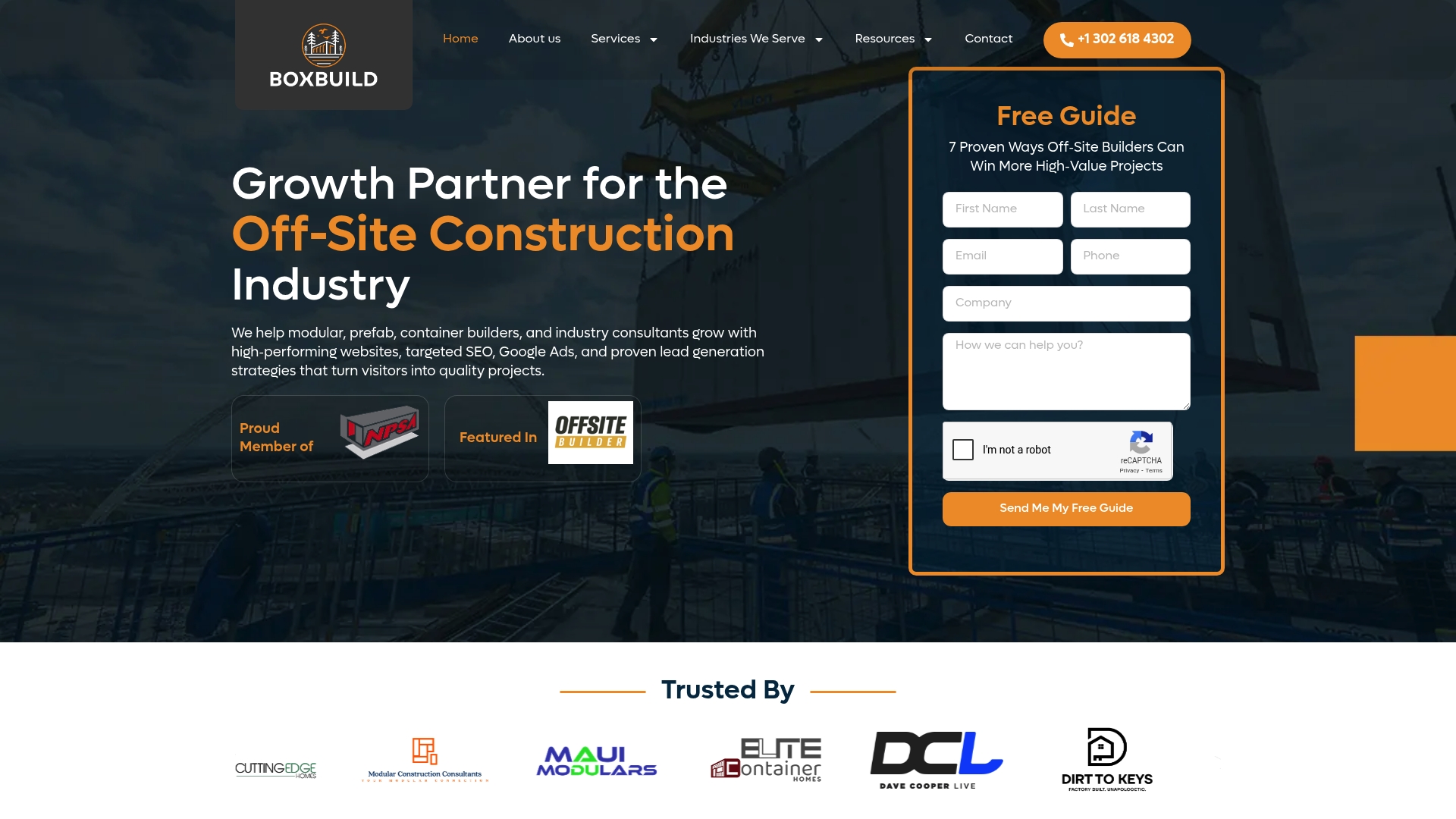
BoxBuild Agency is a growth partner specializing in marketing for the off-site construction industry, including modular, prefab, and container builders. They deliver high-performing websites, targeted SEO, and paid campaigns designed to attract quality projects and close high-value work. In short: industry-specific marketing that drives measurable leads quickly, with case results showing a 124% increase in qualified leads within 90 days.
Core Features
BoxBuild combines industry-specific web design and development with targeted SEO and content marketing to improve organic visibility for off-site construction firms. They run Google, Facebook, and Instagram advertising campaigns to generate immediate demand, while social media growth and management maintain ongoing engagement. Their lead generation systems include integrated funnels and tracking so you can see which channels deliver high-value inquiries and optimize spend across sources.
Pros
- Deep industry expertise in off-site construction: Their focus on modular, prefab, and container builders means strategies are built around how your buyers research and select projects.
- Complete integrated services: BoxBuild unites website design, SEO, ads, and lead generation so you avoid fragmented vendors and data silos.
- Proven results with measurable uplifts: They report significant increases in qualified leads and organic traffic, backed by client case data.
- Fast return on investment: Clients commonly see tangible results within 60–90 days, accelerating project pipelines and cash flow.
- Dedicated team with flexible options: You get a specialized team that adapts to project scope, whether you need full-service growth or targeted campaign support.
Who It’s For
BoxBuild Agency is built for Off-site Construction companies — modular builders, prefab developers, container firms, architects, developers, and industry consultants — who want to scale by winning higher-value projects. If you prioritize lead quality over vanity metrics, need a website that converts construction buyers, and want marketing that understands technical procurement cycles, this is your match.
Unique Value Proposition
BoxBuild stands apart because it pairs sector expertise with full-funnel execution: conversion-focused website builds, SEO that targets construction-specific search intent, and paid campaigns tuned for project-level leads. That combination reduces wasted spend and shortens sales cycles. Smart buyers choose BoxBuild because the agency doesn’t sell generic marketing; it applies playbooks informed by real off-site construction dynamics, integrated tracking to prove attribution, and rapid iteration to capture momentum. Limitations like exclusive focus on off-site construction are intentional — they let BoxBuild concentrate experience, templates, and messaging where it delivers the highest ROI for builders and developers.
Real World Use Case
A modular construction company engaged BoxBuild to redesign their site, implement SEO, and launch Google Ads. With integrated funnels and tracking in place, they saw a 124% increase in qualified leads within 90 days, demonstrating how aligned messaging, targeted search visibility, and paid acquisition work together to fill project pipelines quickly.
Pricing
Pricing is not specified in public materials and is likely custom based on the services selected and campaign scale. Expect tailored proposals aligned to project scope and measurable lead goals.
Website: https://boxbuild.agency
Autodesk
At a Glance
Autodesk provides a comprehensive suite of 3D design, engineering, and construction tools focused on connecting data, processes, and insights for AI-driven workflows. For container home developers and modular builders, it offers powerful visualization and simulation capabilities that help de-risk complex builds and communicate outcomes to high-value clients. The platform is broad and enterprise-oriented, so expect a steep learning curve and variable licensing costs depending on the products you adopt.
Core Features
Autodesk bundles AI-driven design and make platforms with support for connected data, processes, and insights across architecture, construction, and manufacturing. Core capabilities include advanced 3D visualization and animation, simulation tools for construction and manufacturing processes, and industry-specific modules tailored to design and engineering workflows. The environment is designed to unify modeling, simulation, and data so teams can iterate designs, validate buildability, and generate client-facing visuals from a single source of truth.
Pros
- Comprehensive industry coverage: Autodesk supports architecture, construction, and manufacturing workflows, which lets modular builders use the same ecosystem across design and production stages.
- Focus on AI and data integration: The platform emphasizes AI-driven design and connected data, enabling more predictive and informed decision-making during preconstruction and planning.
- Versatile tools across workflows: Autodesk offers visualization, simulation, and engineering analysis capabilities that cover concept through manufacturing, reducing the need to export between multiple tools.
- Strong market reputation: Autodesk’s software is widely recognized and trusted for professional projects, which can be useful when presenting credibility to clients and partners.
Cons
- Limited specific product details in the provided snippet: The source data lacks fine-grained information about which Autodesk products or modules target container building specifically, making evaluation of fit harder.
- Potentially high cost for enterprise solutions: Licensing and product selection vary by module and can lead to significant expenses for small builders unless you carefully tailor your subscriptions.
- Complexity may require training for optimal use: Advanced features and integrated workflows likely need dedicated training or experienced hires to unlock full value, which adds time and overhead.
Who It’s For
Autodesk is best for professional architects, engineers, and manufacturing firms—plus modular builders who operate at scale and need integrated design-to-manufacture workflows. If you manage multi-disciplinary teams, require high-fidelity visualizations for client approvals, or simulate construction sequences to avoid on-site surprises, Autodesk fits. If you are a solo builder or early-stage shop with limited budget, expect a heavier lift.
Unique Value Proposition
Autodesk’s unique value is its breadth: a single vendor approach that ties AI-driven design, simulation, and data management together for end-to-end project workflows. That unified approach helps teams shorten iteration cycles, validate constructability earlier, and produce client-ready visuals that win high-value projects.
Real World Use Case
A construction firm uses Autodesk to build detailed building models, run construction simulations to sequence modular deliveries, and produce animated visualizations that show stakeholders how a container-based structure will be assembled on site. The result is fewer surprises during installation and clearer buy-in from clients.
Pricing
Pricing is not specified in the provided snippet and typically varies by product and license type; expect per-product subscriptions and enterprise pricing tiers depending on modules and user counts.
Website: https://autodesk.com
Autovol
At a Glance
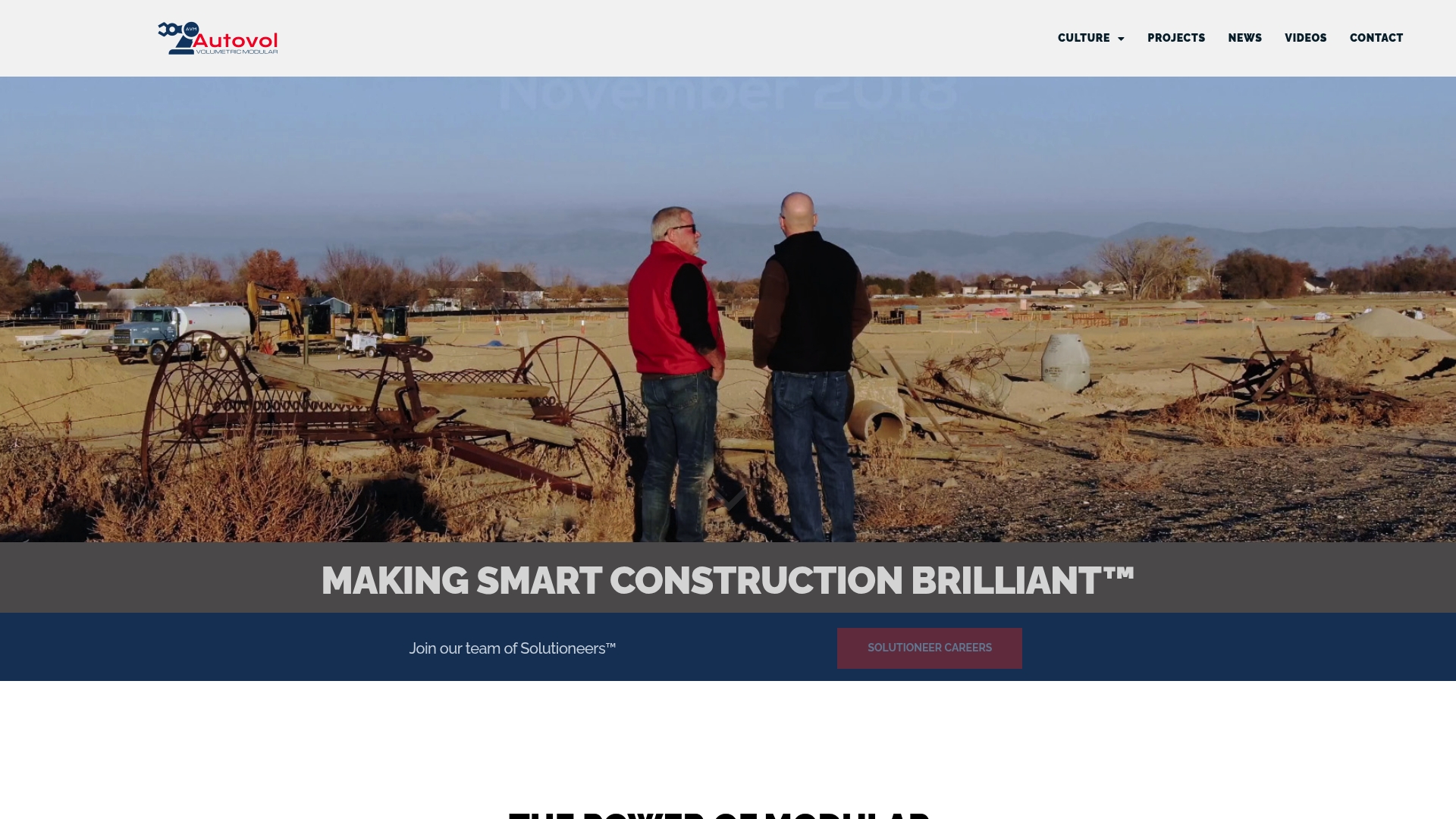
Autovol pairs factory-based modular construction with robotics to deliver fully finished volumetric units at scale, aiming squarely at the affordable housing shortage. Its 400,000 sq ft facility in Nampa, Idaho combines human skills and automation to speed delivery while maintaining interior finish quality. For developers focused on multifamily and hospitality projects in the western U.S., Autovol offers faster, more consistent units—but expect up-front technology and logistics trade-offs.
Core Features
Autovol’s core capabilities center on factory-based volumetric modular construction and automation with robotics, producing fully enclosed modules that arrive with finished interiors ready for assembly. The company operates a large 400,000 sq ft production facility that blends human labor and robotic processes to increase throughput and consistency. Strategically located in Nampa, Idaho, the operation is positioned to serve projects across the western U.S., particularly multifamily apartments, condos, and hotels.
Stop. Consider scale.
Pros
- Increases construction speed and efficiency: Factory production and volumetric modules compress on-site schedules, allowing developers to move from foundation to occupancy faster than traditional stick-built workflows.
- Reduces dependence on skilled labor shortages: Automation and a mixed human-robot workflow lower the sensitivity of project timelines to local trades availability.
- Creates new job opportunities in an innovative workplace: The blend of robotics and human operators creates roles in a manufacturing environment that can attract different workforce skill sets.
- High-quality, finished modular units: Units are produced fully enclosed with finished interiors, which improves quality control and reduces finish-stage rework at the site.
- Strategic location enabling regional service: A large facility in Nampa, Idaho positions Autovol to serve western U.S. markets with regional logistical advantages and shorter haul times compared with distant plants.
Cons
- Implementation of new technology may involve initial costs: Adopting factory-produced, robot-assisted modules can require higher upfront capital or premium pricing that developers must absorb or pass on to projects.
- Focus on specific types of residential and hospitality projects might limit diversity of applications: Autovol’s concentration on multifamily, condos, and hotels means smaller or highly customized single-family or niche commercial projects may not fit the product offering.
- Relies on shipping modules to construction sites, potentially increasing logistical complexity: Transporting volumetric modules introduces coordination needs for trucking, site access, and craning that can add schedule and cost variables.
Who It’s For
Autovol is best for construction companies, developers, and organizations seeking scalable, repeatable building solutions for multifamily housing and hospitality. If your projects prioritize faster delivery, consistent interior finishes, and regional scale—especially in the western U.S.—Autovol aligns with those operational goals. It is less suited for developers who need extreme design customization or who cannot absorb module transport logistics.
Unique Value Proposition
Autovol’s distinct value is the combination of volumetric, fully finished modular units produced at scale in a robotic-enabled factory. That blend promises predictable unit quality, shorter onsite schedules, and a manufacturing approach that addresses skilled labor constraints—delivering a production model that shifts complexity off the jobsite and into a controlled facility.
Real World Use Case
A developer building a 200-unit apartment complex or a 150-room hotel can source fully finished modules from Autovol to compress on-site schedule by weeks or months, reduce variations in unit finishes, and limit the number of skilled trades required at the site. The developer benefits from factory quality control and faster lease-up timelines.
Pricing
Not specified on website.
Website: https://autovol.com
Cadmakers
At a Glance
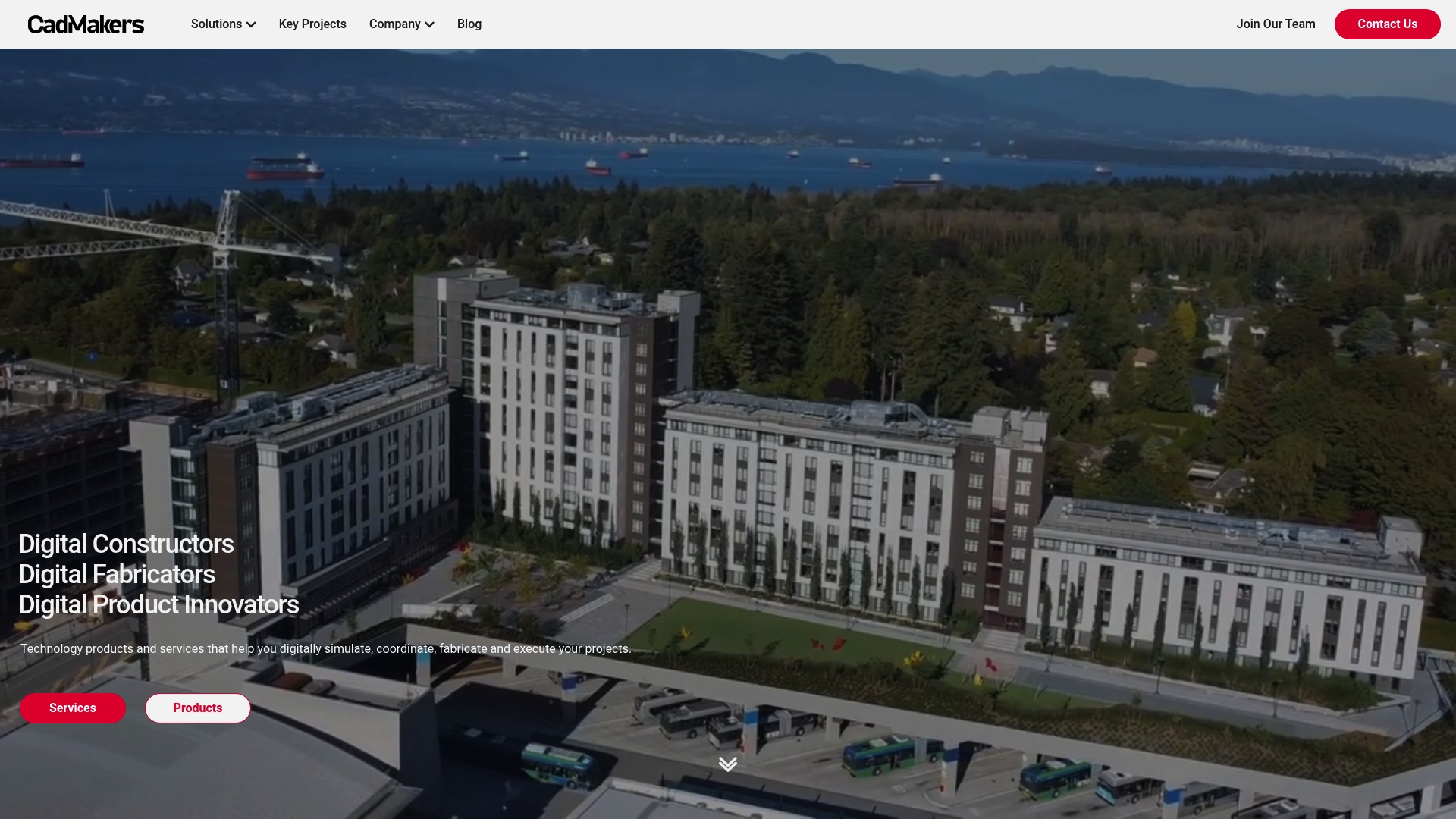
Cadmakers delivers an enterprise-grade suite focused on digital construction, fabrication, and manufacturing workflows, centered on fully integrated digital twins. It shines when projects demand precise coordination between design, shop fabrication, and on-site execution. If you build container homes or modular units at scale and need end-to-end digital continuity, Cadmakers offers a clear path to reduce rework and speed handoffs. It is best suited to larger projects and teams comfortable with a high-touch digital transformation.
Core Features
Cadmakers builds digital construction twins that support design, fabrication, and construction workflows, paired with visual construction planning tools such as 3D site logistics models and 4D simulations. The platform creates digital fabrication twins with automated workflows and accurate fabrication outputs, and it delivers digital manufacturing services that enable data-driven decision support. A real-time production tracking and optimization platform closes the loop so fabrication and field teams can compare plans against live production performance.
Pros
- Comprehensive role coverage: Cadmakers provides digital solutions that address needs across owners, developers, contractors, fabricators, and designers, which simplifies collaboration on complex builds.
- Proven at scale: The platform has a proven track record on large and complex projects, indicating it can handle high-volume, high-detail construction work.
- Industry credibility: Strong endorsements and client testimonials suggest Cadmakers is trusted by experienced teams in the construction and fabrication sectors.
- Advanced digital tooling: The integration of digital twins and visual planning software lets you simulate logistics and sequencing before committing to shop or site work.
- Risk and process focus: The solution is explicitly designed to mitigate risk and optimize processes, which helps reduce rework and unexpected cost growth.
Cons
- Opaque pricing: Specific pricing details are not provided on the website, making budget planning and vendor comparison harder for project leads.
- Unclear trial access: There is no explicit mention of trial options or free demos, which could slow evaluation cycles for teams that prefer hands-on testing.
- Limited support visibility: The website provides limited information on customer support and training, so onboarding expectations and ongoing assistance aren’t clearly defined.
Who It’s For
Cadmakers is aimed at construction owners, developers, general contractors, fabricators, process planners, roboticists, and mechanical designers who require advanced digital tools for planning, fabricating, and executing complex assemblies. If you run modular or container projects where coordination between shop and site is mission-critical, Cadmakers fits that profile.
Unique Value Proposition
Cadmakers combines fully integrated digital twins with visual planning and real-time production tracking to create a continuous digital thread from design through fabrication to field execution. That continuity translates into fewer surprises, tighter schedule adherence, and better predictability for high-value modular builds.
Real World Use Case
Cadmakers has been employed on large-scale construction projects to improve planning accuracy, reduce risk, and streamline fabrication-to-site workflows—delivering measurable time savings and fewer fabrication errors in complex assemblies.
Pricing
Not specified on the website.
Website: https://cadmakers.com
NoviHome
At a Glance
NoviHome is a buyer experience platform built to keep prospective and current homeowners engaged from search through warranty. For builders, it centralizes marketing assets, progress updates, and real-time buyer analytics so sales teams can act on behavior quickly. If you build container or modular homes and want to deepen buyer trust while improving conversion rates, NoviHome is purposefully aligned to that workflow. It isn’t a plug-and-play price list—expect some onboarding and customization.
Core Features
NoviHome brings buyer engagement tools, a mobile app for distributing marketing materials, and continuous construction communication into a single platform. Key capabilities include access to floor plans, virtual tours, and community maps via mobile; sharing progress photos and videos during and after construction; and sending progress updates that keep buyers emotionally connected to their home’s status. On the sales side, NoviHome delivers real-time analytics so teams can track buyer activity, spot trends, and tailor outreach to improve conversion.
Stop. Consider the buyer journey. NoviHome maps to it—visually and analytically.
Pros
- Enhances buyer engagement and emotional connection to the home buying process: The platform’s progress photos, video updates, and milestone notifications help buyers feel involved during construction, which reduces anxiety and increases satisfaction.
- Provides real-time analytics that help sales teams improve conversion rates: Actionable tracking of buyer behavior lets sales focus outreach where it matters, shortening decision cycles and increasing lead-to-sale ratios.
- Affordable, scalable pricing with no extra charges for standard integrations: Standard integrations are included without extra fees, which simplifies budgeting as your operation scales by division.
- Increases operational efficiency and tracking capabilities for builders: Centralized progress reporting and buyer communication reduce manual status calls and paperwork, freeing crew and office time.
- Supports post-sale engagement, strengthening customer relationships: Warranty tracking and post-sale communication keep customers connected and can drive referrals and repeat business.
Cons
- Pricing is customized and may require direct contact to obtain detailed cost information: You’ll need to engage NoviHome for a tailored quote, which slows quick budget comparisons.
- Dependent on digital infrastructure and buyer tech-savviness: Builders serving buyers with limited mobile access or low digital comfort may see uneven adoption and reduced benefits.
- Limited detail available on specific integrations and customization options: The provided information doesn’t spell out integration depth or how far custom workflows can be extended, which may require discovery calls.
Who It’s For
NoviHome is best for homebuilders, including container and modular builders, and their sales teams who want a single platform to improve buyer experience, track engagement, and streamline post-sale processes. If your business prioritizes transparent communication, higher conversion from online leads, and centralized progress reporting, NoviHome fits well. If you prefer strictly self-serve pricing transparency, plan for a sales conversation.
Unique Value Proposition
NoviHome’s strength is tying marketing assets, construction transparency, and buyer analytics into one buyer-centric experience. That combination helps builders convert leads faster and keep buyers emotionally engaged during construction—critical for premium, custom, or off-site-built projects where trust and communication drive higher-margin deals.
Real World Use Case
A builder uses NoviHome to deliver virtual tours and floor plans to prospects, tracks which assets buyers view, and then sends targeted notifications with progress photos once a contract is signed. The result: faster conversions, fewer site calls, and higher buyer satisfaction during the build and warranty phases.
Pricing
Pricing includes a one-time setup fee and ongoing license fees with licenses segmented by division. Exact costs are customized based on organizational needs, and NoviHome does not charge for standard integrations.
Website: https://novihome.com
Veev
At a Glance
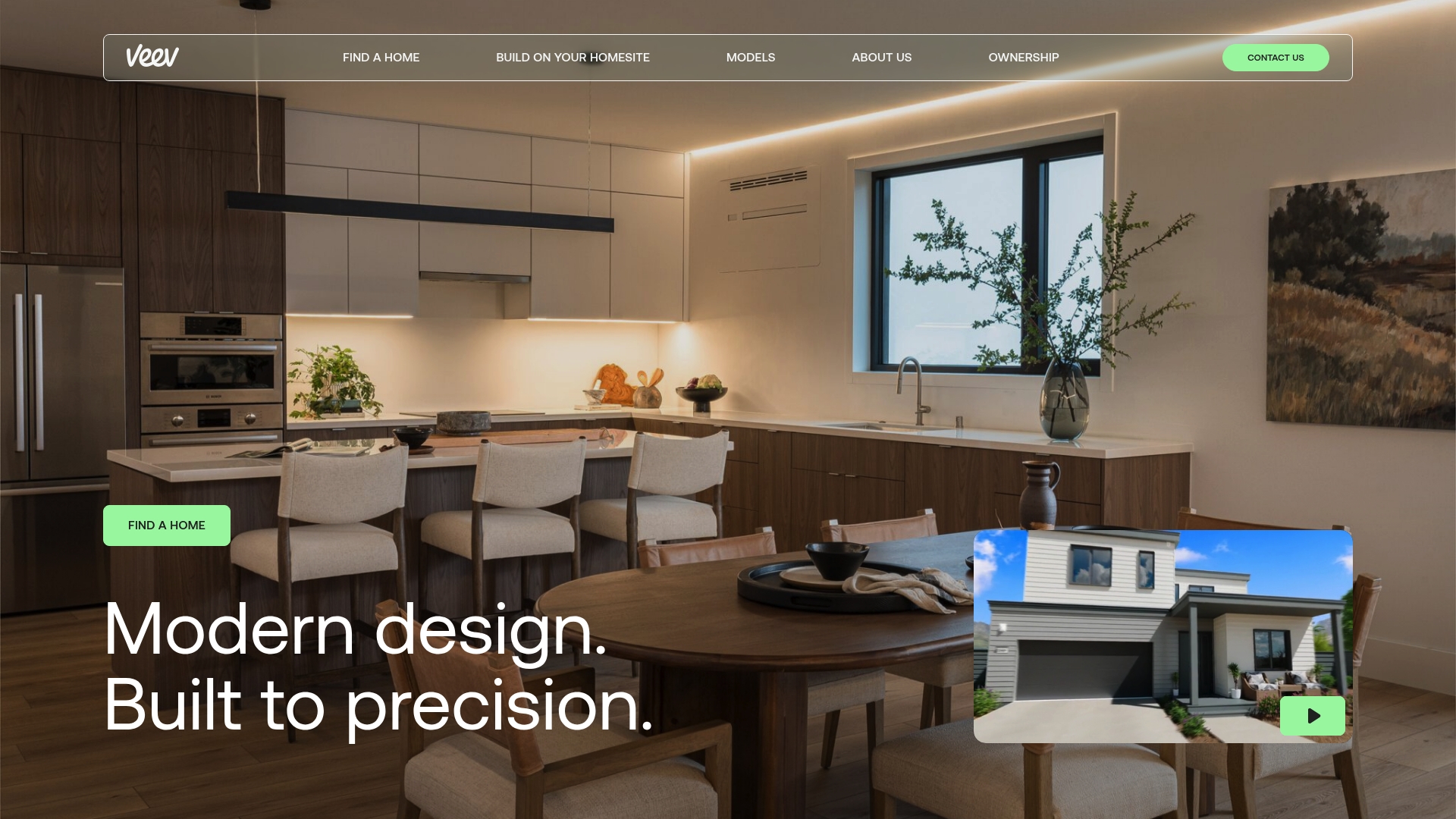
Veev, developed by Lennar, packages high-end modern design, sustainable systems, and smart-home readiness into a curated home offering aimed at premium buyers. The homes emphasize durability through light-gauge steel construction and deliver showroom-quality finishes like an all-electric gourmet kitchen. If you prioritize design-forward living, energy efficiency, and the stability of a major homebuilder, Veev is worth evaluating; however, expect limited pricing transparency and geographic availability up front.
Core Features
Veev focuses on turnkey modern living with a concise set of visible features: a showroom-worthy all-electric gourmet kitchen, dimmable recessed LED lighting in every room, wall-mounted high-performance toilets, a closed wall system that conceals plumbing and wiring, and light-gauge steel construction that resists water, rot, and termites. Those elements combine to reduce onsite trade complexity and present a finished product that emphasizes health, comfort, and low-maintenance performance.
Pros
- Modern design with high-end finishes included: Veev homes come with premium touches—especially the gourmet kitchen—so you deliver a luxury experience without piecing together upgrades.
- Built for sustainability and energy efficiency: The product messaging includes solar power integration and high-performance systems that reduce operating costs and appeal to environmentally conscious buyers.
- Durable, low-maintenance construction: Light-gauge steel framing offers resistance to water, rot, and termites, which can lower long-term maintenance and insurance concerns.
- Integrated systems for cleaner aesthetics and performance: The closed wall system hides plumbing and wiring for a neater finish and potentially faster serviceability.
- Backed by Lennar: Association with America’s leading homebuilder brings scale, warranty expectations, and project reliability that smaller builders may struggle to match.
Cons
- Limited pricing transparency without location-specific models: The available price point (starting at $3,198,000 in Santa Rosa, CA) shows this is a premium product, but broader pricing detail by model or market is not provided.
- Primarily focused on new, modern home buyers: Veev’s contemporary design language and feature set may not fit buyers seeking traditional aesthetics or budget-focused solutions.
- Geographic availability appears constrained: The offering may only be available in select developments and regions, limiting project flexibility if you work across multiple markets.
Who It’s For
Veev targets homebuyers and developers aiming at the high-end new-home market—people who value design, smart systems, and energy performance and who can invest at premium price points. For modular or container builders exploring partnerships, Veev represents a benchmark in packaged modern-living features and builder-backed delivery.
Unique Value Proposition
Veev’s unique value lies in marrying a curated set of high-end, sustainable features with the operational scale and reliability of Lennar. That combination reduces risk for buyers and positions projects as turnkey, design-led offerings rather than customizable, component-driven builds.
Real World Use Case
A family purchases a new Veev home seeking a low-maintenance, energy-efficient residence with luxury finishes and smart systems already integrated; they benefit from the durable steel construction, integrated solar readiness, and the convenience of a showroom-quality kitchen without a long custom-build process.
Pricing
Veev lists pricing starting at $3,198,000 in Santa Rosa, CA, with costs varying by location and model—expect premium positioning and project-specific quotes rather than flat, nationwide price tiers.
Website: https://veev.com
Product Comparison for Modular and Construction Solutions
Discover and compare leading modular and construction-focused solutions, analyzing their unique features, benefits, limitations, and applications to determine the perfect fit for your projects.
| Product | Target Audience | Primary Benefits | Limitations | Pricing Information |
|---|---|---|---|---|
| BoxBuild Agency | Off-site Construction companies | Rapid lead generation; Integrated digital marketing services; Industry-specific expertise | Exclusive to off-site construction industry; Custom pricing required | Customized pricing based on services and campaign scope |
| Autodesk | AEC (Architecture, Engineering, Construction) professionals | Comprehensive tools with advanced simulation and design capabilities | Steep learning curve; High costs | Variable subscription model |
| Autovol | Developers; Multifamily and hospitality projects | High-quality factory-built modular units; Innovative automation in manufacturing | Focus on specific projects; Logistic requirements for module transport | Custom pricing depending on project specifications |
| Cadmakers | Construction owners and planners | Integrated digital twins; Precision coordination in design and manufacturing | Requires high comfort with digital workflows; Sparse support documentation | Not explicitly specified |
| NoviHome | Builders and sales teams | Enhances buyer engagement; Centralizes buyer communication | Requires technology adaptation by clients | Tailored pricing with setup and ongoing license fees |
| Veev | High-end new home builders | Premium design and energy efficiency; Integrated smart systems | Limited geographic availability; Premium pricing | Pricing starts at $3,198,000 in Santa Rosa, CA |
Elevate Your Container Building Designs with Proven Digital Growth Strategies
Designing container buildings in 2026 means navigating complex challenges like precise buyer targeting and shortening sales cycles in a competitive off-site construction market. If you want your platform to do more than just showcase designs, you need a strategy that drives qualified leads and connects your innovative work with high-value clients. Key goals include leveraging AI-driven marketing, optimizing funnel performance, and launching impactful campaigns that deliver measurable results fast.
BoxBuild Agency specializes in exactly this—helping container and modular builders amplify their market presence with tailored websites, cutting-edge Google Ads, AI-powered insights, and high-converting Funnels. Our deep industry expertise ensures your brand stands out and attracts the opportunities you deserve.
Take the next step now. Discover how to turn your container building design platform into a lead-generating engine by partnering with experts who know the off-site construction space inside out. Explore more at https://www.boxbuild.agency/ today.
Frequently Asked Questions
What features should I look for in container building design platforms for 2026?
Focus on tools that offer advanced 3D modeling, structural analysis, and project management capabilities. Look for platforms that integrate with current building standards and allow for customization to fit your specific project needs.
How can container building design platforms improve my workflow?
Container building design platforms can streamline communication, reduce design errors, and enhance collaboration among team members. Implementing these tools can lead to a reduction in project completion times by up to 30%.
Are there specific design platforms better suited for beginners?
Yes, look for platforms with user-friendly interfaces and comprehensive tutorials to help you get started. Choosing software with built-in templates and guided workflows can help beginners learn the design process within days.
How do I evaluate the cost-effectiveness of a container building design platform?
Assess the initial subscription costs alongside long-term benefits such as time savings and error reduction. Calculate potential return on investment (ROI) by estimating how much faster your projects could be completed and how many design revisions may be avoided.
Can I integrate container building design platforms with other project management tools?
Most modern design platforms offer integration capabilities with popular project management tools. Ensure the platform you choose allows for seamless data sharing to keep all aspects of your project aligned and updated.
What are the benefits of using digital twins in container building design?
Using digital twins allows for real-time simulation and monitoring of your design, making it easier to identify issues before construction begins. This approach can reduce costly rework by approximately 25%, ensuring smoother project execution.
Recommended
- Container-Based Construction – BoxBuild
- Design-Build Method: Boosting Efficiency for Modern Builders – BoxBuild
- 7 Key Modular Home Design Best Practices for Builders – BoxBuild
- Apply 2025 Website Trends for Builders: A Step-by-Step Guide – BoxBuild
- Protective Coating Trends 2025: Innovations for Infrastructure