
CS — CASE STUDY
Maui Modulars
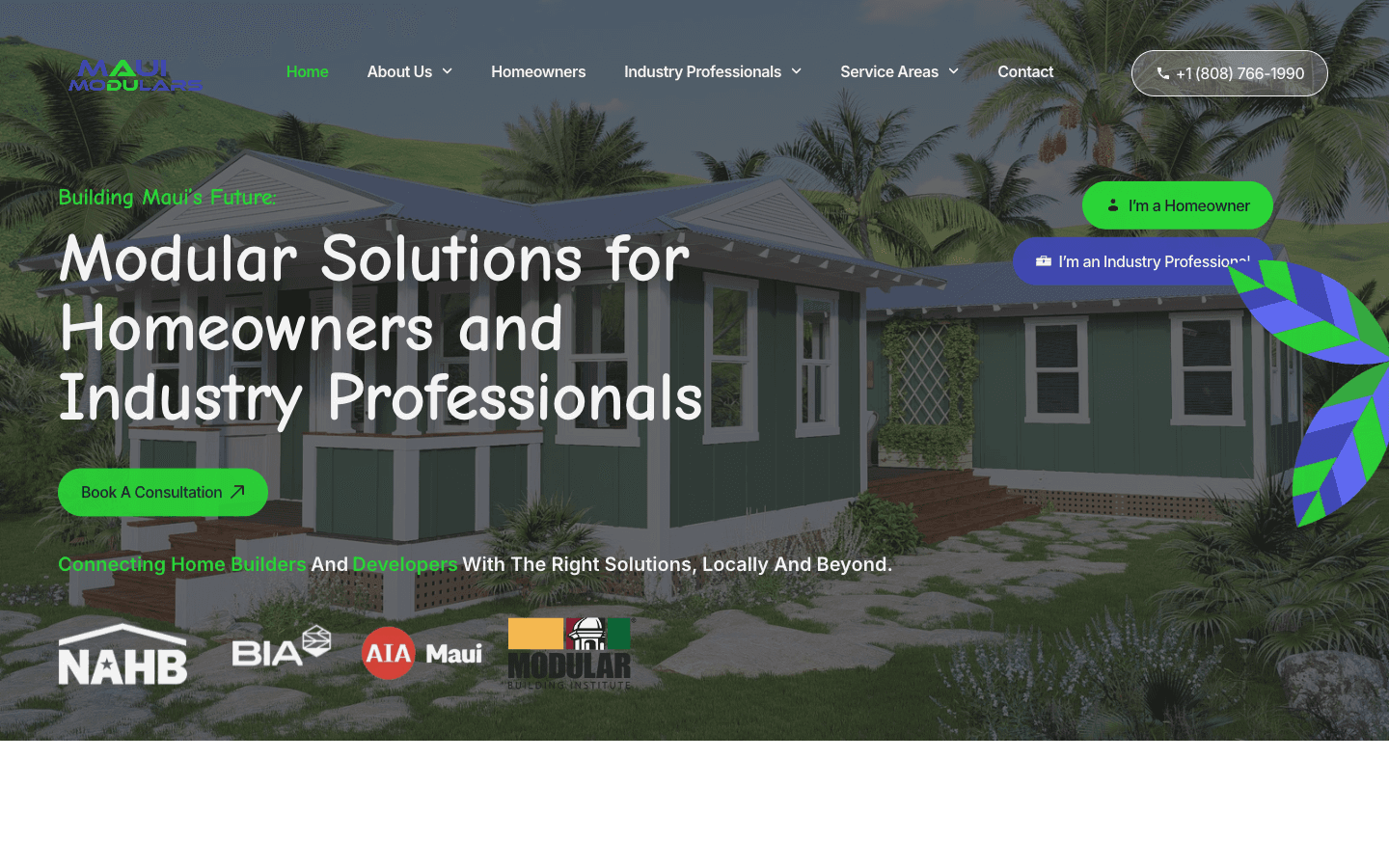
Maui Modulars needed more than a website — it needed a position. Modular construction has a distinct case to make to buyers weighing it against site-built, and the brand had to carry that argument clearly. The company also had no appetite for managing hosting, updates, and technical upkeep itself.
APPROACH
We started with brand positioning: what Maui Modulars stands for, who it serves, and why modular is the right answer for its buyers. The website design was built to carry that position, not decorate it. Hosting and maintenance sit with us, so the site stays fast, secure, and current without the client touching it.
The situation
Maui Modulars didn’t need a brochure. It needed a position. Modular construction has a genuine case to make against site-built — but only if the brand makes that case clearly, to the right buyers, in terms they care about. A generic builder website with stock photography and “quality craftsmanship” copy would have buried the argument entirely.
For an island builder, the stakes are higher, not lower. Buyers weighing modular against conventional construction are running a real comparison, and most of that comparison happens on the builder’s website before anyone makes contact. If the position isn’t clear there, it isn’t clear anywhere — and the buyer defaults to what they already know.
There was a second, quieter requirement. The company had no interest in becoming its own IT department. Hosting, updates, security, and technical upkeep needed to be someone else’s job — permanently, not until the first renewal.
The system we built
- Brand positioning first: who Maui Modulars serves, what it stands for, and why modular is the right answer for its buyers — settled before a single page was designed
- Website design built to carry that position, with structure and copy that make the modular case instead of decorating around it
- Hosting and maintenance on a BoxBuild care plan, so the site stays fast, secure, and current without the client lifting a finger
The order of operations is the point. Positioning before design, always. A website built before the positioning is settled is an expensive way to say nothing in particular — and in modular, where the buyer is actively comparing you against site-built alternatives, saying nothing in particular means losing.
How it works day to day
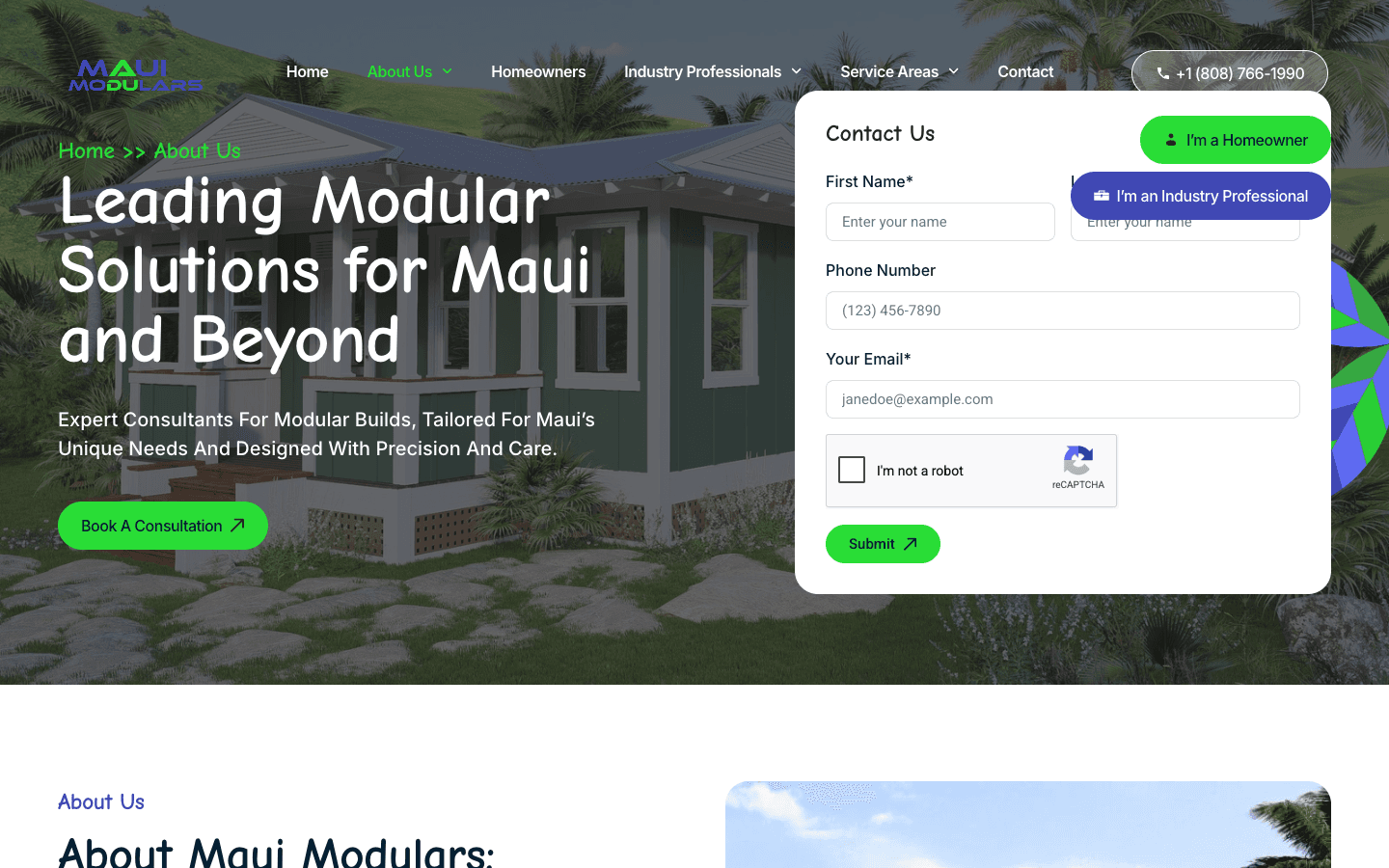
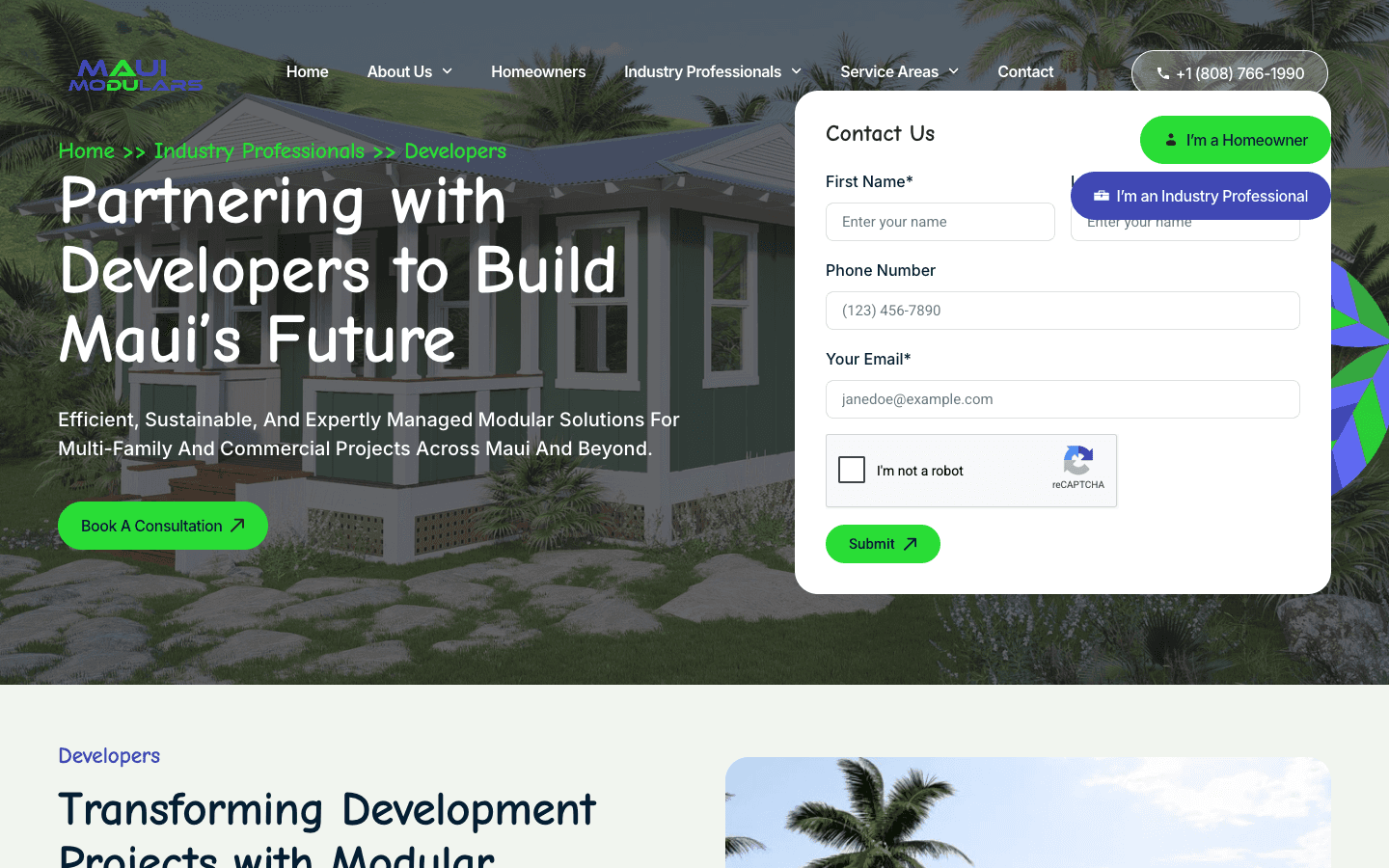
The positioning does its work on every page a buyer touches. Instead of generic builder copy, the site makes one coherent argument from the first screen to the contact form: this is who we build for, this is why modular serves them, this is what working with us looks like. A buyer moving through the site is moving through the case for modular — so by the time they reach out, the comparison against site-built has already been argued in Maui Modulars’ favor.
The care plan runs underneath, on our side of the fence. Software updates land on schedule. Security gets monitored and patched, not discovered. Speed gets maintained, because a slow site quietly taxes every visit. When something needs changing — a new project, a copy update, a new page — the team sends it to us and it gets done. Nobody at Maui Modulars logs into a hosting panel, remembers a renewal date, or troubleshoots anything.
That arrangement is how the website keeps being an asset instead of decaying into a liability. A construction company’s website should work like its best equipment: reliable, maintained on schedule, and never the reason a job stalls. That’s our job now, not theirs. The video testimonial on this page shows what the partnership looks like from the client’s side.
What changed
Maui Modulars now presents the way a serious island builder should: positioned clearly, arguing the case for modular instead of leaving buyers to argue it for themselves, on a site that’s fast and current every day of the year. The brand finally matches the product.
Just as important is what the team no longer does. No hosting decisions, no update anxiety, no wondering whether the site is slow or out of date. The web presence became a handled thing — maintained by the people who built it, improved as needs come up, and never on the client’s to-do list. That frees the company to do the work it actually sells: building homes. The website’s job is to make the argument and hold the standard. It does both, and it will keep doing both, because keeping it that way is what a care plan is for.
EXHIBITS — LIVE PAGES
CLIENT TESTIMONIAL