More than 60 percent of American construction businesses now use automation to connect with potential clients faster and more efficiently. As the off-site building sector grows, companies face increasing pressure to improve how they find and manage new business leads. For modular builders and prefab developers, understanding how automation systems can personalize outreach and nurture opportunities is key to staying competitive in a crowded market.
Table of Contents
- Defining Automation In Lead Generation
- Types Of Automated Lead Generation Tools
- How Automation Streamlines Builder Workflows
- Key Features For Off-Site Construction Firms
- Cost, ROI, And Common Automation Mistakes
Key Takeaways
| Point | Details |
|---|---|
| Lead Generation Automation | Utilizing technology improves efficiency in identifying and nurturing business opportunities in off-site construction. |
| Types of Tools | Key tools include contact enrichment, outreach automation, lead capture systems, and CRM integrations for effective lead management. |
| Workflow Streamlining | Intelligent automation reduces administrative overhead and enhances project acquisition through improved lead management and client communication. |
| Strategic Investment | Successful implementation of automation requires careful financial planning and ongoing evaluation to maximize returns. |
Defining Automation in Lead Generation
In the competitive world of off-site construction, lead generation automation represents a strategic approach to identifying and nurturing potential business opportunities more efficiently. Marketing automation software transforms how modular builders and prefab developers attract and convert potential clients by systematically tracking visitor interactions and personalizing engagement strategies.
At its core, lead generation automation involves using technological tools to streamline the process of attracting and capturing potential customer interest. By implementing intelligent tracking mechanisms, businesses can monitor website visitors, analyze their behavior, and develop targeted communication strategies. These systems go beyond traditional marketing approaches by enriching user profiles based on specific interactions, allowing for more precise and personalized outreach.
The fundamental components of lead generation automation typically include:
- Behavioral tracking technologies
- Automated email communication systems
- Customer relationship management (CRM) integrations
- Intelligent lead scoring mechanisms
With advanced automation, off-site construction professionals can transform their lead generation from a manual, time-consuming process into a data-driven, strategic approach. By leveraging systematic lead generation techniques, builders can significantly reduce response times, improve prospect engagement, and ultimately increase their conversion rates.
Types of Automated Lead Generation Tools
In the rapidly evolving landscape of off-site construction marketing, automated lead generation tools have become essential for modular builders seeking to streamline their business development processes. Lead generation platforms offer diverse capabilities designed to capture, nurture, and convert potential client prospects with unprecedented efficiency.
Comprehensive lead generation tools can be strategically categorized into several critical types. Contact and data enrichment tools enable builders to gather detailed information about potential clients, transforming anonymous website visitors into actionable leads. Outreach and campaign automation platforms facilitate personalized communication strategies, allowing developers to create targeted marketing sequences that engage potential customers across multiple touchpoints.
The primary categories of automated lead generation tools include:
- Contact & Data Enrichment Tools
- Identify and validate potential client information
- Provide comprehensive professional and company insights
- Enable precise targeting and segmentation
- Outreach & Campaign Automation Platforms
- Design multi-channel communication strategies
- Track and analyze prospect interactions
- Automate follow-up sequences
- Lead Capture & Landing Page Builders
- Create conversion-optimized web experiences
- Implement intelligent form design
- Generate high-quality lead capture mechanisms
- Customer Relationship Management (CRM) Systems
- Centralize lead and customer information
- Manage complex sales pipelines
- Provide advanced reporting and analytics
By integrating these sophisticated lead generation tools for ADU development, off-site construction professionals can transform their marketing approach from reactive to proactively strategic, ensuring consistent growth and improved project acquisition rates.
How Automation Streamlines Builder Workflows
Off-site construction professionals are increasingly leveraging intelligent automation to transform complex business processes, dramatically reducing administrative overhead and increasing operational efficiency. Sales funnel optimization represents a critical area where automation can significantly impact workflow management and project acquisition strategies.

Intelligent automation combines artificial intelligence with robotic process automation to streamline repetitive tasks and complex workflows. By implementing advanced CRM systems, builders can automate critical processes such as lead tracking, client communication, and project documentation. These systems continuously learn and adapt, enabling more sophisticated decision-making and reducing manual intervention across multiple operational domains.
Key workflow automation strategies for off-site construction professionals include:
- Lead Management Automation
- Automatic lead scoring and prioritization
- Seamless lead routing to appropriate sales representatives
- Personalized follow-up communication triggers
- Project Documentation
- Automated document generation
- Standardized template management
- Real-time collaboration and version control
- Client Communication
- Scheduled email and notification sequences
- Intelligent response tracking
- Personalized communication based on interaction history
- Resource Allocation
- Automated scheduling and resource assignment
- Performance tracking and optimization
- Predictive capacity planning
By embracing these sophisticated automation techniques, off-site construction businesses can create more agile, responsive, and efficient operational frameworks that minimize human error and maximize productivity across all critical business functions.
Key Features for Off-Site Construction Firms
Automation technologies are revolutionizing how off-site construction firms approach business operations, offering sophisticated solutions that transform traditional workflows. SEO strategies play a crucial role in connecting these technological advancements with broader digital marketing objectives, enabling more intelligent and responsive business models.
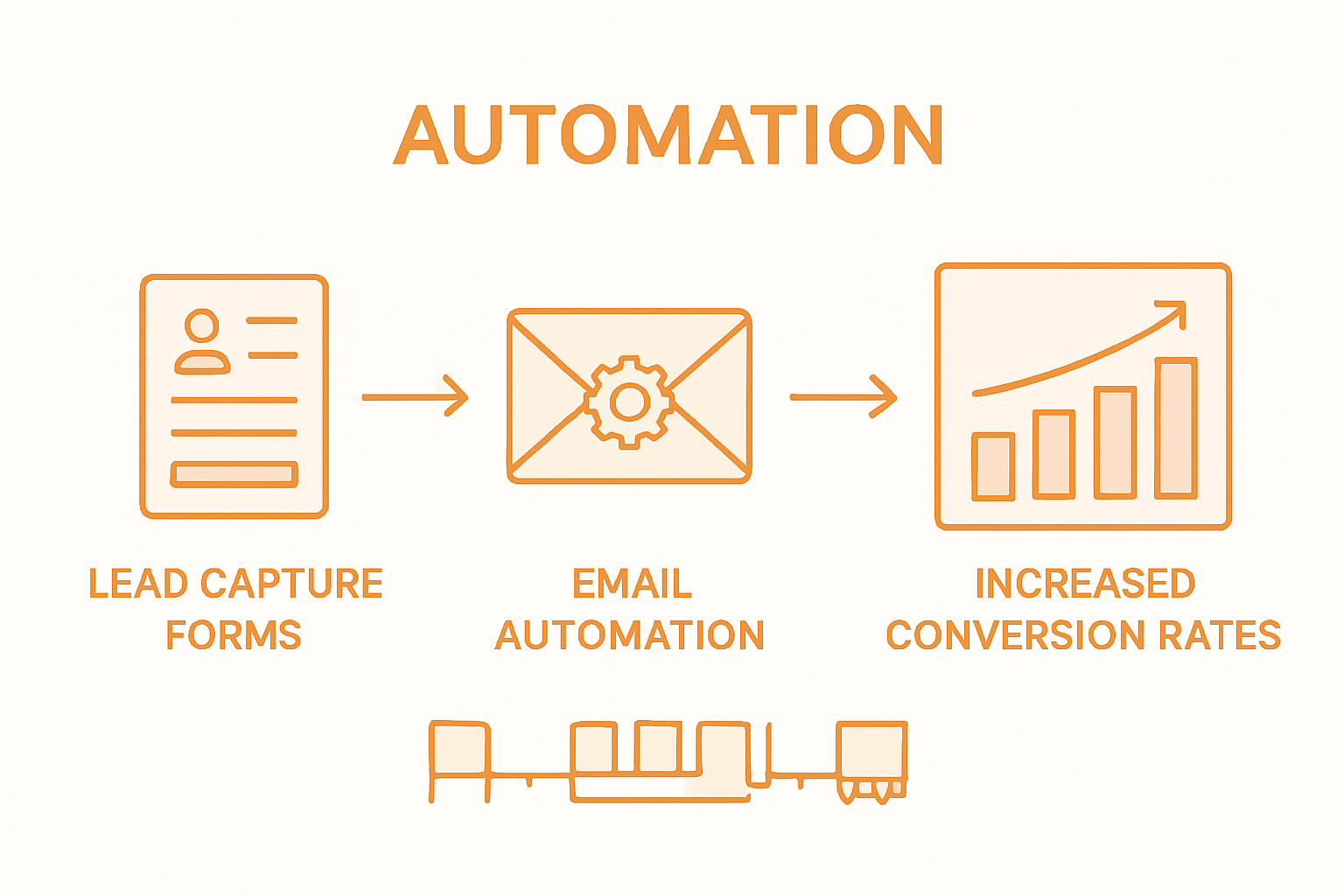
Robotic Process Automation (RPA) provides powerful tools for systematically addressing repetitive tasks and complex operational challenges. Agent-based modeling allows firms to simulate intricate interactions and optimize resource allocation, creating more predictable and efficient project management strategies. These advanced technologies enable builders to develop content marketing approaches that are more data-driven and strategically aligned with client needs.
Key automation features critical for off-site construction firms include:
- Workflow Optimization
- Automated project tracking
- Real-time resource allocation
- Predictive performance analytics
- Client Engagement Automation
- Intelligent lead qualification
- Personalized communication sequences
- Automated follow-up mechanisms
- Documentation Management
- Standardized template generation
- Automatic version control
- Seamless collaboration tools
- Operational Intelligence
- Comprehensive performance dashboards
- Integrated reporting systems
- Adaptive learning algorithms
By strategically implementing these advanced automation features, off-site construction firms can create more agile, responsive, and technologically sophisticated business ecosystems that consistently deliver superior operational performance.
Cost, ROI, and Common Automation Mistakes
Implementing automation technologies requires strategic financial planning and a comprehensive understanding of potential returns and pitfalls. Automated machine learning tools offer significant potential for transforming business operations, but successful implementation demands careful evaluation of both investment costs and anticipated productivity gains.
Literature-based discovery approaches reveal that successful automation strategies involve more than simply purchasing technology. Firms must develop nuanced implementation frameworks that account for organizational complexity and specific operational requirements. Content marketing strategies play a crucial role in understanding and communicating the value of automation investments to stakeholders.
Common automation mistakes and critical ROI considerations include:
- Financial Evaluation Errors
- Underestimating total implementation costs
- Failing to calculate long-term efficiency gains
- Overlooking ongoing maintenance expenses
- Technology Selection Challenges
- Choosing tools without comprehensive needs assessment
- Neglecting scalability and integration capabilities
- Ignoring user adoption and training requirements
- Operational Integration Mistakes
- Implementing automation without process redesign
- Insufficient change management strategies
- Resistance from team members unfamiliar with new technologies
- Performance Measurement Gaps
- Lack of clear performance benchmarks
- Incomplete tracking of automation effectiveness
- Failure to continuously optimize automated systems
Successful off-site construction firms recognize that automation represents a strategic investment requiring continuous refinement, comprehensive planning, and a commitment to technological adaptability.
Unlock Lead Generation Success with Smart Automation Solutions
The article highlights the complexity of managing lead generation automation in the off-site construction industry. You face challenges like tracking visitor behavior, personalizing outreach, and integrating multiple tools to efficiently nurture prospects. These pain points demand a solution that not only automates but also strategically optimizes your sales funnel and client communications. Key concepts such as intelligent lead scoring, automated follow-up, and CRM integration are essential to transform these challenges into growth opportunities.
At BoxBuild Agency, we specialize in helping modular, prefab, and container-based builders overcome these exact hurdles through our data-driven marketing and automation expertise. Our tailored Funnels – BoxBuild strategies streamline your lead management workflow, ensuring no opportunity is lost. We also leverage advanced AI – BoxBuild techniques to personalize outreach and improve lead qualification accuracy. Let us help you build smarter processes that accelerate project acquisitions and position you as a trusted market leader.
Take control of your lead generation automation now and experience measurable growth.
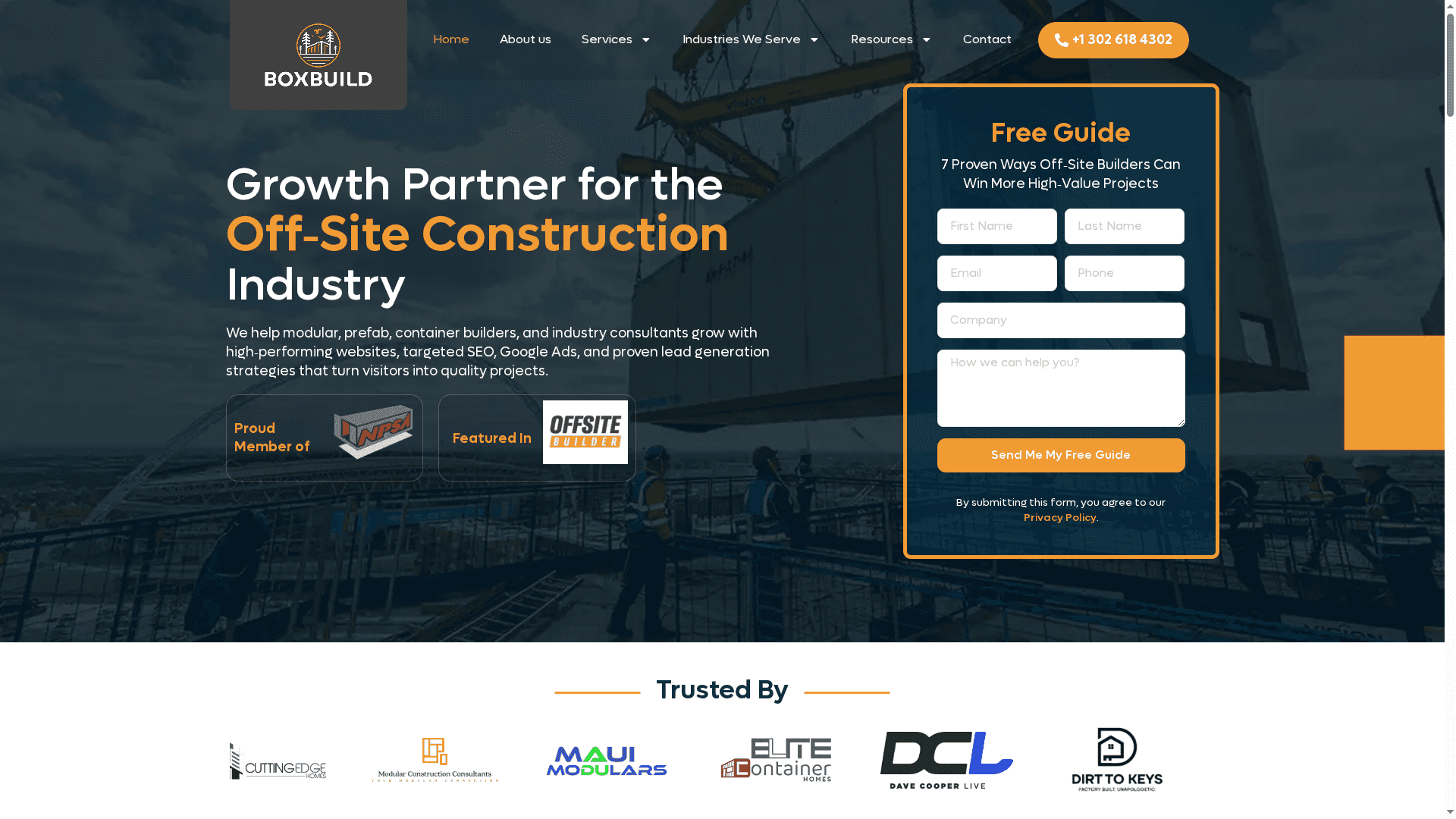
Discover how our proven automation systems can simplify complex workflows and boost your conversions. Visit BoxBuild Agency today to start transforming your lead generation strategy.
Frequently Asked Questions
What is lead generation automation?
Lead generation automation is the use of technology to streamline the process of attracting and capturing potential customer interest. It involves tracking visitor interactions and personalizing communication strategies to improve engagement and conversion rates.
What are some key components of lead generation automation?
Key components include behavioral tracking technologies, automated email communication systems, CRM integrations, and intelligent lead scoring mechanisms that enhance targeting and engagement.
How does automation improve builder workflows?
Automation reduces administrative overhead and increases operational efficiency by streamlining processes like lead management, project documentation, client communication, and resource allocation, allowing businesses to focus on strategic activities.
What are common mistakes in implementing automation for lead generation?
Common mistakes include underestimating costs, selecting incompatible technology, neglecting the need for operational integration, and failing to establish clear performance measurement metrics.