Most American modular construction firms face mounting pressure to deliver projects faster and at lower cost. Automation is shaping a major shift in building processes, with some companies reporting up to 20 percent labor cost reduction after adopting key technologies. Efficiency gains come from integrating robotic equipment, intelligent software, and real-time monitoring systems. This article gives practical insights and examples for project managers who want to stay competitive by making smart automation decisions that support predictable schedules and consistent quality.
Table of Contents
- Defining Automation In Construction Processes
- Major Types And Technologies Used Today
- How Automation Transforms Modular Building
- Integrating Automation In Modular Workflows
- Cost, Risks, And Implementation Best Practices
Key Takeaways
| Point | Details |
|---|---|
| Automation Enhances Efficiency | Integrating advanced technologies in construction dramatically improves productivity and reduces manual labor. |
| Key Technologies to Adopt | Essential automation tools include robotic machines, AI-driven controls, and 3D printing for efficient workflows. |
| Strategic Integration Required | Successful automation demands careful planning and phased implementation to minimize disruption and risks. |
| Staff Training is Crucial | Comprehensive training programs ensure that construction teams effectively utilize and collaborate with new technologies. |
Defining Automation in Construction Processes
Automation in construction represents a technological transformation that fundamentally reshapes traditional building processes through advanced technological integration. At its core, automation combines sophisticated machinery, intelligent software systems, and emerging technologies to enable greater machine autonomy in construction activities. These technologies aim to address critical industry challenges by reducing manual labor requirements and improving overall operational efficiency.
The technical definition of construction automation centers on electronic and mechanical systems that control and operate production processes. This approach integrates robotics, computer-based controls, and specialized equipment to streamline complex construction workflows. By deploying automated technologies, construction firms can significantly enhance productivity, minimize human error, and create more predictable project outcomes.
Key automation technologies in construction encompass several strategic domains:
- Robotic equipment for precise material handling
- Computer-aided design and planning systems
- Automated fabrication and prefabrication processes
- Real-time project monitoring and data collection platforms
- Intelligent quality control and safety tracking mechanisms
Pro tip: Start small by identifying one repetitive process in your construction workflow where automation could immediately reduce labor time and improve consistency.
Major Types and Technologies Used Today
Construction automation encompasses a diverse range of sophisticated technologies designed to transform traditional building processes. Robotics and advanced technological systems have emerged as critical components in modernizing construction workflows, addressing persistent industry challenges such as labor shortages and safety concerns.
The primary categories of automation technologies in construction include:
- Autonomous Navigation Machines: Self-guided vehicles and robots capable of navigating construction sites independently
- Robotic Equipment: Specialized machines for material handling, welding, and precise construction tasks
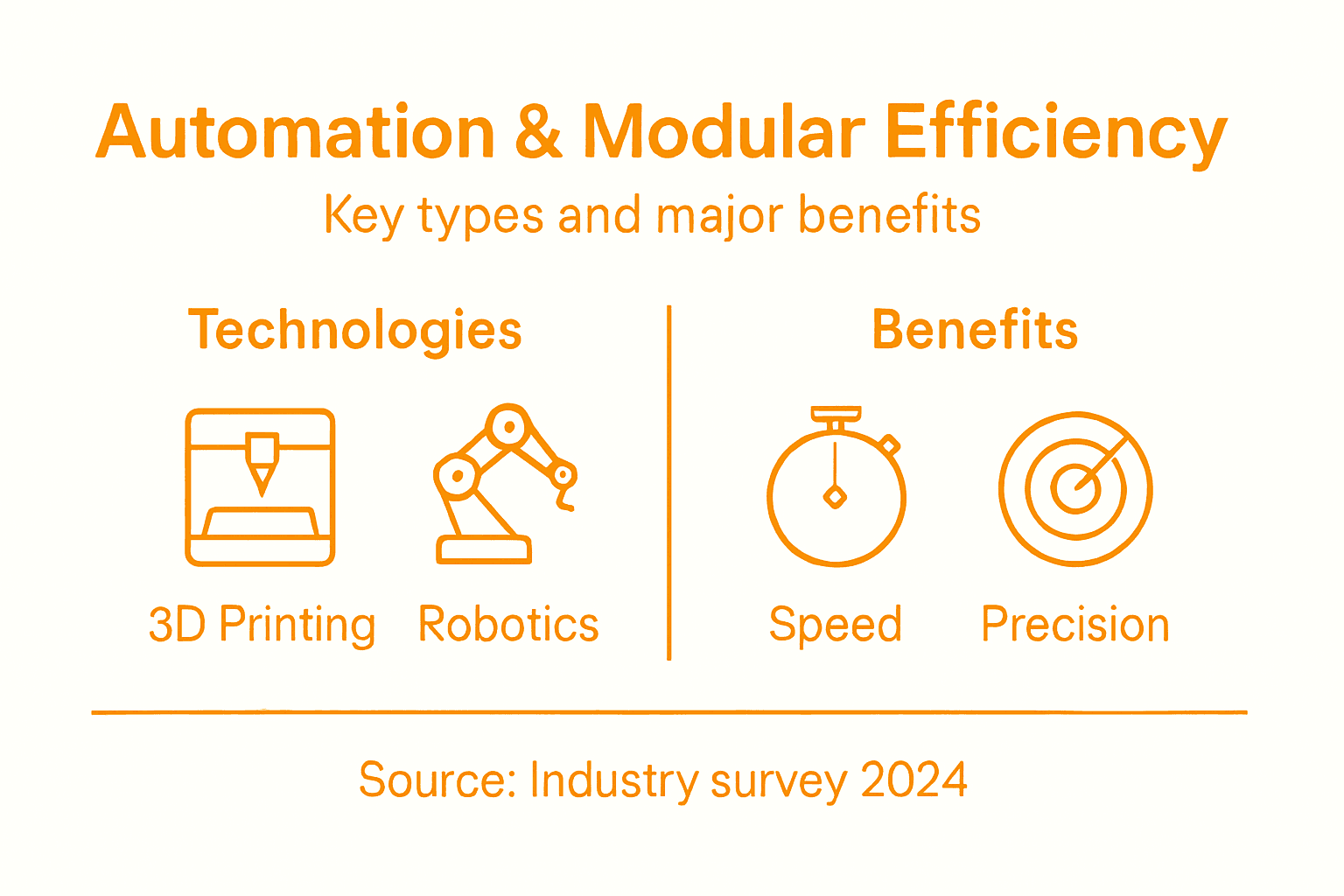
- 3D Printing Technologies: Advanced fabrication systems that can create complex structural components on-site
- Drone-Based Monitoring: Aerial systems for site surveying, progress tracking, and safety inspections
- AI-Driven Control Systems: Intelligent platforms that optimize project management and resource allocation
Human-robot collaboration represents a particularly promising frontier in construction automation. These integrated systems combine human expertise with robotic precision, enabling more complex and efficient construction processes. By leveraging sensors, machine learning, and advanced control mechanisms, these technologies can dramatically improve productivity, reduce human error, and enhance overall project safety.
Here’s how leading construction automation technologies compare in their primary benefits and common applications:
| Technology Type | Key Benefit | Common Application |
|---|---|---|
| Autonomous Machines | Increased jobsite safety | Earthmoving and material transport |
| Robotic Equipment | Enhanced task precision | Welding and bricklaying |
| 3D Printing Systems | Faster production speed | On-site structural components |
| Drone-Based Monitoring | Real-time data collection | Progress tracking and inspections |
| AI-Driven Control Systems | Optimized resource use | Project scheduling and allocation |
Pro tip: Conduct a comprehensive audit of your current construction workflows to identify specific processes where automation technologies could provide the most immediate and significant performance improvements.
How Automation Transforms Modular Building
Modular building has experienced a revolutionary transformation through advanced automation technologies that fundamentally reimagine traditional construction methodologies. AI-driven algorithms and robotic systems are now enabling unprecedented levels of precision, efficiency, and quality control throughout the construction project lifecycle.
The key transformative aspects of automation in modular building include:
- Enhanced precision in manufacturing components
- Dramatically reduced human error
- Accelerated production timelines
- Improved resource allocation and utilization
- Superior quality consistency across building modules
Automation technologies are particularly powerful in modular construction because they address critical industry challenges. By integrating advanced sensor technologies, machine learning algorithms, and robotic manufacturing processes, construction firms can now produce standardized building components with remarkable accuracy. These technologies support sustainable practices by minimizing material waste, optimizing resource consumption, and creating more predictable project outcomes.
Pro tip: Invest in comprehensive staff training programs that help your team understand and effectively collaborate with emerging automation technologies to maximize their potential benefits.
Integrating Automation in Modular Workflows
Successful integration of automation in modular construction requires a comprehensive, strategic approach that transforms traditional workflows through advanced technological implementation. Synchronized control systems and digital tools now enable construction teams to reimagine every stage of the modular building process, from initial design to final assembly.
The critical steps for effective automation integration include:
- Implementing digital design platforms
- Establishing robotic fabrication protocols
- Developing automated quality control mechanisms
- Creating streamlined logistics and tracking systems
- Integrating real-time data monitoring technologies
Each workflow stage demands careful consideration and technological alignment. Design teams must leverage Building Information Modeling (BIM) technologies to create precise digital representations, while manufacturing teams utilize robotic systems for consistent, high-precision component production. Automated logistics tracking ensures seamless coordination between design, fabrication, and onsite assembly, dramatically reducing human error and increasing overall project efficiency.

Pro tip: Create cross-functional teams that include both technological experts and experienced construction professionals to ensure smooth automation integration and maintain practical operational knowledge.
Cost, Risks, and Implementation Best Practices
Implementing automation technologies in modular construction requires a strategic, nuanced approach that carefully balances technological investment against potential returns. Comprehensive risk management strategies are essential for successfully navigating the complex landscape of technological transformation in construction workflows.
Key financial and operational considerations include:
- Initial equipment and software investment costs
- Training and workforce adaptation expenses
- Potential productivity gains and efficiency improvements
- Technical integration and interoperability challenges
- Long-term return on technology investment
Successful implementation demands a phased, methodical approach. Construction firms must conduct thorough risk assessments, develop comprehensive training programs, and create flexible technological adoption strategies that allow gradual integration. This approach minimizes disruption while enabling teams to incrementally build technological capabilities, reducing financial risk and supporting smoother organizational transitions.
Below is a summary of implementation challenges and recommended strategies when adopting automation in modular construction:
| Challenge | Strategy for Success |
|---|---|
| High initial investment | Pilot projects to prove ROI |
| Workforce adaptation | Comprehensive training programs |
| Integration complexity | Gradual, phased rollouts |
| Data interoperability | Use open digital platforms |
| Managing project risks | Continuous risk assessment review |
Pro tip: Conduct a pilot project with a limited scope to test automation technologies, allowing your team to gain practical insights and validate potential benefits before full-scale implementation.
Unlock Greater Efficiency in Modular Construction with Smarter Automation Solutions
The article highlights the pressing challenge of integrating automation to boost modular building efficiency while overcoming hurdles like workforce adaptation and workflow integration. If you are looking to capitalize on AI-driven systems, robotic precision, and optimized resource allocation in your off-site construction projects you need marketing strategies that reflect your technological edge. BoxBuild Agency specializes in helping modular, prefab, and container-based builders generate more qualified leads through targeted AI-powered marketing campaigns and expertly designed funnels.

Get ahead in the competitive modular construction market with data-driven solutions that amplify your automation capabilities and attract high-value projects. Visit BoxBuild Agency to explore how our seamless integration of automation concepts and strategic Google Ads can accelerate your growth today. Take the first step now and partner with a digital expert who understands both technology and construction.
Frequently Asked Questions
What is automation in construction?
Automation in construction refers to the integration of advanced technologies, such as robotics and intelligent software systems, to enhance efficiency and reduce manual labor in building processes.
How does automation improve modular building efficiency?
Automation enhances modular building efficiency by increasing precision in manufacturing, reducing human error, accelerating production timelines, and optimizing resource utilization.
What are the main types of automation technologies used in construction?
Key automation technologies include autonomous navigation machines, robotic equipment for tasks like welding, 3D printing systems for fabrication, drone-based monitoring for progress tracking, and AI-driven control systems for project management.
What challenges might a construction firm face when implementing automation?
Challenges can include high initial investment costs, workforce adaptation requirements, integration complexity of new technologies, and managing data interoperability between different systems.
Recommended
- 7 Essential Automation Tools for Construction Success – BoxBuild
- 7 Key Modular Home Design Best Practices for Builders – BoxBuild
- What Is BIM in Off-Site Construction: Key Impacts – BoxBuild
- Design-Build Method: Boosting Efficiency for Modern Builders – BoxBuild
- The Real Cost of Working with AEC Daily, RedVector & CEU Events – CEU Builder