Choosing the right construction approach can define a builder’s success in the competitive North American market. Eco-conscious developers know that outdated myths often cloud the real benefits of smart modular homes, but modern systems prove otherwise. By combining factory precision with advanced technology, these homes bring accelerated timelines, higher sustainability, and tailored designs that surpass traditional expectations. Discover how smart modular construction provides an edge with digital integration and proven durability.
Table of Contents
- Smart Modular Homes Defined and Debunked
- Core Technologies Powering Smart Modular Homes
- Key Benefits for Builders and Developers
- Smart Modular vs. Traditional and Prefab Homes
- Adoption Challenges and Emerging Opportunities
Key Takeaways
| Point | Details |
|---|---|
| Smart Modular Homes Offer Efficiency | They combine factory precision with advanced technologies, enabling rapid assembly and lower construction timelines. |
| Technological Integration is Key | Smart modular homes incorporate IoT, AI, and energy management systems for enhanced customization and sustainability. |
| Misconceptions Need to be Addressed | Modern modular homes meet high-quality building standards and are not merely temporary structures. |
| Challenges Exist in Adoption | Financial barriers and regulatory hurdles remain, but emerging opportunities can facilitate market growth. |
Smart Modular Homes Defined and Debunked
A smart modular home represents a revolutionary approach to residential construction that combines factory precision with advanced technological integration. Unlike traditional home building methods, these homes leverage digital technologies and prefabrication techniques to deliver unprecedented efficiency and customization.
Modular construction offers significant advantages by combining factory-controlled settings with digital technologies. The core characteristics of smart modular homes include:
- Precision manufacturing in controlled factory environments
- Integration of Internet of Things (IoT) technologies
- Rapid assembly and reduced construction timelines
- Enhanced sustainability and energy efficiency
- Greater design flexibility compared to traditional construction
Contrary to outdated misconceptions, modern modular homes are not temporary or low-quality structures. They meet rigorous building codes and can be constructed using diverse, high-quality materials that rival—and often exceed—traditional home construction standards. The modular architecture approach enables flexible residential design that adapts to changing homeowner needs.
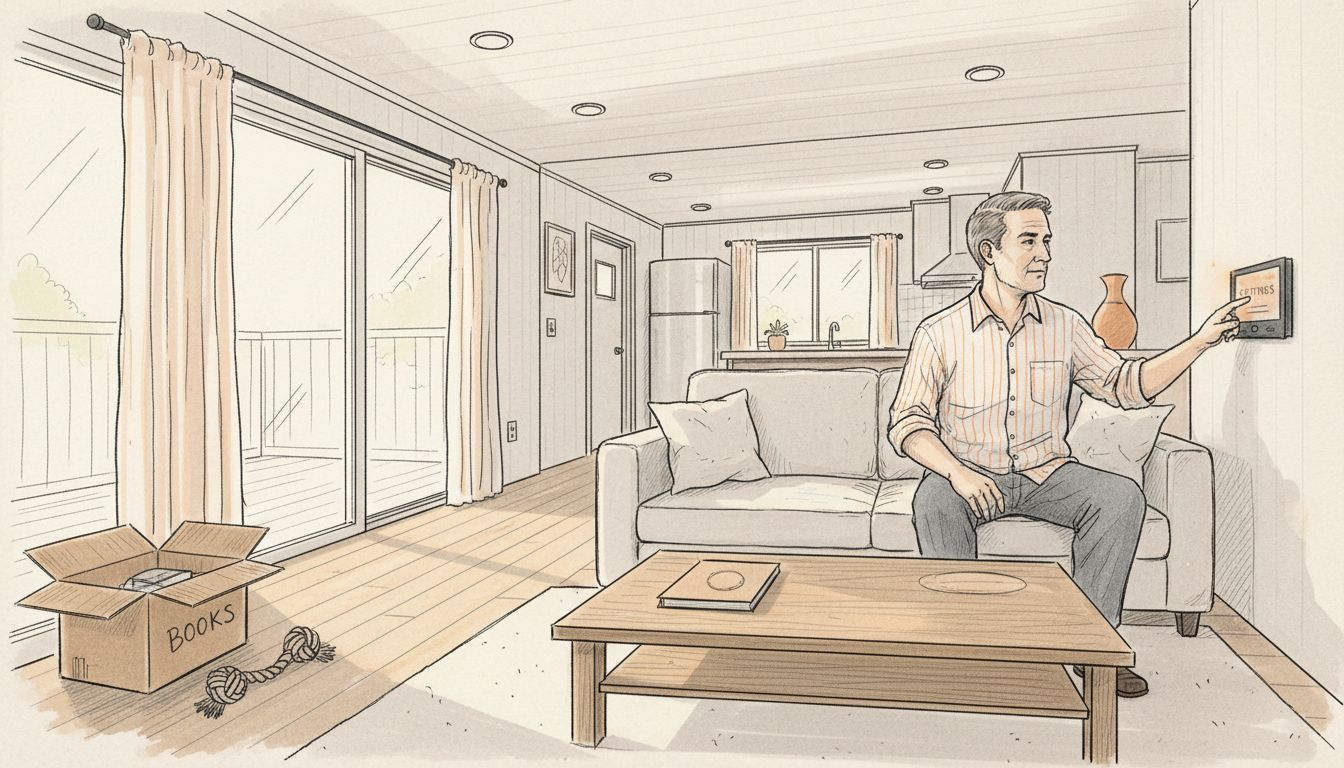
Key technological innovations distinguish smart modular homes from conventional builds. These include advanced Building Information Modeling (BIM), precision manufacturing robotics, and integrated smart home systems that allow for unprecedented levels of customization and efficiency.
Pro tip: When evaluating a smart modular home, request detailed specifications about manufacturing processes, material quality, and integrated technological features to ensure you’re getting a truly advanced residential solution.
Core Technologies Powering Smart Modular Homes
Smart modular homes are revolutionizing residential construction through advanced digital technologies that transform traditional building processes. These innovative systems integrate cutting-edge solutions to create more efficient, sustainable, and intelligent living environments.
Key technologies driving this transformation include digital monitoring and energy modeling systems, which enable unprecedented levels of precision and customization. The core technological components encompass:
- Building Information Modeling (BIM)
- Internet of Things (IoT) integration
- Advanced building energy management systems
- Artificial Intelligence (AI) monitoring platforms
- Smart home connectivity technologies
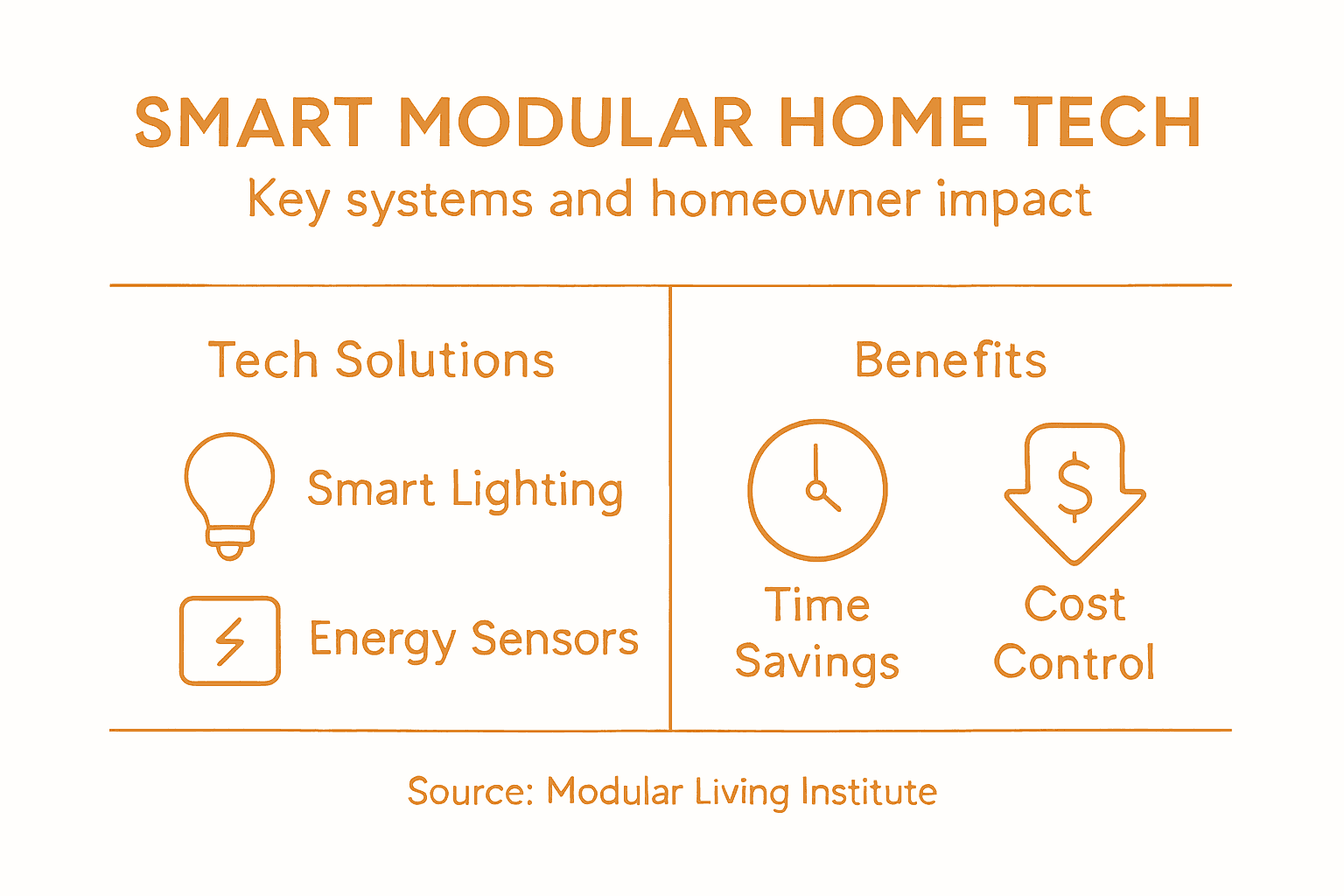
These technological innovations provide comprehensive benefits beyond traditional construction methods. Smart home platforms like SmartThings now allow homeowners to control virtually every aspect of their living environment, from automated lighting and temperature adjustments to real-time energy consumption tracking.
Automation and connectivity represent the most transformative aspects of smart modular home technologies. AI-enabled appliances and integrated systems create living spaces that adapt to residents’ preferences, optimize energy consumption, and provide enhanced security and comfort.
Here is a summary of the main technologies used in smart modular homes and their specific impacts:
| Technology | Core Function | Impact on Homeowners |
|---|---|---|
| Building Information Modeling (BIM) | Digital design and planning | More accurate, customizable designs |
| IoT Integration | Device connectivity | Centralized control of home systems |
| Energy Management Systems | Optimize power usage | Lower utility bills and carbon footprint |
| AI Monitoring | Adaptive system management | Increased comfort and operational efficiency |
| Smart Home Platforms | Unified automation | Simple user experience and control |
Pro tip: When considering a smart modular home, prioritize systems with open-source integration capabilities to ensure long-term technological adaptability and upgrade potential.
Key Benefits for Builders and Developers
Modular construction represents a transformative approach that addresses critical challenges faced by builders and developers in today’s complex construction landscape. Digital technologies are revolutionizing construction efficiency, offering unprecedented advantages across project management and delivery.
The key benefits for builders and developers include:
- Reduced construction timelines
- Significant cost savings
- Enhanced quality control
- Improved labor resource management
- Increased project predictability
- Sustainable building practices
Builders can leverage modular construction to directly address industry-wide challenges. Project scalability becomes dramatically more achievable when construction processes are streamlined through advanced manufacturing techniques. Modular approaches enable cost reductions up to 20%, with construction timelines potentially reduced between 20-50%.
Strategic implementation requires a holistic approach that integrates digital tools, precise manufacturing, and collaborative stakeholder engagement. Successful developers recognize that modular construction is not just a technique, but a comprehensive methodology for reimagining residential and commercial building processes.
Pro tip: Invest in cross-functional training to help your team understand and effectively implement modular construction technologies and methodologies.
Smart Modular vs. Traditional and Prefab Homes
Understanding the distinctions between smart modular, traditional, and prefabricated homes requires a nuanced examination of their core construction methodologies and technological capabilities. Advanced manufacturing techniques dramatically transform home construction approaches, offering unprecedented opportunities for efficiency and innovation.
Key differences between these home construction methods include:
-
Construction Location
- Traditional: Entirely onsite
- Prefab: Partially offsite
- Smart Modular: Predominantly factory-manufactured
-
Technological Integration
- Traditional: Minimal digital integration
- Prefab: Limited technological features
- Smart Modular: Full digital ecosystem and IoT connectivity
-
Resource Management
- Traditional: High material waste
- Prefab: Reduced waste
- Smart Modular: Optimized material usage and sustainability
Smart modular homes represent a quantum leap beyond conventional construction methods. Unlike traditional builds that consume months of onsite labor, or basic prefab approaches, these homes integrate cutting-edge digital technologies to create intelligent, adaptable living spaces. Advanced manufacturing processes enable superior quality control, ensuring consistent performance and unprecedented customization potential.
Pro tip: Evaluate potential home solutions by examining their technological integration, not just their initial construction cost.
Adoption Challenges and Emerging Opportunities
The journey toward widespread smart modular home adoption involves navigating complex technological, economic, and regulatory landscapes. Strategic policy support and workforce development are critical in overcoming persistent implementation barriers.
Significant adoption challenges include:
-
Financial Barriers
- High initial investment costs
- Limited financing options
- Uncertain return on technology investment
-
Technological Constraints
- Device interoperability challenges
- Infrastructure compatibility issues
- Security and privacy concerns
-
Regulatory Hurdles
- Complex building code requirements
- Inconsistent regional regulations
- Slow policy adaptation to technological innovation
Emergent opportunities are reshaping the smart modular home ecosystem. Innovative business models and service-oriented approaches are creating new pathways for technology integration, emphasizing long-term customer relationships and solution-driven development.
This table compares adoption challenges to new opportunities in the smart modular home market:
| Challenge Area | Key Barrier | Emerging Opportunity |
|---|---|---|
| Financial | High upfront costs | New financing models & incentives |
| Technology | Interoperability issues | Open standards boost compatibility |
| Regulation | Varying local codes | Policy updates streamline approvals |
| Skills | Limited workforce knowledge | Sector-specific training programs |
Pro tip: Develop comprehensive stakeholder education programs to systematically address technological misconceptions and demonstrate tangible smart modular home benefits.
Unlock the Full Potential of Smart Modular Homes with Digital Growth Expertise
Smart modular homes are redefining residential construction with cutting-edge technology and precision manufacturing. Yet, builders and developers face the challenge of standing out in this highly competitive, tech-driven market. If you want to accelerate lead generation, showcase your innovative solutions, and position your business as an industry leader, the key is strategic digital growth tailored specifically to modular construction.
At BoxBuild Agency, we understand the importance of harnessing AI-powered marketing, automated funnels, and targeted social media campaigns to reach the right customers exactly when they are ready to invest. Our proven methods help your brand capture attention, communicate your smart home advantages, and close high-value projects faster than ever before.
Boost your online presence with our expert AI strategies and optimize your sales cycle through custom funnels designed for modular home builders.
Don’t let your smart modular home innovations go unnoticed. Partner with BoxBuild Agency at https://www.boxbuild.agency/ today and transform your digital marketing into a lead-generating powerhouse. Start growing with confidence and take your construction business to the next level.
Frequently Asked Questions
What is a smart modular home?
A smart modular home is a type of home constructed using advanced prefabrication techniques and digital technologies. It combines factory precision with smart technologies, offering enhanced efficiency, customization, and sustainability compared to traditional building methods.
How do smart modular homes differ from traditional homes?
Smart modular homes are primarily constructed in factories, allowing for greater precision and reduced onsite labor. They incorporate advanced digital technologies, such as IoT integration and Building Information Modeling, which traditional homes typically lack.
What are the main benefits of owning a smart modular home?
The key benefits of smart modular homes include faster construction timelines, energy efficiency, reduced material waste, greater design flexibility, and enhanced automation through smart home technologies, contributing to a more sustainable living environment.
What challenges are associated with the adoption of smart modular homes?
Adoption challenges include high initial investment costs, limited financing options, technological constraints such as device interoperability, and complex regulatory requirements. Overcoming these barriers is essential for broader acceptance of smart modular homes.
Recommended
- Smart Construction Technology: Transforming Modular Building – BoxBuild
- Marketing Modular Homes: Winning Leads in 2025 – BoxBuild
- 7 Key Modular Home Design Best Practices for Builders – BoxBuild
- Modular vs Traditional Building: Project Efficiency and Cost – BoxBuild
- Why Use 3D Modelling in Urban Design Projects – 3D Urban Design