Project timelines often slip when unpredictable weather or on-site issues slow progress, but hybrid construction lets you sidestep many of these delays by combining prefabricated factory precision with the adaptability of on-site work. For modular construction managers across the United States and Canada, this approach delivers faster completion and lower costs without sacrificing flexibility. This overview cuts through the confusion, highlighting exactly how hybrid methods integrate factory and site operations to help you keep every project on track and under budget.
Table of Contents
- Hybrid Construction Explained For Modular Builds
- Types And Methods In Hybrid Construction
- How Hybrid Construction Maximizes Project Speed
- Major Benefits And Challenges For Project Managers
- Cost Factors And How To Avoid Common Pitfalls
Key Takeaways
| Point | Details |
|---|---|
| Hybrid Construction | Combines factory prefabrication with traditional site construction for increased efficiency and speed. |
| Types of Hybrid Approaches | Various methods exist, including Permanent Modular and Panelized construction, tailored to project needs. |
| Project Speed | Parallel workflows reduce timelines by allowing site preparation and factory production to occur simultaneously. |
| Cost Management | High upfront costs can be mitigated through careful planning and coordination to avoid transportation delays and design changes. |
Hybrid Construction Explained for Modular Builds
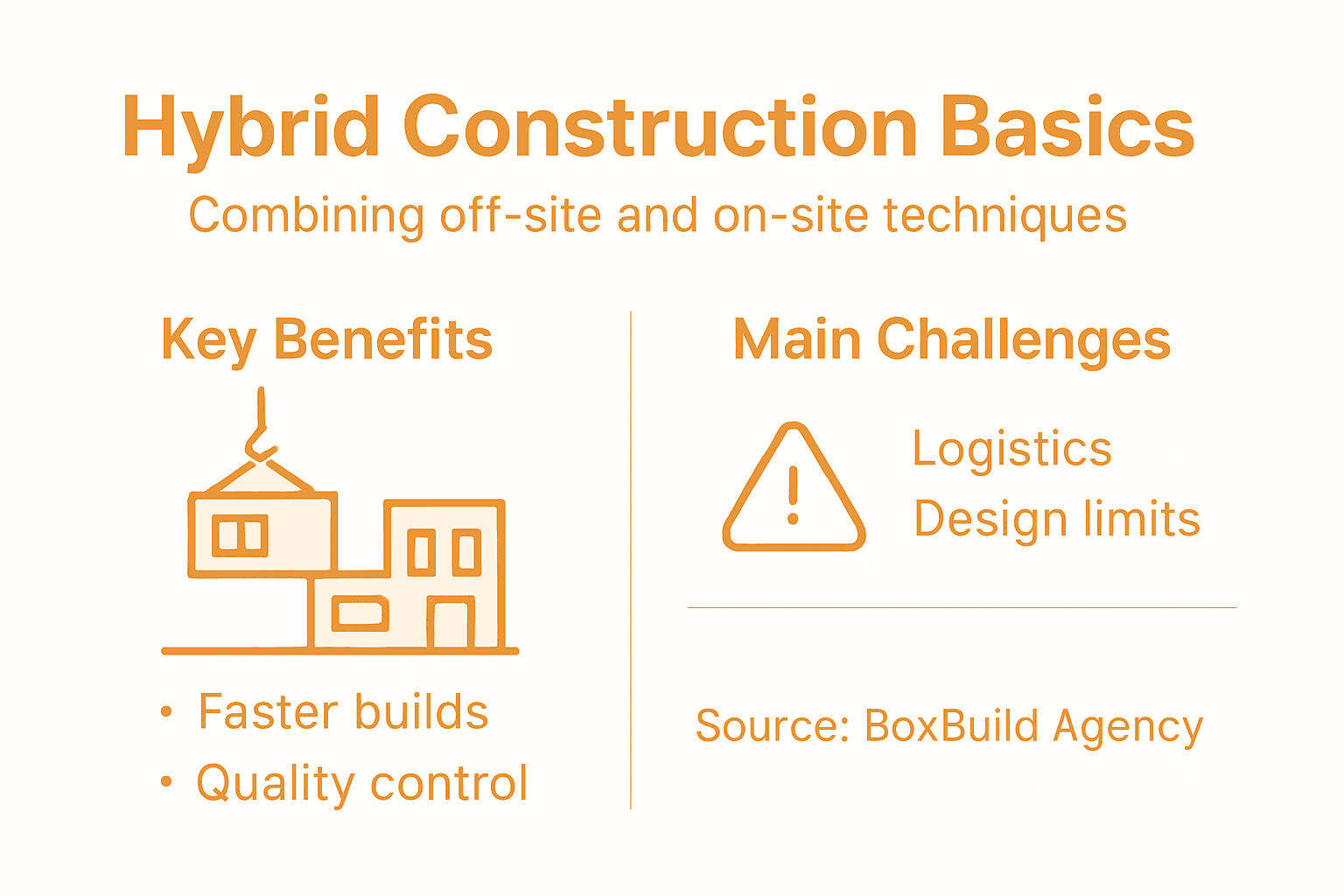
Hybrid construction combines the best of two worlds: factory-controlled prefabrication with traditional on-site construction methods. Instead of choosing between fully modular or fully traditional approaches, you get the precision of factory environments paired with the flexibility of site-based work.
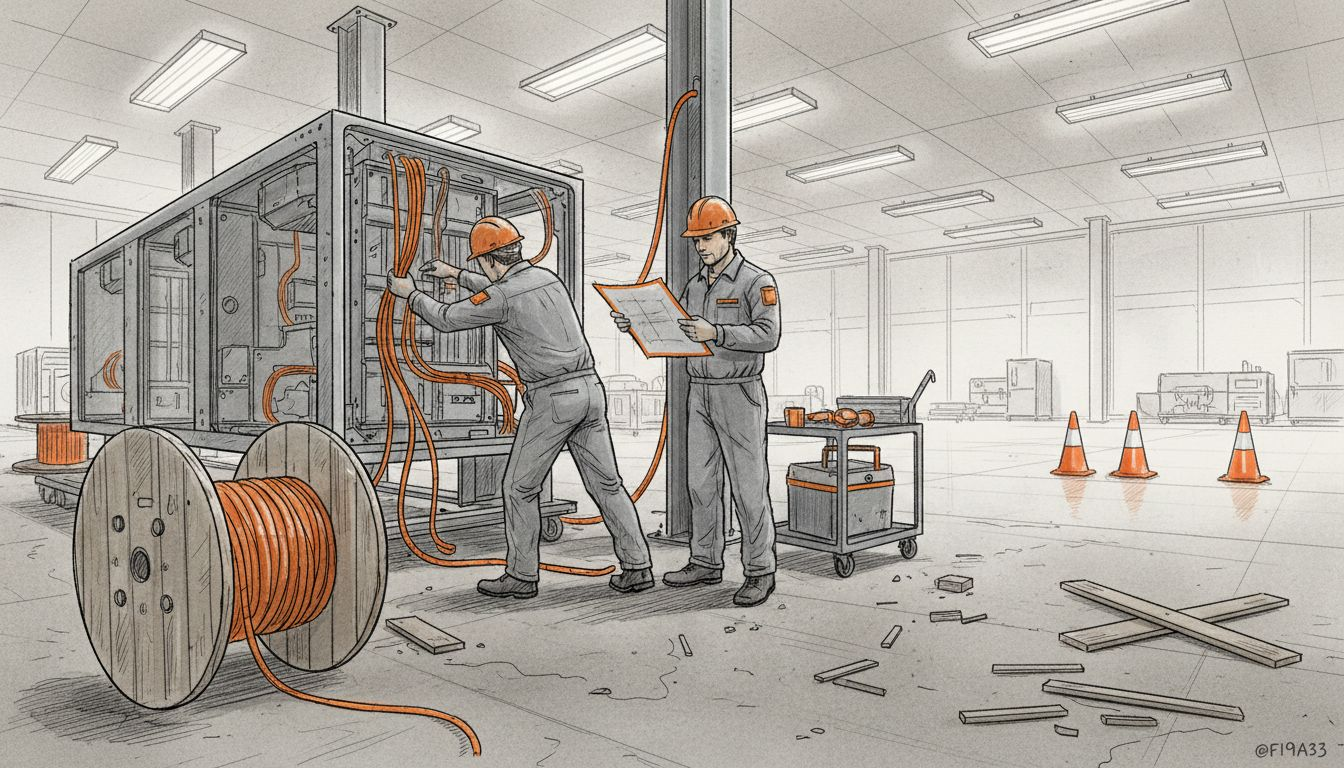
The core advantage lies in how hybrid modular construction integrates factory fabrication with on-site building. Your factory handles the repetitive, high-tolerance components where climate control and precision equipment matter most. Meanwhile, site crews handle customization, unique connections, and work that benefits from real-time decisions based on actual site conditions.
This approach solves real problems you face in modular construction. Factory fabrication catches quality issues before materials leave the plant. Your crews avoid weather delays on routine component manufacturing. You reduce material waste because factory processes optimize cutting and assembly. Projects move faster because modules arrive ready for installation rather than requiring extensive finishing work.
The structure works through a defined workflow. Hybrid construction processes use structured frameworks that separate site-appropriate work from factory-appropriate work. Complex internal systems and precision components get manufactured off-site. Connections, customizations, and site-specific elements get handled by your crews. This division lets you automate factory operations while maintaining the flexibility modular projects demand.
What makes hybrid construction valuable for your North American projects is scalability. You can handle varying project sizes without completely restructuring your process. A small residential project uses the same hybrid framework as a larger commercial build, just with different module quantities. This consistency reduces training overhead and operational complexity across multiple projects.
Pro tip: Start by mapping which components your team manufactures consistently versus which ones require site customization. This clarity shows where hybrid construction delivers the biggest gains in your specific operation.
Types and Methods in Hybrid Construction
Hybrid construction isn’t one-size-fits-all. Different project types call for different hybrid approaches. Understanding which method works best for your specific project is the difference between smooth delivery and cost overruns.
Permanent modular construction forms the foundation of most hybrid projects. Your factory manufactures complete volumetric units that stack and connect on-site with minimal additional work. These modules arrive with finishes, utilities, and fixtures already installed. This approach works exceptionally well for residential and hospitality projects where units repeat across floors. You reduce site labor dramatically because assembly happens mostly off-site.
Panelized construction takes a different angle. Instead of complete modules, factories produce wall and floor panels that crews assemble on-site. This method gives you more architectural flexibility than full volumetric modules. You can customize layouts more easily because panels connect like building blocks. The trade-off is more on-site labor, but you gain the ability to handle complex geometries and one-off designs that full modules would struggle with.
Modular construction types combine with traditional methods to create tailored solutions. Your hybrid approach might use volumetric modules for repetitive core areas while employing panelized systems for custom facade work. You might manufacture structural frames in the factory but handle interior finishes and systems on-site. This flexibility lets you match factory efficiency with project-specific requirements.
Movable modular construction addresses temporary or adaptable projects. Modules designed for relocation work well for disaster recovery, temporary facilities, or projects requiring future reconfiguration. This approach requires more robust connections and weather sealing but gives clients long-term value through adaptability.
The method you choose depends on three factors: your project timeline, architectural complexity, and your workforce capabilities. Permanent volumetric modules maximize speed and factory control. Panelized systems maximize design flexibility. Hybrid combinations let you optimize for your specific constraints.
Pro tip: Evaluate your factory capabilities against project requirements early. If your crews excel at panelized work but a project needs volumetric speed, bringing in modular suppliers as partners often costs less than forcing the wrong method.
The following table compares the main hybrid construction methods and their best use cases:
| Method | Best For | Key Benefit |
|---|---|---|
| Permanent Modular | Hotels, multi-family residential | Maximizes site labor savings |
| Panelized | Custom homes, complex designs | Increases design flexibility |
| Movable Modular | Temporary facilities, disaster recovery | Allows easy relocation |
| Hybrid Combinations | Large mixed-use, adaptive reuse | Balances speed and flexibility |
How Hybrid Construction Maximizes Project Speed
Speed wins projects. Hybrid construction delivers speed by doing two things at once. While your site crews prepare foundations and utilities, your factory manufactures modules simultaneously. This parallel workflow is the secret to cutting months off your schedule.
Traditional construction forces a linear timeline. You finish site prep, then start framing, then add systems. Everything waits for the previous phase to complete. Hybrid construction breaks this dependency. Parallel workflows enable simultaneous off-site and on-site work, meaning your factory starts production while foundation crews are still mobilizing equipment.
Factory work moves fast because conditions are controlled. No weather delays. No crew scheduling conflicts. No material shortages from unexpected demand. Your factory operates on predictable timelines. Modules leave the facility ready for installation, not requiring weeks of finishing work on-site. This efficiency compounds across multiple units. A residential tower using 60 modules gets those units installed and connected far faster than traditional framing and finishing could achieve.
Weather protection matters more than people realize. Shifting substantial work off-site reduces weather related delays, particularly critical in North American climates with unpredictable winter conditions. Your modules arrive fully weatherized. Site crews focus on installation and connections during limited weather windows. Rain doesn’t slow your factory. Cold doesn’t stop your progress. Your schedule stays intact.
The real speed gain comes from reduced finishing time. Traditional projects spend 30 to 40 percent of their schedule on finishing work. Hybrid projects compress this phase dramatically because modules arrive with systems tested and finishes complete. You’re not chasing punch lists for weeks. You’re closing out systems that already work.
Urban infill projects particularly benefit. When site access is limited and schedule pressure is intense, hybrid methods let you deliver without extensive on-site staging areas or extended construction zones that upset neighbors.
Pro tip: Calculate your traditional timeline versus hybrid delivery by mapping critical path activities. Quantifying the parallel work advantage shows clients exactly why hybrid costs more upfront but delivers faster, which often justifies premium pricing.
Major Benefits and Challenges for Project Managers
Hybrid construction isn’t a magic bullet. You get real advantages, but you inherit real complications. Knowing both sides helps you make informed decisions about whether hybrid fits your operation.
The benefits are substantial. Projects complete up to 50 percent faster than traditional builds. Your factory produces modules while site crews prepare the location, compressing your overall timeline dramatically. Cost savings hover around 20 percent when you factor in labor efficiency, reduced waste, and fewer weather delays. Material waste drops significantly because factory processes optimize cutting and assembly. Quality consistency improves because controlled factory conditions catch defects before modules leave the plant.
Transportation creates real logistical headaches. Large modules require specialized trucks and routing around weight restrictions. Urban sites with limited access become expensive problems. Your project manager needs to coordinate transportation windows, which often means modules arrive in sequences that don’t match your preferred installation order. This complexity adds planning overhead that traditional construction doesn’t demand.
Design flexibility takes a hit. Modular construction presents challenges including limited design flexibility and high upfront costs. Your architectural vision might require custom solutions that break the modular rhythm. One-off elements or unusual building shapes increase costs and timelines, sometimes eliminating the speed advantage that made hybrid attractive. Architects accustomed to unlimited customization often resist modular constraints.
Coordination complexity grows. Hybrid construction requires overcoming coordination challenges between on-site and off-site teams, demanding integrated management and clear stakeholder communication. Your factory operates on its schedule while your site operates on weather and labor availability. When these timelines misalign, modules arrive when you’re not ready or sit in storage costing money. Communication breaks between teams lead to mismatched connections and rework.
High upfront costs demand confidence. Factory setup, tooling, and initial module production require capital before revenues arrive. Small projects sometimes can’t justify these investments. You need consistent project volume to spread these costs across multiple buildings.
Success depends on choosing projects that fit the hybrid model, not forcing hybrid into projects that don’t align with it.
Pro tip: Build a compatibility checklist before proposing hybrid methods. Repetitive modular units, tight schedules, and accessible sites significantly increase success probability. Projects with custom designs, severe site constraints, or one-time builds usually don’t justify the approach.
Cost Factors and How to Avoid Common Pitfalls
Hybrid construction costs more upfront but saves money overall. The problem is managing those upfront expenses and avoiding surprises that kill your profit margins. Understanding where costs hide prevents expensive mistakes.
Factory setup demands capital investment. Tooling, equipment, and facility preparation happen before you manufacture a single module. Small projects can’t justify these costs alone. You need project pipeline visibility to spread setup expenses across multiple buildings. This is why hybrid works better for companies with consistent modular volume, not one-off custom builders.
Transportation costs spike faster than most project managers expect. Large modules require specialized heavy haul trucks. Route planning around weight limits adds complexity. Urban deliveries often need after-hours windows or police escorts, multiplying costs. Careful consideration of transport logistics prevents cost overruns. Get detailed quotes from specialized carriers early, not after your budget is locked. Storage costs explode when modules arrive before you’re ready to install them.
Design changes destroy budgets. Once factory production starts, modifications become expensive. Detailed upfront planning and early stakeholder engagement minimize costly changes and budget risks. Architects need to lock designs before fabrication begins. Changes mid-production trigger rework, delays, and unexpected costs that traditional construction handles more flexibly.
Coordination failures between factory and site multiply expenses. Modules arriving when your crews aren’t ready sit in expensive storage. Misaligned schedules mean idle labor or rushed installation. Effective communication between factory and site teams controls expenses and maintains timelines. Weekly coordination meetings prevent surprises.
Digital tools prevent disasters. Building Information Modeling catches conflicts before fabrication. Precise 3D coordination between factory work and site work prevents mismatches that require costly field modifications. Investing in proper coordination software saves multiples of what it costs.
Here’s an overview of the biggest project management risks in hybrid construction and how to mitigate them:
| Risk | Common Cause | Mitigation Strategy |
|---|---|---|
| Transportation delays | Inadequate route planning | Early carrier engagement, timeline buffers |
| Cost overruns | Late design changes | Freeze designs before module production |
| Schedule slippage | Poor factory/site coordination | Weekly cross-team meetings |
| Quality issues | Mismatched components | Use advanced digital modeling tools |
Pro tip: Build a detailed cost model showing factory setup, transportation, storage, and coordination expenses spread across your project pipeline. This transparency reveals whether hybrid economics work for your specific operation and identifies which project types profit most.
Accelerate Your Hybrid Construction Success with BoxBuild Agency
Hybrid construction demands precise coordination, efficient workflows, and a clear marketing strategy to stand out in a competitive market. If navigating challenges like coordinating factory and onsite teams, managing complex timelines, or communicating your speed and quality advantages feels overwhelming, you are not alone. Modular builders striving to showcase their innovative hybrid methods need more than just great construction skills — they need targeted digital growth solutions that connect with the right clients quickly.
BoxBuild Agency specializes in helping modular and prefab builders generate qualified leads and close high-value projects by leveraging proven digital marketing tools. Our expertise in creating tailored Funnels captures project owners actively seeking faster, cost-effective hybrid construction solutions. Supported by data-driven Google Ads campaigns and industry insights, we position you as a trusted, market-leading partner your clients can rely on.
Ready to unlock faster project wins and maximize your hybrid construction potential? Visit BoxBuild Agency today to discover how our strategic digital growth services power your business growth amid the evolving off-site construction landscape.
Frequently Asked Questions
What is hybrid construction in modular builds?
Hybrid construction combines factory-controlled prefabrication with traditional on-site construction methods, allowing for efficient integration of high-precision factory work with the flexibility of site-based customization.
What are the main types of hybrid construction methods?
The main types include permanent modular construction, panelized construction, movable modular construction, and hybrid combinations, each tailored to different project needs based on timeline, design complexity, and workforce capabilities.
How does hybrid construction improve project timelines?
Hybrid construction allows for simultaneous off-site (module manufacturing) and on-site (foundation preparation) activities, cutting project timelines significantly compared to traditional construction methods where tasks are completed in sequence.
What are the potential challenges of hybrid construction?
Challenges include logistical issues with transportation of large modules, design flexibility limitations, increased coordination complexity between factory and site teams, and high upfront costs. Proper planning and communication can help mitigate these risks.