Most American project managers know that integrating design and construction delivers faster results, yet many modular and prefab companies worldwide still rely on outdated, fragmented processes. With design-build methods, your team can move projects forward up to 50 percent quicker while reducing costly errors. Understanding this approach matters now more than ever as construction moves toward global standards of collaboration and efficiency. Discover how a unified workflow empowers smarter decisions and stronger partnerships for every build.
Table of Contents
- Defining The Design-Build Method In Construction
- Key Variations And Delivery Models Explained
- How The Design-Build Process Works Step-By-Step
- Advantages For Modular And Prefab Builders
- Risks, Legal Duties, And Owner Responsibilities
- Comparing Design-Build To Traditional Approaches
Key Takeaways
| Point | Details |
|---|---|
| Unified Workflow | The design-build method consolidates design and construction into a single contract, streamlining project management. |
| Risk and Responsibility | Owners retain strategic oversight while sharing certain risks with the design-build team, demanding active engagement throughout the project. |
| Flexible Delivery Models | Variations of the design-build method, such as architect-led and contractor-led approaches, allow for tailored solutions based on project needs. |
| Efficiency Gains | This approach can lead to reduced timelines and costs due to overlapping design and construction phases, enhancing project outcomes. |
Defining the Design-Build Method in Construction
The design-build method represents a transformative approach in construction project management that consolidates traditionally separate processes into a unified workflow. Unlike conventional project delivery systems, this method integrates design and construction services under a single contractual umbrella, creating a streamlined and collaborative environment. Design-build delivery fundamentally reimagines how construction projects are conceived, planned, and executed.
At its core, the design-build approach eliminates the fragmentation typical in traditional construction models. Instead of separate contracts for designers and contractors, one entity – the design-builder – assumes comprehensive responsibility for both design and construction phases. This unified approach offers significant advantages: reduced project risks, accelerated project timelines, and enhanced communication between design and construction teams. By overlapping design and construction stages, project managers can achieve more efficient workflows and potentially lower overall project costs.
The method encompasses several variations, including architect-led and contractor-led design-build models. In an architect-led approach, design professionals take primary project leadership, while contractor-led models prioritize construction expertise and buildability. Off-site construction best practices often leverage design-build methodologies to optimize prefabrication and modular building processes, demonstrating the method’s versatility across different construction contexts.
Pro tip: When implementing a design-build approach, prioritize selecting a design-build team with proven collaborative experience and a track record of successful integrated project deliveries.
Key Variations and Delivery Models Explained
The design-build landscape features multiple project delivery models, each with unique characteristics and strategic advantages. Project delivery methods fundamentally define how construction projects are structured, determining the interactions between owners, designers, and contractors. Understanding these variations allows project managers to select the most appropriate approach for their specific construction requirements.
Four primary delivery models dominate the construction industry: Design-Bid-Build, Design-Build, Construction Management at Risk, and Integrated Project Delivery. Construction project delivery approaches each offer distinct benefits and potential challenges. The traditional Design-Bid-Build model separates design and construction phases, while Design-Build consolidates these responsibilities under a single entity. Construction Management at Risk involves a construction manager who guarantees maximum project cost, and Integrated Project Delivery emphasizes collaborative decision-making across all project stakeholders.
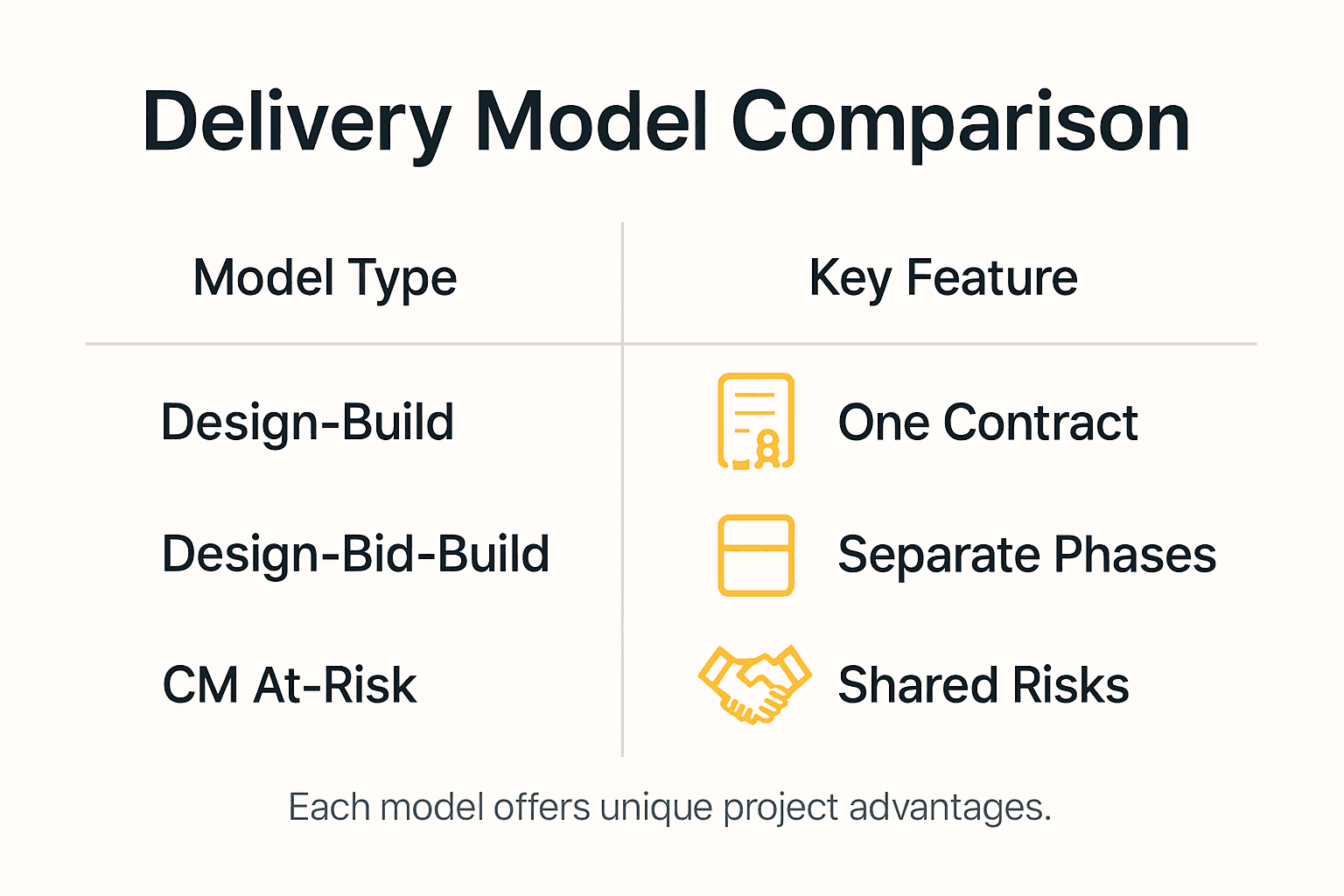
Within the Design-Build framework, multiple sub-variations exist. Architect-led models prioritize design expertise and aesthetic considerations, whereas contractor-led approaches focus on construction feasibility and cost optimization. Some hybrid models emerge that balance design innovation with practical buildability, allowing for more flexible and nuanced project management strategies. These variations demonstrate the method’s adaptability across different project scales and complexities.
Pro tip: Carefully evaluate your project’s specific requirements, budget constraints, and team capabilities when selecting a project delivery model to ensure optimal alignment and successful outcomes.
Here’s a concise comparison of four major construction project delivery models:
| Delivery Model | Contract Structure | Main Advantage | Common Challenge |
|---|---|---|---|
| Design-Bid-Build | Separate contracts | Clear roles and responsibilities | Slow, fragmented process |
| Design-Build | Single contract | Faster delivery, reduced risk | Less owner control |
| Construction Mgmt at Risk | Manager guarantees cost | Budget certainty, expert management | Complex relationships |
| Integrated Project Delivery | Multi-party agreement | High collaboration, shared goals | Coordination intensive |
How the Design-Build Process Works Step-by-Step
The design-build process unfolds through a structured, comprehensive workflow that transforms project conception into successful completion. Design-Build Best Practices outline three critical stages that guide project teams from initial planning to final delivery: procurement, contracting, and execution. Understanding these stages helps project managers navigate the complexities of integrated design and construction.
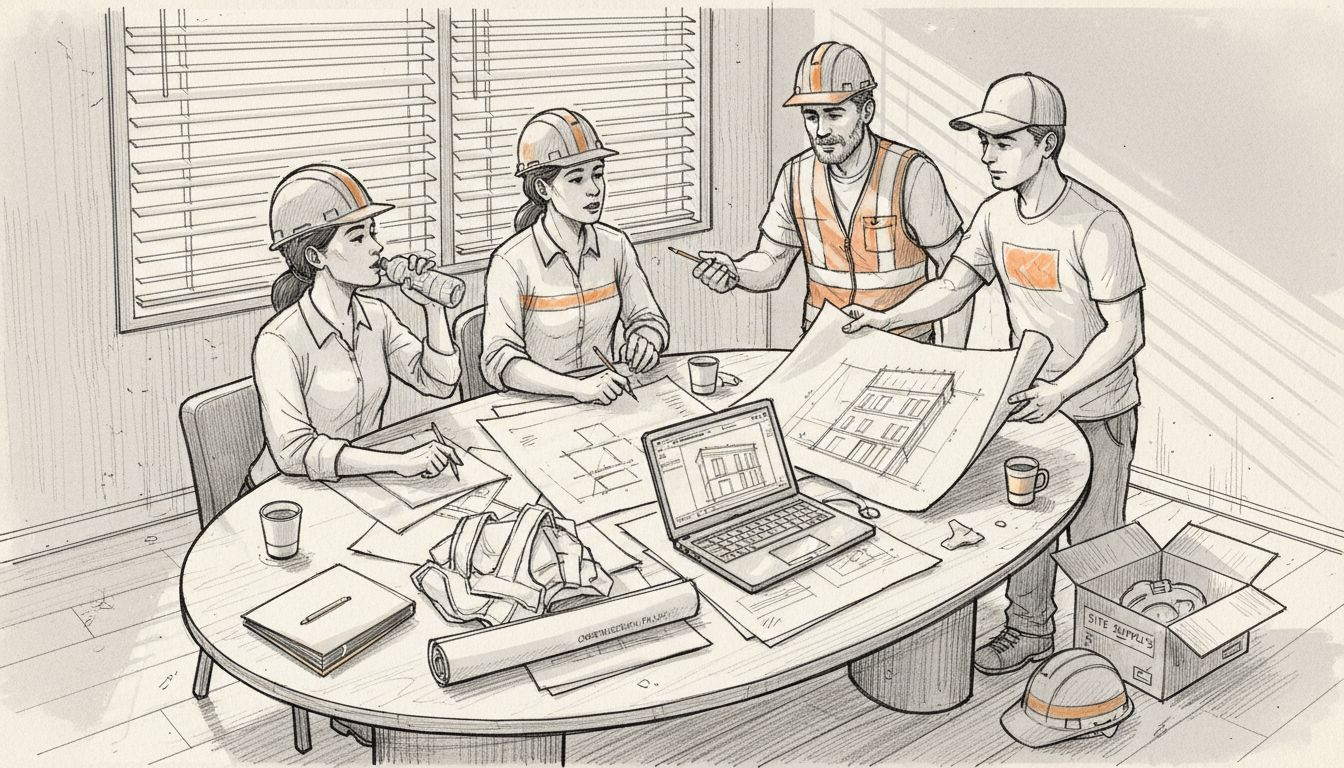
The initial procurement stage involves developing precise project requirements and strategically selecting the design-build team. This phase typically includes creating detailed Request for Qualifications (RFQ) and Request for Proposals (RFP) documents that outline project scope, expectations, and evaluation criteria. Design Management Strategies emphasize the importance of thorough team vetting, ensuring that selected teams possess the technical expertise, collaborative skills, and innovative capacity to meet project objectives.
Once the design-build team is selected, the process transitions into detailed contract negotiation and project execution. This stage involves defining clear responsibilities, establishing communication protocols, and developing integrated design and construction workflows. Project teams must create robust risk management strategies, establish quality control mechanisms, and maintain flexible yet structured collaboration between design and construction professionals. Successful implementation requires continuous communication, iterative design refinement, and a shared commitment to project goals.
Pro tip: Implement regular cross-functional team meetings and use collaborative digital platforms to ensure seamless information sharing and alignment throughout the design-build process.
Advantages for Modular and Prefab Builders
Modular construction techniques revolutionize building processes by introducing unprecedented efficiency and precision to construction workflows. The design-build method amplifies these inherent advantages, creating a powerful approach for modern prefabrication and modular building strategies. By integrating design and construction under a single workflow, builders can leverage factory-controlled environments to dramatically improve project outcomes.
The most significant advantages emerge from reduced construction timelines and enhanced quality control. Modular construction methods can decrease project completion times by 20 to 50 percent compared to traditional building approaches. Factory-based fabrication allows for rigorous quality management, precise component manufacturing, and consistent environmental conditions that traditional onsite construction cannot match. These controlled settings enable builders to minimize material waste, optimize resource utilization, and produce higher-quality structural components with greater predictability.
Sustainability represents another critical advantage for modular and prefab builders embracing the design-build method. The approach inherently supports environmental conservation through reduced material waste, improved energy efficiency in manufacturing processes, and the ability to design buildings with greater adaptability and reusability. Modular home design best practices further enhance these sustainability goals by enabling more precise material selection, optimized component design, and streamlined construction techniques that minimize environmental impact.
Pro tip: Invest in advanced digital design and manufacturing technologies to maximize the precision and efficiency advantages inherent in modular construction workflows.
Below is a summary highlighting key benefits of design-build for modular and prefab builders:
| Benefit | Description | Impact on Modular Projects |
|---|---|---|
| Reduced Timeline | Overlaps design and build phases | Projects finish up to 50% faster |
| Improved Quality Control | Precision through factory environments | Higher consistency, fewer errors |
| Resource Optimization | Minimizes waste, uses materials efficiently | Costs and environmental impact lowered |
| Enhanced Sustainability | Supports adaptable, efficient buildings | Greater energy and material savings |
Risks, Legal Duties, and Owner Responsibilities
Design-build project risks represent a complex landscape of shared responsibilities and strategic contractual considerations. Unlike traditional construction methods, the design-build approach fundamentally transforms how project risks are allocated and managed. Owners must understand that while many traditional risks transfer to the design-build team, they retain critical oversight and strategic decision-making responsibilities throughout the project lifecycle.
Design-Build contract management requires owners to carefully navigate several key risk domains. These include design adequacy verification, interface risk management between design and construction phases, and ensuring comprehensive insurance coverage. Owners must conduct thorough due diligence during contract negotiations, clearly defining performance expectations, quality standards, and specific risk allocation mechanisms. This proactive approach helps mitigate potential disputes and establishes a framework for successful project execution.
The legal duties of owners in design-build projects extend beyond traditional contractual frameworks. Owners must demonstrate active engagement by participating in comprehensive project reviews, maintaining clear communication channels, and establishing robust performance metrics. They need to balance providing sufficient project guidance with avoiding micromanagement that could undermine the design-build team’s autonomy and innovation potential. Effective owners view themselves as strategic partners rather than passive recipients of construction services.
Pro tip: Develop a comprehensive risk management matrix during initial contract negotiations that explicitly outlines risk ownership, mitigation strategies, and performance benchmarks for each project phase.
Comparing Design-Build to Traditional Approaches
Traditional project delivery methods operate through a fundamentally different paradigm compared to the design-build approach. In the conventional Design-Bid-Build model, project phases are strictly sequential: designers create plans, contractors bid on those plans, and construction occurs after a separate bidding process. This fragmented approach introduces significant inefficiencies, communication barriers, and potential conflicts between design and construction teams.
Construction project delivery dynamics reveal stark contrasts between traditional and design-build methodologies. Traditional approaches typically involve multiple contracts, which create complex communication channels and increase the potential for disputes. Design-build, by consolidating design and construction responsibilities under a single contract, eliminates many of these structural inefficiencies. The unified team approach allows for real-time problem solving, cost optimization, and more seamless translation of design intent into physical construction.
The performance differences between these approaches are significant. Traditional methods often experience extended project timelines, budget overruns, and increased administrative overhead. Design-build methods, conversely, enable faster project delivery, more accurate cost predictions, and enhanced collaborative problem solving. By integrating design and construction expertise from project inception, design-build approaches can identify and mitigate potential issues earlier, reducing both financial and operational risks for project owners.
Pro tip: Conduct a comprehensive comparative analysis of project complexity, timeline, and budget requirements before selecting between traditional and design-build delivery methods to ensure optimal project outcomes.
Unlock the Full Potential of Design-Build with Digital Growth Strategies
The design-build method dramatically improves project efficiency by integrating design and construction under one roof. However, many modular and prefab builders face challenges turning this streamlined process into increased business opportunities and high-value contracts. Pain points such as generating qualified leads, standing out in a competitive market, and effectively communicating complex workflows can slow growth and impact profitability.
At BoxBuild Agency, we understand these unique hurdles and use proven digital marketing strategies tailored for off-site construction innovators. Our expertise in Funnels – BoxBuild helps modular builders convert prospects into loyal clients by crafting strategic website experiences. Combined with cutting-edge tools from our AI – BoxBuild solutions, we enable faster decision-making and more personalized outreach aligned with your design-build strengths.
Ready to turn your design-build advantage into greater market share and project wins? Visit BoxBuild Agency today to discover how data-driven marketing and industry insight can position your business as a trusted leader. Let us help you close more deals and build tomorrow’s success starting now.
Frequently Asked Questions
What is the design-build method in construction?
The design-build method is an integrated approach in construction project management where design and construction services are consolidated under one contract, allowing for improved collaboration and efficiency.
What are the main advantages of using the design-build method?
The key advantages include reduced project risks, accelerated timelines, enhanced communication, and potentially lower overall project costs due to overlapping design and construction stages.
How does the design-build process differ from the traditional design-bid-build approach?
In the traditional design-bid-build approach, design and construction are separate phases, often leading to communication gaps and inefficiencies. The design-build method combines both phases under a single contract, fostering better collaboration and quicker problem resolution.
What factors should be considered when selecting a design-build team?
It’s essential to prioritize a design-build team with proven collaborative experience, a strong track record of successful projects, and expertise that aligns with the specific needs and goals of your construction project.
Recommended
- 7 Key Modular Home Design Best Practices for Builders – BoxBuild
- Apply 2025 Website Trends for Builders: A Step-by-Step Guide – BoxBuild
- Website Strategy for Builders: Essential Guide – BoxBuild
- Why Marketing Matters for Builders: Complete Guide – BoxBuild
- Understanding What is Built-Up Roofing: A Complete Guide – Liberty Roofworks