Nearly 60 percent of American property developers say that improper lead qualification is their biggest barrier to maximizing ADU project value. For mid-level marketing managers in off-site construction, identifying the right prospects is not just about filling a sales pipeline. It means filtering high-quality opportunities, improving conversion rates, and ensuring each project delivers on its promise. This guide shows you how to raise your standards and turn every ADU inquiry into a measurable business win.
Table of Contents
- Step 1: Identify Key ADU Project Criteria
- Step 2: Set Up Lead Capture Automation
- Step 3: Score And Segment Incoming ADU Leads
- Step 4: Qualify Leads Through Targeted Outreach
- Step 5: Verify Lead Readiness For Sales Handoff
Quick Summary
| Key Insight | Explanation |
|---|---|
| 1. Assess Local Zoning Regulations | Understand specific municipal guidelines for ADU eligibility, including size and parking. |
| 2. Automate Lead Capture Systems | Use automated web forms to streamline lead collection and enhance efficiency in inquiries. |
| 3. Score and Segment Leads Efficiently | Implement scoring systems to prioritize leads based on property eligibility and project motivation. |
| 4. Personalize Lead Outreach | Develop targeted communication strategies to qualify leads effectively and build trust. |
| 5. Establish Clear Handoff Protocols | Create a standardized process for transferring qualified leads to the sales team for smoother transitions. |
Step 1: Identify key ADU project criteria
Successful Accessory Dwelling Unit (ADU) projects require strategic evaluation of multiple critical factors before breaking ground. This section will walk you through identifying the essential project criteria that determine feasibility, potential, and ultimate success.
When analyzing potential ADU opportunities, start by examining property characteristics and local regulatory landscapes. Zoning regulations play a pivotal role in project viability. Research demonstrates that ADU development hinges critically on location accessibility and policy frameworks, which means understanding your specific municipal guidelines is paramount. Key criteria include property size, existing structure configuration, potential lot coverage, setback requirements, and parking availability.
Beyond physical constraints, financial considerations are equally important. Assess your potential project through multiple lenses including construction costs, potential rental income, property value appreciation, and compliance expenses. Comprehensive ADU policy analysis reveals that regulatory barriers and financial incentives significantly impact development outcomes. Look closely at local permit review processes, safety requirements, and any available municipal or state incentive programs that might offset initial investment.
Pro Tip: Before investing significant time and resources, consult your local planning department and obtain a comprehensive zoning verification letter to confirm ADU eligibility for your specific property.
Step 2: Set up lead capture automation
Automating your lead capture process transforms how you collect and manage potential ADU project inquiries. This section will guide you through creating an efficient system that captures leads seamlessly and routes them strategically.
Automated web forms represent the cornerstone of effective lead capture workflows, allowing you to pre-qualify prospects without manual intervention. Design your web form with targeted fields that capture essential information such as property address, project scope, budget range, and contact details. Implement conditional logic that automatically filters and segments leads based on their responses. Connect these forms directly to your Customer Relationship Management (CRM) platform to ensure instant data transfer and immediate follow-up potential.

Modern lead capture strategies extend beyond traditional web forms to include intelligent engagement tools like chatbots and integrated social media lead generation, enabling 24/7 prospect interaction. Consider implementing multichannel capture mechanisms that sync automatically with your core marketing infrastructure. This approach reduces manual data entry, minimizes human error, and creates a consistent communication pipeline that keeps potential ADU clients engaged from initial inquiry through project completion.
Pro Tip: Test your automated lead capture system thoroughly before full deployment and create multiple fail-safe mechanisms to ensure no potential lead slips through unnoticed.
Step 3: Score and segment incoming ADU leads
Effective lead management transforms raw inquiries into actionable opportunities for ADU project success. This section will guide you through strategically scoring and segmenting your incoming leads to maximize conversion potential.
Advanced lead scoring techniques leverage AI-powered tools to automatically prioritize and categorize prospects based on their behaviors and specific characteristics, enabling you to focus your resources on the most promising opportunities. Develop a comprehensive scoring system that evaluates leads across multiple dimensions such as property eligibility, financial readiness, project complexity, and immediate motivation. Assign numerical values to key indicators like property size, location zoning compatibility, budget range, and timeline urgency to create a dynamic scoring mechanism.
Strategic lead segmentation allows you to organize prospects into targeted groups with shared traits, enabling more personalized and efficient follow-up strategies. Create distinct segments such as immediate ADU developers, potential long-term investors, property upgraders, and rental property owners. Each segment should have tailored communication protocols and nurturing pathways that address their specific needs and potential project motivations. This approach reduces wasted effort and dramatically improves your overall conversion rates by delivering precisely targeted engagement.
Here’s a quick comparison of three common ADU lead types and their core characteristics:
| Lead Type | Typical Motivation | Common Challenges | Preferred Communication |
|---|---|---|---|
| Immediate ADU developers | Fast project delivery | Permitting, budget limits | Email, phone |
| Long-term property investors | Maximize return over time | Market fluctuations | Automated reports |
| Homeowners exploring upgrades | Enhance property value | Uncertain about process | Educational resources |
Pro Tip: Regularly recalibrate your lead scoring and segmentation criteria based on actual conversion data to ensure your system remains dynamic and responsive to changing market conditions.
The following table highlights the main functions of lead scoring and segmentation in the ADU workflow:
| Function | Description | Business Impact |
|---|---|---|
| Lead Scoring | Prioritizes prospects by key indicators | Improves resource allocation |
| Lead Segmentation | Groups leads by shared characteristics | Enables tailored follow-up |
Step 4: Qualify leads through targeted outreach
Transforming potential ADU project leads into actionable opportunities requires strategic and personalized communication. This section will walk you through a systematic approach to qualifying leads that maximizes your conversion potential.
Effective lead qualification leverages structured frameworks like BANT to systematically assess prospect readiness and potential, enabling you to prioritize and engage with the most promising clients. Develop a targeted outreach strategy that asks strategic questions designed to uncover key decision making factors. Focus on understanding the prospect’s budget constraints, decision making authority, specific project needs, and realistic project timeline. Categorize leads into nuanced segments such as cold, warm, and hot prospects based on their responses and demonstrated engagement level.
Personalized communication and rapid follow-up are critical components of successful lead qualification in the ADU project landscape. Implement an intelligent communication workflow that adapts to each lead segment, using automation tools to ensure timely and relevant interactions. Develop communication scripts tailored to different prospect profiles like first time ADU developers, experienced property investors, and homeowners exploring potential upgrades. Your goal is to gather comprehensive qualifying information while building trust and demonstrating your expertise throughout the engagement process.
Pro Tip: Create a standardized qualification questionnaire with strategic scoring mechanisms that allow you to quickly assess and prioritize leads without extensive manual intervention.
Step 5: Verify lead readiness for sales handoff
Transitioning qualified ADU project leads to your sales team requires a precise and systematic verification process. This section will guide you through confirming lead readiness and ensuring a seamless marketing to sales transfer that maximizes conversion potential.
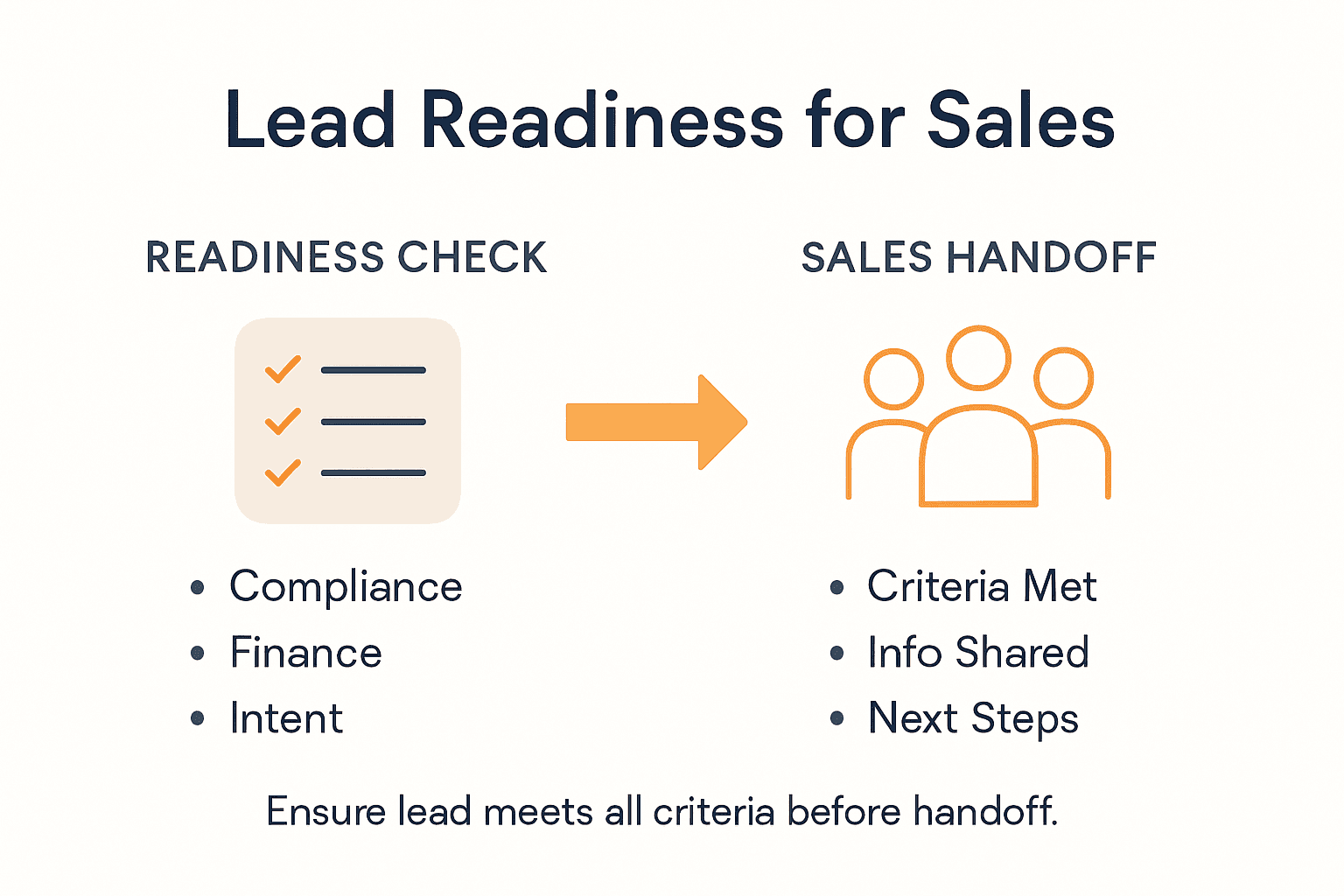
Establishing clear lead qualification criteria is fundamental to creating effective handoff protocols that improve overall sales efficiency. Develop a comprehensive verification checklist that confirms leads meet your ideal customer profile and demonstrate genuine project potential. This verification should encompass multiple dimensions including budget alignment, project timeline feasibility, decision making authority, and specific ADU project requirements. Utilize automated scoring mechanisms that objectively evaluate each lead against predefined readiness thresholds.
Smooth lead handoffs depend on transparent communication and shared qualification standards between marketing and sales teams. Implement a standardized lead transfer process that provides sales representatives with complete contextual information about each prospect. Include detailed engagement history, preliminary project insights, communication preferences, and specific qualifying signals that demonstrate the lead’s potential. Automate the information transfer to ensure no critical details are lost during the transition and to accelerate the overall sales cycle.
Pro Tip: Create a dynamic lead readiness dashboard that provides real time visibility into lead qualification status and enables instant sales team intervention.
Streamline Your ADU Lead Qualification with BoxBuild Agency
Mastering the lead qualification process for Accessory Dwelling Units requires a clear strategy to score, segment, and qualify prospects effectively. This article highlights the challenges of managing complex ADU leads, from zoning verification to readiness assessment. If you are facing difficulties converting raw inquiries into high-value project opportunities it is crucial to implement automation and data-driven techniques that ensure no promising lead falls through the cracks.
BoxBuild Agency specializes in empowering off-site construction professionals with tailored digital solutions designed to solve these pain points. Our expertise in creating optimized Funnels – BoxBuild coupled with cutting-edge AI – BoxBuild tools automates lead capture, dynamic scoring, and personalized outreach workflows. This approach reduces manual effort and accelerates the qualification process so you can close more ADU projects with confidence and speed.
Ready to elevate your ADU lead management and boost conversions? Visit BoxBuild Agency today to discover how our strategic websites, SEO, and Google Ads combine with automation and industry insight to position you as a trusted market leader. Transform your lead qualification workflow and start closing more deals now.
Frequently Asked Questions
What is lead qualification in the context of ADU projects?
Lead qualification is the process of assessing potential clients for Accessory Dwelling Units (ADUs) to determine their readiness and suitability for a project. Use a structured approach, like BANT (Budget, Authority, Need, Timeline), to gather information about the prospect’s goals and constraints.
How can I automate my lead capture process for ADUs?
Automating your lead capture process involves using online forms and integration with a Customer Relationship Management (CRM) system. Start by creating a web form with targeted fields to capture essential details such as project scope and budget, ensuring immediate data transfer for timely follow-up.
What criteria should I use to score ADU leads effectively?
To score ADU leads effectively, evaluate them based on property eligibility, financial readiness, and project urgency. Assign numerical values to key factors, such as budget range and zoning compatibility, to create a dynamic scoring system that prioritizes the most promising prospects.
How do I segment my leads for ADU projects?
Segmenting your leads means organizing them into groups based on shared characteristics and motivations. Create categories like immediate developers and long-term investors to tailor your communication strategies and improve engagement with personalized outreach.
What steps should I take to verify lead readiness before handing off to sales?
Before handing off a lead to sales, verify their readiness by using a checklist that confirms alignment with your ideal customer profile, including budget, timeline, and decision-making authority. Establish a standardized handoff process to ensure that all relevant prospect information is transferred smoothly to the sales team.
How can I improve my lead qualification process for higher conversions?
To enhance your lead qualification process for higher conversions, implement automated scoring and personalized engagement strategies. Regularly analyze your qualification criteria and adjust them based on conversion data to ensure your system remains effective and responsive.