Nearly 80 percent of clients check online reviews before hiring modular or prefab builders. For American builders and their international peers, this means your digital reputation can win or lose major projects. Effective reputation management goes beyond simple marketing. It is about shaping how potential clients view your technical skills, reliability, and service. Discover strategies to safeguard your credibility, attract higher-value leads, and set your construction business apart from the competition.
Table of Contents
- Defining Reputation Management For Builders
- Key Elements Of Builder Reputation Online
- Types Of Feedback And Review Platforms
- How Reputation Management Drives Leads
- Mitigating Risks And Common Pitfalls
Key Takeaways
| Point | Details |
|---|---|
| Strategic Reputation Management | Builders should adopt a systematic approach to influence client perceptions through consistent branding and effective communication. |
| Core Elements of Online Reputation | Trust, ethical conduct, and performance transparency are essential for building credibility and attracting quality clients. |
| Proactive Digital Engagement | Regularly update digital platforms with project showcases and respond to feedback to enhance online visibility and client trust. |
| Mitigating Reputation Risks | Builders must develop clear protocols for managing feedback and maintaining transparent communication to prevent potential brand damage. |
Defining Reputation Management for Builders
Reputation management for builders goes beyond traditional marketing – it’s a strategic approach to intentionally shaping how potential clients perceive your construction business. At its core, reputation management involves systematically monitoring, influencing, and controlling the public narrative about your professional capabilities, project quality, and client interactions. Reputation involves a complex combination of public trust, stakeholder perceptions, and consistent actions.
For modular and prefab builders, reputation management means creating a comprehensive strategy that demonstrates technical expertise, reliability, and client-focused service across multiple digital channels. This includes managing online reviews, crafting compelling project portfolios, responding professionally to feedback, and proactively communicating your unique value proposition. The goal is not just to showcase past work, but to build a trustworthy digital presence that attracts high-value clients and differentiates your brand in a competitive market.
Successful reputation management requires understanding that your reputation is an intangible asset directly connected to leadership, operational quality, communication effectiveness, and ethical conduct. Reputation forms through a combination of past behaviors and current stakeholder interactions, meaning every project, client interaction, and online touchpoint contributes to your overall market perception. This holistic approach demands consistent effort across project delivery, client communication, digital marketing, and professional networking.
Pro tip: Dedicate at least 30 minutes weekly to systematically review and respond to online reviews, update project showcases, and monitor your digital reputation across platforms like Google, LinkedIn, and industry-specific review sites.
Key Elements of Builder Reputation Online
Online reputation for builders is built through a complex interplay of digital interactions, client perceptions, and professional visibility. Six core elements fundamentally shape how construction professionals are perceived in the digital landscape: trust, ethical conduct, stakeholder engagement, communication consistency, performance transparency, and strategic brand alignment. These elements work together to create a comprehensive digital narrative that potential clients use to evaluate your professional credibility.

The most critical components of online reputation include managing digital platforms, showcasing project portfolios, maintaining professional social media presence, and generating authentic client testimonials. Professional websites become virtual storefronts where builders demonstrate technical expertise, highlight past achievements, and communicate their unique value proposition. Successful reputation management requires balancing corporate leadership, service quality, stakeholder relationships, and communication practices, with each element contributing to a holistic digital representation of your construction business.
Building a robust online reputation demands strategic, consistent effort across multiple channels. This means developing a proactive approach to digital presence management, including regularly updating project galleries, responding professionally to online reviews, sharing industry insights through blog posts or social media, and maintaining transparent communication about project capabilities and limitations. Modern clients seek builders who not only demonstrate technical skills but also communicate authentically and maintain a professional, trustworthy online persona.
Pro tip: Create a monthly digital reputation audit checklist that includes reviewing online reviews, updating project portfolios, checking social media engagement metrics, and ensuring all digital platforms reflect your current professional capabilities and brand messaging.
Here’s a summary of key online reputation elements and what they mean for builders:
| Element | What It Represents | Impact on Builders |
|---|---|---|
| Trust | Reliability in project delivery | Attracts quality clients |
| Ethical Conduct | Commitment to professional ethics | Prevents reputation damage |
| Stakeholder Engagement | Interaction with clients & partners | Builds referral opportunities |
| Communication Consistency | Uniform messaging across all channels | Strengthens brand image |
| Performance Transparency | Open sharing of project outcomes | Enhances credibility |
| Strategic Brand Alignment | Cohesive digital brand storytelling | Differentiates in the market |
Types of Feedback and Review Platforms
Digital transformation has dramatically reshaped how construction professionals collect and manage client feedback, introducing a diverse ecosystem of review platforms that go far beyond traditional word-of-mouth recommendations. Modern builders now navigate multiple digital channels, each offering unique opportunities for gathering client insights and managing professional reputation. These platforms range from specialized industry-specific directories to broad consumer review sites, social media networks, and professional networking platforms.
The primary categories of feedback platforms include: trade-specific review sites, general consumer rating platforms, social media channels, professional networking sites, and specialized construction industry forums. Platforms like Google Reviews, Houzz, and industry-specific directories provide builders with structured feedback mechanisms, while social media platforms such as LinkedIn and Facebook offer more conversational and immediate interaction opportunities. Research has demonstrated that effective online review systems require careful validation and strategic implementation across multiple communication channels.
Each review platform presents unique advantages for modular and prefab builders. Google Reviews offers widespread visibility and local search optimization, while industry-specific platforms like Houzz provide targeted exposure to design-conscious clients. Professional networking sites enable more nuanced, career-oriented feedback, and specialized construction forums allow for detailed technical discussions. Builders must strategically manage their presence across these platforms, understanding the specific audience, review dynamics, and reputation management opportunities each one presents.
Pro tip: Develop a comprehensive digital feedback strategy that includes monitoring at least three different review platforms, creating response templates for various feedback scenarios, and establishing a consistent review management schedule.
Compare the advantages of major review platforms for modular and prefab builders:
| Platform | Audience Focus | Builder Benefit | Review Style |
|---|---|---|---|
| Google Reviews | Broad, local clients | Maximizes visibility, SEO | Structured star ratings |
| Houzz | Design-conscious homeowners | Showcases visual portfolios | Project-based reviews |
| Industry professionals | Builds credibility, networking | Career-oriented feedback | |
| Construction Forums | Technical peers | Technical knowledge sharing | Detailed discussions |
How Reputation Management Drives Leads
Reputation marketing serves as a powerful mechanism for converting online visibility into qualified construction project leads, transforming digital reputation into a strategic business development tool. For modular and prefab builders, this means translating positive client experiences, detailed project showcases, and authentic digital interactions into tangible business opportunities. The process goes beyond simple marketing, creating a comprehensive narrative that attracts high-value clients by demonstrating technical expertise, reliability, and professional credibility.
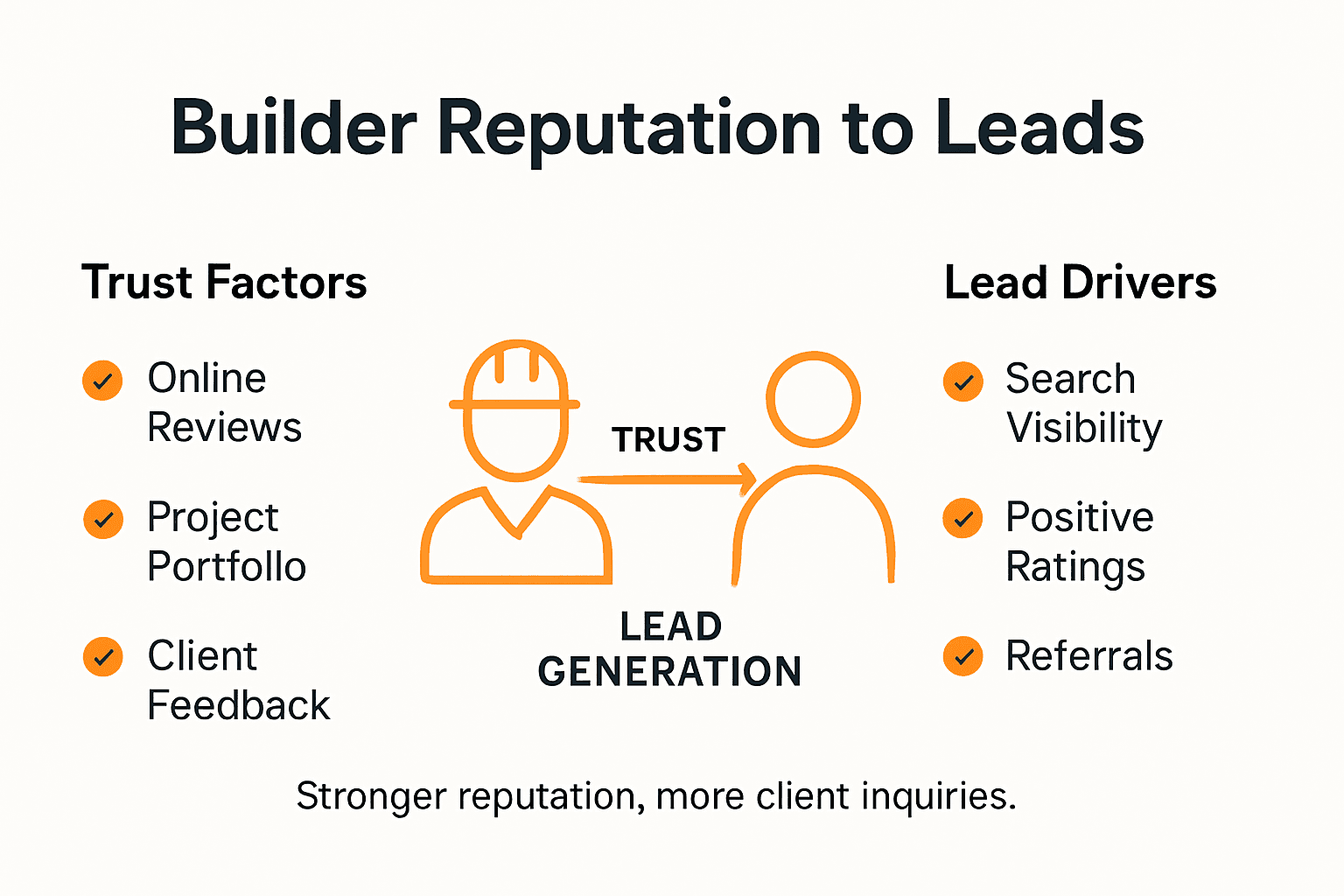
The connection between reputation and lead generation is rooted in social proof and client trust. Potential clients extensively research builders online, using digital reputation as a primary filter for selecting project partners. Positive reviews, detailed project portfolios, professional response patterns, and consistent communication across digital platforms signal competence and reliability. Reputation serves as a critical quality indicator that stimulates referrals and fosters strategic business alliances, effectively becoming a self-reinforcing mechanism for attracting new project opportunities.
Successful reputation management requires a proactive, multifaceted approach that integrates digital storytelling, client engagement, and strategic visibility. This involves systematically collecting and showcasing client testimonials, responding professionally to all feedback, maintaining an updated and visually compelling online portfolio, and demonstrating technical expertise through content marketing. Modern builders must view their digital reputation as a dynamic asset that directly influences lead generation, client selection, and overall market positioning.
Pro tip: Implement a quarterly reputation audit that tracks review metrics, analyzes client feedback patterns, and develops targeted strategies to address any consistent themes or improvement opportunities.
Mitigating Risks and Common Pitfalls
Reputation risk management demands a proactive, strategic approach to identifying and neutralizing potential threats to a builder’s digital credibility, well before they can escalate into significant brand damage. For modular and prefab builders, this means developing a comprehensive risk mitigation strategy that anticipates potential vulnerabilities across digital communication channels, client interactions, and professional representation. Understanding these risks is not about creating defensive mechanisms, but about building robust, transparent systems that demonstrate professional integrity.
Common reputation risks include inconsistent communication, delayed or inappropriate response to negative feedback, lack of transparency in project challenges, and inadequate documentation of client experiences. Organizations frequently encounter twelve critical pitfalls that can undermine their reputation management efforts, ranging from reactive communication to neglecting stakeholder engagement. These risks are particularly acute in the construction industry, where project complexity, client expectations, and potential technical challenges create multiple potential points of reputational vulnerability.
Effective risk mitigation requires a multifaceted strategy that integrates proactive communication, robust internal protocols, and a culture of transparency. This includes developing standardized response templates for various feedback scenarios, creating clear escalation protocols for addressing negative reviews, implementing regular digital reputation audits, and training team members on professional communication standards. Builders must view reputation risk management as an ongoing process of continuous improvement, not a one-time defensive strategy.
Pro tip: Create a comprehensive reputation risk management playbook that outlines specific protocols for handling different types of client feedback, including response time expectations, communication guidelines, and escalation procedures for complex situations.
Elevate Your Builder Reputation with Strategic Digital Growth
Managing your online reputation is key for modular and prefab builders who want to earn client trust and transform positive reviews into high-value leads. This article highlights the vital role of transparent communication, consistent digital presence, and proactive engagement in building a trustworthy brand image. You may be facing challenges like responding efficiently to feedback, showcasing your completed projects effectively, or standing out in a competitive market through authentic storytelling.
BoxBuild Agency specializes in turning these challenges into growth opportunities by combining industry insight with advanced marketing strategies. Our expertise in Funnels helps you craft clear client journeys that nurture trust from the first digital touchpoint. With data-driven campaigns through Google Ads, we maximize your visibility to the right audience seeking reliable builders. Learn how AI enhances reputation monitoring and automates timely responses so no client feedback goes unnoticed. As your digital growth partner, BoxBuild unlocks your reputation’s full potential to attract qualified leads and close more projects.
Take control of your builder reputation today with proven digital strategies designed specifically for your industry. Visit BoxBuild Agency now to discover how we can help you build trust, elevate your online presence, and win more clients in a competitive off-site construction market.
Frequently Asked Questions
What is reputation management for builders?
Reputation management for builders is a strategic approach to shaping how potential clients perceive a construction business. It involves monitoring, influencing, and controlling the public narrative about professional capabilities, project quality, and client interactions.
How does online reputation impact client trust?
Online reputation impacts client trust by serving as a primary filter through which potential clients assess builders. Positive reviews, project showcases, and professional responses signal reliability and competence, which are crucial for attracting quality clients.
What key elements contribute to a builder’s online reputation?
Key elements that contribute to a builder’s online reputation include trust, ethical conduct, stakeholder engagement, communication consistency, performance transparency, and strategic brand alignment. Together, these factors create a comprehensive digital narrative that influences market perception.
How can builders manage their online reviews effectively?
Builders can manage their online reviews effectively by regularly monitoring feedback across review platforms, responding professionally to both positive and negative comments, and maintaining updated project portfolios to demonstrate their capabilities.