Most modular construction firms waste time on leads that never convert. In fact, nearly 60 percent of generated construction leads fail to match a company’s ideal client profile, costing businesses both money and focus. When your team knows exactly who to target and uses smart systems for capturing the right data, you can supercharge your workflow and bring in projects that truly fuel your growth. This guide lays out simple steps for attracting and qualifying higher-value leads in modular construction.
Table of Contents
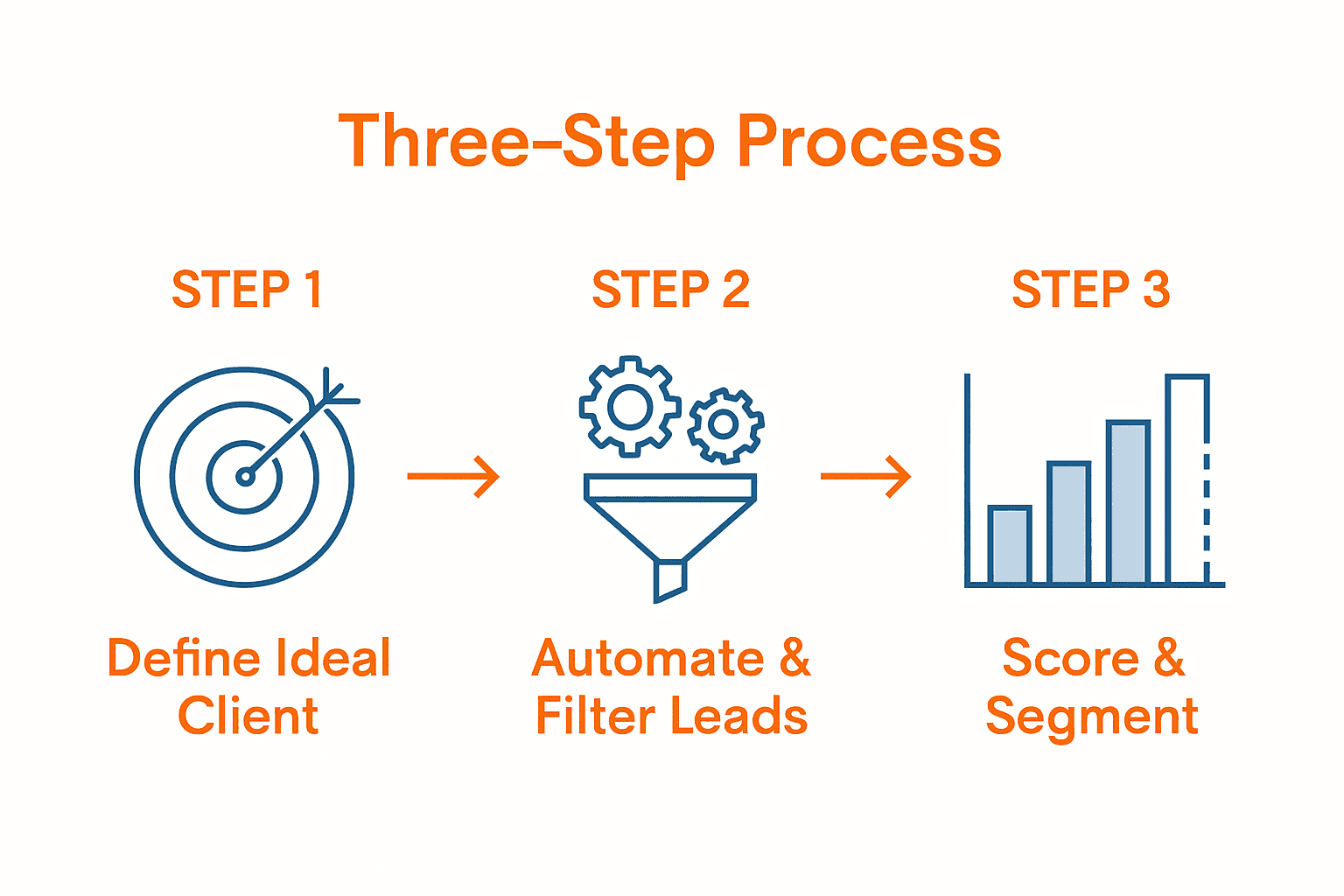
- Step 1: Define Ideal Client Profiles For Targeted Lead Intake
- Step 2: Implement Automated Data Capture And Filtering Systems
- Step 3: Score And Segment Leads Using Qualification Criteria
- Step 4: Engage Qualified Leads With Tailored Communication
- Step 5: Verify Lead Quality And Optimize Workflow Performance
Quick Summary
| Key Point | Explanation |
|---|---|
| 1. Define an ideal client profile | Identify characteristics of profitable clients to focus your lead generation efforts. This improves alignment with your company’s strengths and market needs. |
| 2. Automate data capture and filtering | Implement systems that automatically collect and categorize leads based on your ideal client profile to enhance efficiency and accuracy in lead management. |
| 3. Develop a lead scoring system | Create a weighted scoring model to evaluate leads based on qualification criteria, enabling efficient prioritization of high potential clients. |
| 4. Personalize communication strategies | Tailor your communication approaches to the unique needs of qualified leads, enhancing engagement and increasing the chances of conversion. |
| 5. Regularly verify and optimize workflows | Continuously assess your lead qualification process using key performance metrics to improve conversion rates and adapt to market changes. |
Step 1: Define ideal client profiles for targeted lead intake
Building a successful modular construction business starts with understanding exactly who your most valuable clients are. According to Houzz Pro, creating a comprehensive ideal client profile enables you to streamline lead qualification and dramatically improve project alignment.
To craft an effective ideal client profile, you will need to analyze multiple dimensions of your target market. BCI Central recommends examining project types, decision making processes, and core values that distinguish your most profitable clients. Start by reviewing your past successful projects and identifying common characteristics such as:
- Project budgets and scale
- Geographic location and accessibility
- Residential or commercial focus
- Specific modular construction preferences
- Decision maker demographics
The goal is not just to find clients who can afford your services but to identify those who genuinely align with your company’s expertise and vision. By developing a laser focused client profile, you transform lead generation from a scattered approach to a precision strategy that attracts high quality prospects.
Pro tip: Update your ideal client profile annually. Markets evolve and so should your targeting approach. Regularly reassess your most profitable projects and adjust your profile accordingly to stay ahead of industry trends.
Step 2: Implement automated data capture and filtering systems
Streamlining your lead qualification workflow requires robust automated data capture and filtering mechanisms. As research from ArXiv demonstrates, strategic use of API technologies can revolutionize how modular builders collect and process potential client information.
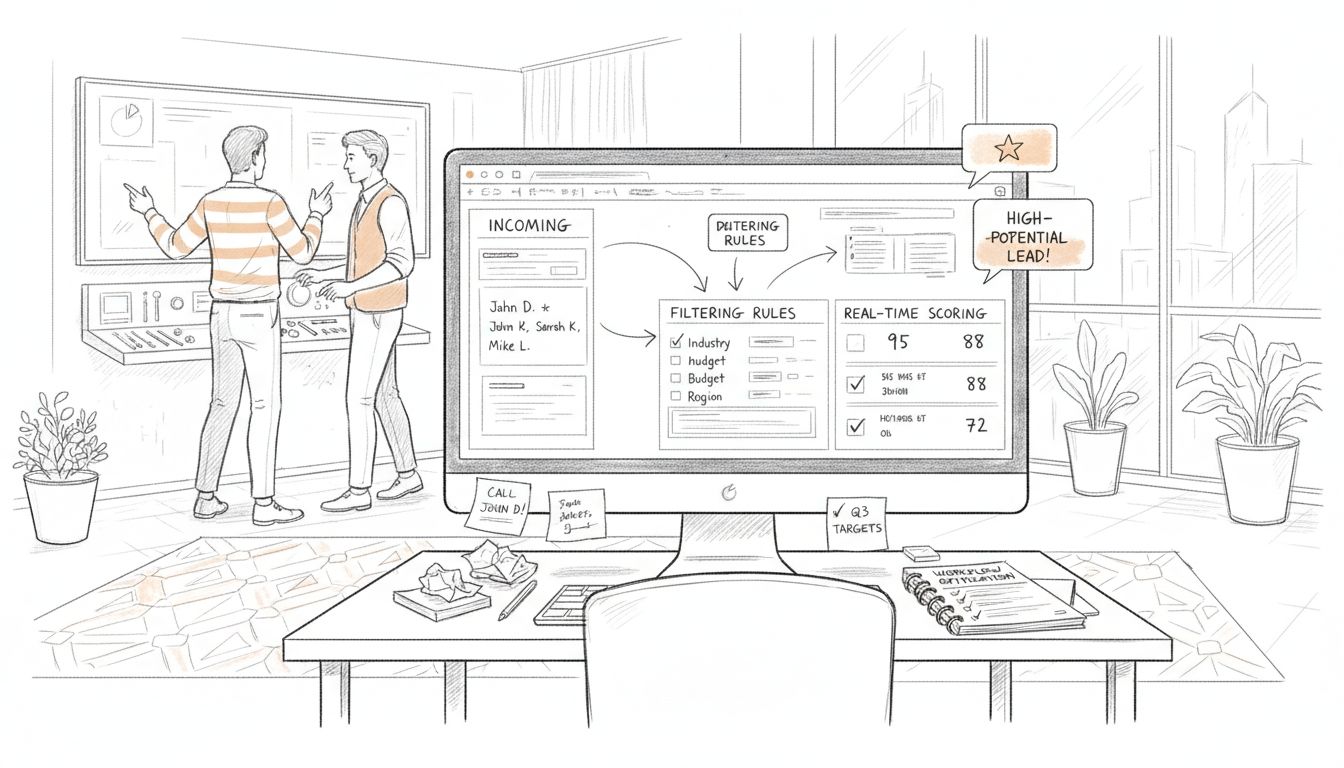
To implement an effective automated system, you will want to integrate multiple data collection touchpoints across your digital platforms. This means configuring your website contact forms, email capture tools, and customer relationship management (CRM) software to automatically categorize and score incoming leads. ArXiv research highlights the importance of data fusion approaches that combine multiple information streams for more accurate lead assessment.
Key components of an automated data capture system include:
- Web forms with intelligent field validation
- Automatic lead scoring algorithms
- Real time data integration across platforms
- Customizable filtering rules based on your ideal client profile
- Automated email or notification triggers for high potential leads
The ultimate goal is creating a seamless system that captures relevant information while filtering out low potential prospects. This approach transforms lead management from a manual sorting process to an intelligent automated workflow that saves time and increases conversion potential.
Pro tip: Regularly audit and recalibrate your automated filtering rules. What works today might become less effective as market dynamics shift. Set a quarterly review to ensure your data capture system remains precise and aligned with your evolving business objectives.
Step 3: Score and segment leads using qualification criteria
Transforming raw lead data into actionable insights requires a strategic approach to scoring and segmentation. Your goal is to create a systematic method that quickly identifies the most promising prospects while efficiently categorizing potential clients based on their likelihood of conversion.
Develop a comprehensive lead scoring model that assigns numerical values to key qualification criteria. This approach allows you to objectively evaluate each potential client across multiple dimensions. Your scoring system should typically include factors such as:
- Budget alignment with project scope
- Project complexity and technical requirements
- Decision making authority
- Timeline and urgency
- Geographical proximity
- Previous experience with modular construction
Create a weighted scoring system where each criteria contributes differently to the overall lead potential.
For instance, budget and project complexity might carry more weight than geographical proximity. A typical scoring range might look like 0 to 100 points, with leads scoring above 70 considered high potential, 40 to 70 as medium potential, and below 40 as low potential.
Pro tip: Implement a dynamic scoring system that evolves with your business. Regularly review and adjust your qualification criteria based on actual conversion rates and changing market conditions. What works today might need refinement tomorrow as your modular building business grows and market dynamics shift.
Step 4: Engage qualified leads with tailored communication
Transforming qualified leads into potential clients requires a strategic and personalized communication approach. LinkedIn research highlights the importance of targeted engagement strategies that speak directly to each lead unique needs and preferences.
Develop a multi channel communication strategy that adapts to each lead profile. This means creating customized email sequences, targeted Google Ads, and personalized content that addresses specific pain points and project requirements. Your communication should demonstrate deep understanding of the potential client needs by showcasing:
- Relevant project case studies
- Specific modular construction solutions
- Technical expertise matching their project complexity
- Potential cost and time savings
- Unique value propositions for their specific project type
The key is to make each interaction feel like a precisely crafted conversation rather than a generic marketing message. Segment your communication approaches based on the lead scoring system you developed earlier. High potential leads might receive more comprehensive proposals with detailed technical breakdowns while medium potential leads get more introductory level communications.
Digital marketing strategies play a crucial role in maintaining consistent and compelling communication. Pro tip: Always track engagement metrics for each communication approach. What resonates today might change tomorrow so continuous optimization is essential to keeping your lead engagement strategy sharp and effective.
Step 5: Verify lead quality and optimize workflow performance
The final stage of your lead qualification workflow involves continuously validating and refining your entire process. Your objective is to transform raw data into actionable insights that progressively improve lead conversion rates and operational efficiency.
Implement a comprehensive verification system that tracks key performance metrics across your lead qualification pipeline. This means establishing clear benchmarks for measuring lead quality and workflow effectiveness. Critical metrics to monitor include:
- Conversion rates at each workflow stage
- Average time from lead capture to project initiation
- Cost per qualified lead
- Lead to project value ratio
- Customer acquisition cost
- Sales team response time
Create a feedback loop that allows systematic analysis and adjustment of your qualification criteria. This involves regular team discussions where sales and marketing collaborate to review lead performance data. Look for patterns that indicate which qualification strategies are producing the most valuable clients and which need refinement.
Landing Pages and Funnels can play a crucial role in optimizing your lead verification process. Pro tip: Implement quarterly comprehensive reviews of your entire lead qualification workflow. Markets evolve quickly and your approach must be dynamic. What works brilliantly today might become less effective in six months so staying adaptable is key to long term success.
Elevate Your Lead Qualification Workflow with Smart Digital Solutions
The challenge of sorting high-potential modular building leads from a sea of inquiries can feel overwhelming. This article highlights key hurdles such as defining your ideal client, automating data capture, and scoring leads wisely to ensure your efforts focus only on prospects with the highest chances of conversion. You may also find yourself looking to engage qualified leads more personally while constantly refining your process to stay competitive.
At BoxBuild Agency, we understand these pain points and offer tailored solutions that blend automation and strategic marketing to help modular builders thrive. Our expertise in creating data-driven Funnels and leveraging AI technologies makes lead capture and qualification seamless and precise. By partnering with us, you gain access to automated workflows that filter and score leads for you while supporting personalized outreach that turns prospects into loyal clients.
Discover how our focused strategies can transform your lead management pipeline and accelerate project wins.
Make the leap today to smarter leads and stronger growth.
Ready to optimize your lead qualification process with expert digital solutions Visit BoxBuild Agency now to explore our services and start closing more high-value projects.
Frequently Asked Questions
How can I define the ideal client profiles for my modular construction business?
To define ideal client profiles, analyze past successful projects and identify common traits such as budget ranges, project types, and decision maker demographics. Create a comprehensive profile that aligns with your company’s expertise and vision.
What systems should I implement for automated data capture in lead qualification?
Integrate various digital touchpoints like web forms, email capture tools, and CRM software to automate data collection and lead scoring. Start by setting up intelligent field validations and customizable filtering rules to optimize lead intake by the next quarter.
How do I create a lead scoring model for my modular building leads?
Develop a scoring model by assigning numerical values to qualification criteria, such as budget alignment and project complexity. Make sure to regularly update and recalibrate this model based on conversion rates for better accuracy.
What is the best way to communicate with qualified leads effectively?
Engage qualified leads through tailored communication that addresses their individual project needs and pain points. Use a multi-channel strategy to provide customized content and proposals based on your lead scoring, ensuring meaningful interactions within a week.
How can I verify lead quality and optimize my lead qualification workflow?
Implement a verification system that tracks metrics like conversion rates and response times at each stage of your workflow. Regularly analyze this data and hold quarterly reviews to refine your qualification strategies based on real performance insights.
Why is updating my ideal client profile annually important for lead qualification?
Updating your ideal client profile annually helps you stay aligned with changing market dynamics and client preferences. Review your most profitable projects each year to adjust your targeting approach and maintain effective lead generation.
Recommended
- 7 Proven Examples of Digital Lead Generation for Builders – BoxBuild
- Modular Construction Companies – BoxBuild
- 7 Proven Lead Generation Strategies Modular Builders Need – BoxBuild
- CRM Setup & Optimization – BoxBuild
- 7 Best CRMs for Real Estate Agents in 2026 – Expert Comparison
- How to Find Yacht Buyers: Step-by-Step Guide for Brokers